Core Role Of Flexible Coupling In Continuous PU Sandwich Panel Production Line

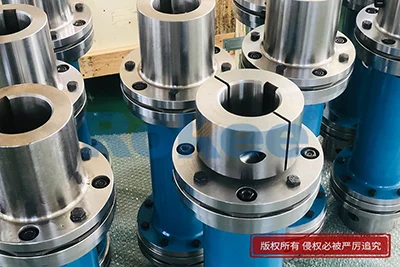
In the modern construction industry, continuous PU sandwich panel production lines have become the backbone of mass-producing high-quality thermal insulation composite panels, integrating mechanical, electrical, chemical, and thermal control technologies to achieve automated and efficient production. These production lines transform raw materials such as color-coated steel sheets and polyurethane (PU) foam into sandwich-structured panels with excellent thermal insulation, sound insulation, and structural performance, which are widely used in industrial workshops, commercial buildings, residential buildings, and cold storage facilities. While the production line consists of multiple key components—including unwinding systems, pretreatment equipment, forming units, foaming systems, curing zones, cutting machines, and stacking devices—one component that often goes unnoticed but plays an irreplaceable core role is the flexible coupling. Unlike rigid couplings that enforce strict alignment between shafts, flexible couplings connect rotating shafts of different equipment while allowing a certain degree of misalignment, vibration damping, and torque transmission, making them indispensable for maintaining the stability, efficiency, and quality of the entire continuous production process. Without the precise and reliable performance of flexible couplings, the seamless coordination of various equipment in the production line would be disrupted, leading to reduced production efficiency, increased equipment wear, and even defects in the final PU sandwich panels.
The continuous PU sandwich panel production process is a complex and interconnected sequence of operations, where each link relies on the stable transmission of power from one piece of equipment to another. From the initial unwinding of the metal sheet coil to the final cutting and stacking of the finished panel, every step requires synchronized operation of multiple motors, reducers, and rotating components. The flexible coupling serves as the critical link that bridges these components, ensuring that power is transmitted smoothly and efficiently from the driving shaft (typically from a motor or reducer) to the driven shaft (of equipment such as unwinding machines, forming rolls, conveyor belts, or cutting tools). This torque transmission function is the fundamental role of flexible couplings, and its reliability directly determines the overall operational stability of the production line. Unlike rigid couplings, which transmit torque through a rigid connection and can easily transfer excessive stress between shafts, flexible couplings use elastic elements—such as rubber, polyurethane, or metal bellows—to absorb minor fluctuations in torque, ensuring that the driven equipment receives a steady and consistent power supply. This is particularly important in continuous production, where even small interruptions or inconsistencies in power transmission can lead to production bottlenecks or product defects. For example, in the unwinding process, the flexible coupling connects the motor to the unwinding roller, ensuring that the metal sheet is uncoiled at a constant speed. If the torque transmission is unstable, the sheet may be pulled too tightly, causing stretching or tearing, or too loosely, resulting in wrinkles or misalignment in subsequent processing steps. Similarly, in the forming unit, where multiple rolls gradually shape the flat metal sheet into the desired waveform, the flexible coupling ensures that each roll rotates in perfect synchronization, maintaining uniform pressure and shaping accuracy.
One of the most critical advantages of flexible couplings in continuous PU sandwich panel production lines is their ability to compensate for shaft misalignment, a common issue in industrial equipment installation and operation. Due to factors such as installation errors, foundation settlement, thermal expansion of equipment during operation, and mechanical deformation caused by long-term use, the driving and driven shafts in the production line rarely maintain perfect coaxial alignment. This misalignment can occur in three forms: angular misalignment (where the shafts are inclined relative to each other), parallel misalignment (where the shafts are offset horizontally or vertically), and axial misalignment (where the shafts move along their central axis). If not addressed, such misalignment can lead to excessive vibration, increased wear on bearings and seals, premature equipment failure, and even damage to the production line’s structural components. Flexible couplings effectively mitigate these issues by using their elastic elements to absorb the stress caused by misalignment, allowing for a certain degree of relative movement between the shafts without compromising torque transmission. For instance, in the foaming system, where high-pressure mixing heads inject PU raw materials between two metal sheets, the flexible coupling connects the motor to the mixing head’s drive shaft. The mixing head operates at high speeds, and any misalignment between the motor and the mixing head shaft could cause uneven mixing of the PU raw materials, leading to inconsistent foam density and poor adhesion between the foam core and the metal sheets. The flexible coupling compensates for this misalignment, ensuring that the mixing head rotates smoothly and uniformly, resulting in high-quality foam with consistent density and structure.
Vibration damping is another essential role of flexible couplings in continuous PU sandwich panel production line, as vibration is an inherent challenge in industrial machinery operation. The production line’s motors, reducers, and rotating components generate vibrations during operation, which can be transmitted through the shaft system to other equipment and even the production line’s frame. Excessive vibration not only affects the stability of the equipment but also impacts the quality of the PU sandwich panels. For example, in the curing zone, where the PU foam undergoes a temperature-controlled curing process to achieve its final strength, excessive vibration can cause the foam to settle unevenly, resulting in variations in panel thickness and structural strength. Additionally, vibration can lead to loosening of fasteners, increased noise levels in the workshop, and reduced service life of critical components such as bearings and gears. Flexible couplings address this issue by using their elastic elements to absorb and dampen vibrations, preventing them from being transmitted between connected shafts. The elastic materials in the coupling act as a buffer, absorbing the impact of vibration and reducing its amplitude before it reaches other parts of the equipment. This not only protects the equipment from damage but also ensures a stable operating environment for the production process. In the double belt press system, which applies uniform pressure to the sandwich panel during foaming and curing, the flexible coupling connects the motor to the press’s drive rollers. The press operates at a constant speed, and any vibration from the motor could cause uneven pressure distribution, leading to panel warping or inconsistent thickness. The flexible coupling dampens these vibrations, ensuring that the press operates smoothly and applies uniform pressure across the entire width of the panel.
The continuous operation of PU sandwich panel production lines requires high reliability and minimal downtime, as any interruption can result in significant production losses. Flexible couplings contribute to the reliability of the production line by reducing the risk of equipment failure and simplifying maintenance. Unlike rigid couplings, which require precise alignment during installation and are prone to damage if misalignment occurs, flexible couplings have a higher tolerance for installation errors, reducing the time and effort required for installation and alignment. Additionally, the elastic elements in flexible couplings are designed to absorb wear and tear, extending the service life of the coupling itself and the connected equipment. For example, in the cutting system, where flying saws cut the continuous panel into pre-set lengths, the flexible coupling connects the motor to the saw blade’s drive shaft. The saw blade operates at high speeds and is subject to frequent start-stop cycles, which can generate significant shock loads. The flexible coupling absorbs these shock loads, protecting the motor and the saw blade from damage and ensuring accurate cutting. Furthermore, flexible couplings are relatively easy to inspect and replace, as they do not require the entire shaft system to be disassembled. This reduces maintenance time and downtime, allowing the production line to resume operation quickly in the event of a coupling failure. Regular maintenance of flexible couplings—such as checking for wear on elastic elements and ensuring proper fastening—can further extend their service life and prevent unexpected breakdowns, ensuring the continuous and efficient operation of the production line.
The quality of PU sandwich panels is directly influenced by the precision and stability of the production process, and flexible couplings play a crucial role in maintaining this precision. In the forming unit, where the metal sheets are rolled into the desired shape, the flexible coupling ensures that each forming roll rotates at a precise speed and with consistent torque. Any deviation in speed or torque can lead to uneven shaping of the metal sheets, resulting in panels with irregular edges, inconsistent thickness, or poor fit between the upper and lower sheets. This, in turn, can affect the foaming process, as uneven gaps between the metal sheets can lead to uneven foam distribution and poor adhesion. In the foaming system, the high-pressure mixing head requires precise rotation to ensure that the PU raw materials are mixed thoroughly and injected evenly. The flexible coupling ensures that the mixing head rotates at a constant speed, preventing variations in mixing efficiency and raw material distribution. Additionally, the flexible coupling’s ability to compensate for misalignment ensures that the mixing head remains aligned with the gap between the metal sheets, preventing over-injection or under-injection of PU raw materials. This results in a foam core with uniform density, which is essential for the panel’s thermal insulation and structural performance. In the cutting system, the flexible coupling ensures that the saw blade rotates at a precise speed, allowing for clean, accurate cuts that meet the required length specifications. Any inconsistency in the saw blade’s speed can lead to jagged edges or inaccurate cutting lengths, reducing the quality of the finished panels and increasing material waste.
The adaptability of flexible couplings to different operating conditions is another key factor that makes them essential in continuous PU sandwich panel production lines. These production lines often operate in varying environmental conditions, including changes in temperature, humidity, and dust levels, and may be subject to fluctuations in load and speed. Flexible couplings are designed to withstand these variations, maintaining their performance and reliability under different operating conditions. For example, in environments with high temperatures—such as near the curing zone—the elastic elements of the coupling are made from heat-resistant materials that can withstand elevated temperatures without losing their flexibility or strength. This ensures that the coupling continues to function effectively even in high-temperature environments, preventing premature failure. Additionally, flexible couplings can adapt to fluctuations in load, such as when the production line changes the thickness or type of panel being produced. The elastic elements in the coupling absorb the additional torque required for thicker panels, ensuring that the power transmission remains stable and consistent. This adaptability allows the production line to be more flexible, capable of producing a wide range of PU sandwich panel types without significant modifications to the equipment or coupling systems.
Another important role of flexible couplings in continuous PU sandwich panel production lines is overload protection. In the event of an unexpected overload—such as a jammed conveyor belt, a stuck forming roll, or excessive resistance in the cutting system—the flexible coupling can absorb the excess torque, preventing damage to the motor, reducer, and other critical components. Some flexible couplings are designed with torque-limiting features, where the elastic elements will slip or deform when a certain torque limit is exceeded, disconnecting the power transmission and protecting the equipment from damage. This is particularly important in continuous production lines, where an overload can cause extensive damage to multiple pieces of equipment, leading to prolonged downtime and high repair costs. For example, if a metal sheet becomes jammed in the forming unit, the flexible coupling will absorb the excess torque generated by the motor, preventing the motor from burning out or the forming rolls from being damaged. Once the jam is cleared, the coupling can resume normal operation, minimizing the impact on production. This overload protection feature not only extends the service life of the equipment but also reduces the risk of safety hazards in the workshop.
In addition to their direct roles in torque transmission, misalignment compensation, vibration damping, and overload protection, flexible couplings also contribute to the overall efficiency of the continuous PU sandwich panel production line. By reducing equipment wear and downtime, flexible couplings help to maximize the production line’s operational time, increasing output and reducing production costs. The smooth and efficient power transmission provided by flexible couplings also reduces energy consumption, as the motor does not have to work harder to overcome misalignment or vibration. This not only lowers energy costs but also makes the production process more environmentally friendly. Furthermore, the reduced maintenance requirements of flexible couplings—compared to rigid couplings—free up maintenance personnel to focus on other critical tasks, improving overall workshop efficiency. For example, a production line equipped with flexible couplings may require less frequent alignment checks and component replacements, allowing the maintenance team to focus on optimizing the foaming process, improving panel quality, or upgrading other equipment.
To fully understand the importance of flexible couplings in continuous PU sandwich panel production lines, it is necessary to consider the consequences of their absence or improper selection. Without flexible couplings, the rigid connection between shafts would transmit all misalignments, vibrations, and shock loads directly to the equipment, leading to frequent breakdowns, increased maintenance costs, and reduced production efficiency. For example, rigid couplings would not compensate for the misalignment between the motor and the unwinding roller, leading to uneven unwinding of the metal sheet, wrinkles, and tears. In the foaming system, rigid couplings would transmit vibrations from the motor to the mixing head, resulting in uneven foam mixing and poor panel quality. Over time, the constant stress from misalignment and vibration would cause premature wear on bearings, gears, and other components, leading to costly repairs and prolonged downtime. Additionally, the lack of overload protection would increase the risk of equipment damage in the event of an unexpected jam or overload, further disrupting production. Therefore, the selection of the right flexible coupling—based on factors such as torque requirements, misalignment tolerance, operating temperature, and environmental conditions—is crucial for ensuring the optimal performance of the continuous PU sandwich panel production line.
In conclusion, flexible couplings play a multifaceted and indispensable core role in the operation of continuous PU sandwich panel production lines. Their ability to transmit torque smoothly, compensate for shaft misalignment, dampen vibrations, protect against overloads, and adapt to varying operating conditions ensures the stability, efficiency, and quality of the entire production process. From the unwinding of raw materials to the cutting and stacking of finished panels, flexible couplings serve as the silent backbone that connects and coordinates the various components of the production line, preventing equipment damage, reducing downtime, and ensuring the consistent production of high-quality PU sandwich panels. As the demand for energy-efficient and high-performance building materials continues to grow, the role of flexible couplings in optimizing continuous PU sandwich panel production lines will become even more critical. By investing in high-quality flexible couplings and ensuring their proper maintenance, manufacturers can enhance the reliability and efficiency of their production lines, reduce costs, and meet the evolving needs of the construction industry.


Links:
- Calibration Weight
- Digital Viscometer
- Carpas Industriales
- Exhibition Tent
- Industrial Cardan Shaft
- PU Sandwich Panel Machine
- PIR Sandwich Panel Line
- Sandwich Panel Machine
- Sandwich Panel Production Line
- PU Sandwich Panel Line
- Sandwich Panel Line
- Flexible Couplings Manufacturer In China
- Elastic Couplings Manufacturer In China