Elastic Coupling Transmits Power For Sandwich Panel Machine Runs Stably
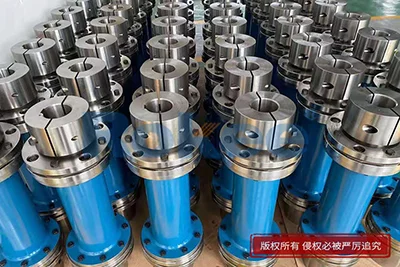
In the realm of modern industrial manufacturing, the stable operation of production equipment is the cornerstone of ensuring efficient output and product quality, and sandwich panel machines, as key equipment for producing building insulation and structural materials, rely heavily on a stable and efficient power transmission system to complete complex forming, pressing, and conveying processes. Among the numerous components that make up this power transmission system, the elastic coupling plays an irreplaceable role—it serves as a crucial bridge between the power source and the working mechanism of the sandwich panel machine, not only undertaking the core task of transmitting power but also effectively mitigating various factors that may affect operational stability, thereby safeguarding the long-term, continuous, and stable operation of the entire equipment. The performance of the elastic coupling directly determines the power transmission efficiency, operational smoothness, and service life of the sandwich panel machine, making it an indispensable key component in the production line.
To understand the important role of elastic couplings in sandwich panel machines, it is first necessary to clarify the working characteristics of sandwich panel machines and the special requirements they place on power transmission. Sandwich panel machines are complex integrated equipment that involves multiple processes such as uncoiling, leveling, feeding, cutting, forming, bonding, and pressing. Each process requires a stable and synchronized power supply to ensure that the thickness, flatness, and bonding strength of the produced sandwich panels meet the specified standards. During operation, the motor, as the power source, needs to transmit torque to various working components such as the forming roller, pressing roller, and conveyor belt through the transmission system. However, in actual industrial environments, it is difficult to avoid various deviations and interferences in the power transmission process—for example, installation errors between the motor shaft and the driven shaft, axial, radial, or angular displacements caused by equipment vibration during operation, impact loads generated when the machine starts, stops, or changes speed, and vibrations generated by the operation of the motor itself. If these problems are not effectively resolved, they will not only affect the stability of power transmission but also cause excessive wear of mechanical components, increase noise, and even lead to equipment failure, resulting in production interruptions and economic losses. It is against this background that elastic couplings have become the preferred choice for power transmission of sandwich panel machines due to their unique structural and performance advantages, effectively addressing the above challenges and ensuring the stable operation of the equipment.
The elastic coupling, also known as the flexible coupling, is a mechanical component used to connect two shafts or a shaft and a rotating part in a mechanical transmission system. Unlike rigid couplings that achieve forced synchronous connection, elastic couplings realize flexible transmission through built-in elastic elements, integrating multiple functions such as torque transmission, deviation compensation, shock absorption, and vibration reduction. Its basic structure is usually composed of three main parts: the primary section connected to the driving shaft, the secondary section connected to the driven shaft, and the elastic element between them. The elastic element, as the core component of the elastic coupling, is usually made of materials with good elasticity and wear resistance, such as rubber, polyurethane, or metal springs. These materials can generate elastic deformation under the action of force, thereby achieving the functions of compensating for shaft deviation and absorbing shocks and vibrations. In addition, the hubs and sleeves of elastic couplings are usually made of high-strength materials such as aluminum alloy, stainless steel, or engineering plastics, which are not only lightweight and corrosion-resistant but also have sufficient structural strength to withstand the torque and impact generated during operation, ensuring the reliability and durability of power transmission.
The core function of the elastic coupling in the sandwich panel machine is to transmit power stably and efficiently. During the operation of the sandwich panel machine, the motor converts electrical energy into mechanical energy and outputs torque through the motor shaft. The elastic coupling connects the motor shaft with the input shaft of the reducer or the working mechanism, and transmits the torque generated by the motor to the driven components smoothly and continuously. Compared with rigid couplings, elastic couplings have a certain degree of flexibility in the process of torque transmission, which can avoid the rigid constraint between the shafts, reduce the stress transmission between the shaft systems, and adapt to the changes of working conditions such as multi-speed and multi-load. In the production process of sandwich panels, the power demand of each working procedure is different—for example, the forming and pressing processes require larger torque to ensure the shaping of the panels, while the conveying process requires stable and uniform speed to avoid damage to the panels. The elastic coupling can adjust the torque transmission according to the actual working conditions through the elastic deformation of its own elastic elements, ensuring that each working component obtains the appropriate power support, thereby maintaining the stability and consistency of the production process. At the same time, the integrated design of the elastic coupling can achieve zero-backlash torque transmission, avoiding the lag or deviation in the power transmission process, which is crucial for ensuring the processing accuracy of the sandwich panel machine, especially for the control of the thickness and flatness of the panels.
In addition to stable power transmission, the ability to compensate for shaft system deviations is another important advantage of elastic couplings that adapt to the operation of sandwich panel machines. In the actual installation and operation process of sandwich panel machines, due to factors such as installation accuracy, foundation settlement, and equipment operation deformation, it is inevitable that there will be coaxiality deviations between the motor shaft and the driven shaft, as well as radial, angular, or axial displacement deviations. If these deviations cannot be effectively compensated, they will cause increased vibration of the shaft system, accelerated wear of bearings and other components, and even lead to equipment failure. The elastic elements of the elastic coupling can absorb the stress caused by these deviations through their own deformation, effectively offset the impact of radial offset, angular tilt, and axial movement, reduce the requirements for installation accuracy, reduce additional losses during equipment operation, and extend the service life of shaft systems, bearings, and other components. For example, when the sandwich panel machine is working, the vibration generated by the forming roller and pressing roller will cause a certain degree of radial deviation between the motor shaft and the driven shaft. The elastic element of the elastic coupling can absorb this deviation through elastic deformation, ensuring that the power transmission is not affected, and avoiding the occurrence of abnormal noise and component wear caused by deviation.
Shock absorption and vibration reduction are also important functions of elastic couplings in ensuring the stable operation of sandwich panel machines. During the operation of the sandwich panel machine, the motor start, load mutation, equipment braking, and other processes will generate impact loads, and the operation of the equipment itself will also generate vibration. These impacts and vibrations, if directly transmitted to the shaft system and working mechanism, will damage precision components, affect the stability of equipment operation, and even cause safety hazards. The elastic elements of the elastic coupling can absorb impact energy, alleviate the impact of impact loads on the shaft system and equipment, and at the same time weaken vibration transmission, reduce equipment operation noise, and create a more stable operation environment. In the working process of sandwich panel machines, especially in the forming and pressing links, the impact load generated when the roller contacts the panel is relatively large. The elastic coupling can effectively absorb this impact load through the elastic deformation of the elastic element, avoiding damage to the motor, reducer, and other core components due to excessive impact, reducing the number of equipment failure shutdowns, and improving production efficiency. In addition, the vibration reduction effect of the elastic coupling can also reduce the noise generated during the operation of the equipment, improving the working environment of the workshop.
The adaptability to complex working conditions is another key factor that makes elastic couplings widely used in sandwich panel machines. Sandwich panel production workshops usually have harsh working environments, which may involve high temperature, oil pollution, dust, and other factors. High-quality elastic couplings can adapt to these complex environments by selecting oil-resistant, corrosion-resistant, and high-temperature resistant elastic materials and main materials, maintaining stable transmission performance without frequent maintenance. For example, in some production workshops where the temperature is relatively high, elastic couplings using silicone rubber or fluororubber as elastic elements can maintain stable performance at high temperatures, avoiding the hardening and cracking of elastic elements caused by high temperatures. In workshops with more oil pollution, elastic couplings made of stainless steel or engineering plastics with oil-resistant properties can avoid corrosion and wear caused by oil pollution, extending their service life. At the same time, the elastic coupling has the advantages of convenient installation and simple later maintenance. It does not require complex calibration procedures during installation, and only needs to regularly check the wear of the elastic elements and replace them in time during later use, which can reduce the maintenance cost of the equipment and ensure the continuous operation of the production line.
The selection of elastic couplings for sandwich panel machines needs to be based on the actual working conditions and power requirements of the equipment to ensure that the performance of the coupling matches the operation of the machine. First of all, it is necessary to determine the rated torque of the coupling according to the power of the motor and the working load of the sandwich panel machine. The rated torque of the coupling should be greater than the maximum torque generated during the operation of the equipment to avoid the failure of the coupling due to overload. Secondly, it is necessary to consider the deviation compensation capacity of the coupling. According to the possible deviation types and ranges between the motor shaft and the driven shaft of the sandwich panel machine, select the coupling with appropriate compensation capacity to ensure that the deviation can be effectively compensated during operation. In addition, the working temperature, environmental medium, and other factors of the workshop should also be considered, and elastic couplings with corresponding material properties should be selected to adapt to the working environment. For example, in the occasion of frequent start-up and reverse rotation, polyurethane elastic couplings with good impact resistance and wear resistance should be selected; in the occasion of high precision requirements, metal diaphragm elastic couplings with zero backhaul clearance should be selected. Reasonable selection of elastic couplings can not only ensure the stable operation of the sandwich panel machine but also extend the service life of the coupling and the entire equipment, reducing production costs.
Although elastic couplings have many advantages, their service life and performance will be affected if they are not properly installed and maintained. Therefore, in the process of using elastic couplings in sandwich panel machines, it is necessary to pay attention to standardized installation and regular maintenance. During installation, it is necessary to ensure that the coupling is correctly aligned with the motor shaft and the driven shaft, and the coaxiality deviation is controlled within the allowable range to avoid the early failure of the elastic element due to excessive deviation. At the same time, the installation should be carried out in accordance with the operating procedures, and hammering or forced installation should be avoided to prevent damage to the coupling components. In terms of maintenance, it is necessary to regularly check the wear, deformation, and aging of the elastic elements of the coupling. If cracks, wear, or deformation are found, they should be replaced in time to avoid affecting the power transmission and equipment operation. In addition, it is necessary to regularly clean the coupling to remove dust, oil, and other impurities, and check the tightness of the connecting bolts to ensure that the coupling is firmly connected during operation. For elastic couplings used in harsh environments, it is necessary to increase the frequency of inspection and maintenance to ensure their stable performance.
In the long-term operation practice of sandwich panel machines, the important role of elastic couplings has been fully verified. Many production enterprises have found that after using elastic couplings, the stability of the equipment operation has been significantly improved, the number of failure shutdowns has been reduced, the production efficiency has been increased, and the service life of the equipment has also been effectively extended. For example, in a sandwich panel production line, before using elastic couplings, the equipment often had problems such as abnormal noise, bearing wear, and frequent shutdowns due to the impact of vibration and deviation, which seriously affected the production progress. After replacing with appropriate elastic couplings, the vibration and deviation of the equipment were effectively controlled, the operation was more stable, the failure rate was reduced by more than 30%, and the production efficiency was increased by nearly 20%. This fully shows that elastic couplings can effectively solve the problems existing in the power transmission of sandwich panel machines, provide a reliable guarantee for the stable operation of the equipment, and bring considerable economic benefits to the enterprise.
With the continuous development of industrial automation and the continuous improvement of sandwich panel production technology, the requirements for the performance of elastic couplings are also increasing. In the future, elastic couplings will develop in the direction of higher precision, better durability, and stronger adaptability. For example, the development of new elastic materials will further improve the shock absorption, wear resistance, and high-temperature resistance of elastic couplings, making them more suitable for complex working conditions; the optimization of structural design will further improve the power transmission efficiency and deviation compensation capacity of elastic couplings, reducing energy loss; the integration of intelligent monitoring functions will enable real-time monitoring of the operating status of elastic couplings, timely warning of potential failures, and further improving the reliability and maintainability of the equipment. These developments will make elastic couplings play a more important role in the power transmission system of sandwich panel machines, promoting the continuous improvement of the automation level and production efficiency of the sandwich panel production industry.
In conclusion, the elastic coupling is an indispensable key component in the power transmission system of sandwich panel machine. It undertakes the important task of transmitting power, compensating for shaft deviation, absorbing shock and reducing vibration, and adapting to complex working conditions, providing a solid guarantee for the stable, efficient, and continuous operation of sandwich panel machines. Its performance directly affects the production efficiency, product quality, and equipment service life of the sandwich panel production line. Therefore, in the process of selecting, installing, and maintaining sandwich panel machines, it is necessary to pay full attention to the role of elastic couplings, select appropriate types of elastic couplings according to actual needs, standardize installation and maintenance operations, and give full play to the performance advantages of elastic couplings. With the continuous progress of technology, elastic couplings will continue to be optimized and upgraded, making greater contributions to the development of the sandwich panel manufacturing industry.
Rokee is a professional manufacturer of industrial couplings in china, designing and customizing a wide range of drive shaft coupling products for customers worldwide. Submit your coupling drawings or technical specifications, and we can customize coupling products for you.
Coupling Categories


Links:
- Calibration Weight
- Digital Viscometer
- Carpas Industriales
- Exhibition Tent
- Industrial Cardan Shaft
- PU Sandwich Panel Machine
- PIR Sandwich Panel Line
- Sandwich Panel Machine
- Sandwich Panel Production Line
- PU Sandwich Panel Line
- Sandwich Panel Line
- Flexible Couplings Manufacturer In China
- Elastic Couplings Manufacturer In China