Flexible Membrane Coupling For Servo Motor

In the field of modern precision motion control, servo motor systems stand as the core power source for automated manufacturing, intelligent processing equipment, and high-precision robotic systems. The operational performance of servo systems is not solely determined by the motor’s own torque output, response speed, and positioning accuracy, but also relies heavily on the stability and coordination of the entire power transmission chain. As a key connecting component between servo motors and load equipment, flexible membrane couplings have gradually become the preferred transmission matching solution for high-end servo systems due to their unique elastic deformation mechanism, zero-backlash transmission characteristics, and excellent misalignment compensation capability. Unlike traditional rigid couplings and elastic couplings with rubber or polyurethane buffer structures, flexible membrane couplings adopt all-metal thin-wall diaphragm structures, which perfectly adapt to the high-speed, high-precision, and high-dynamic operation requirements of servo motors, effectively solving various transmission problems caused by shaft misalignment, mechanical vibration, and operational impact in servo motion systems.
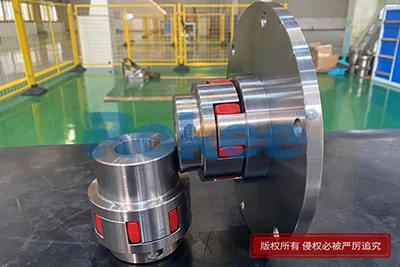
The core working principle of flexible membrane couplings is based on the elastic deformation characteristics of high-strength metal thin plates. A complete flexible membrane coupling is mainly composed of precision-machined shaft hubs, high-strength connecting bolts, and stacked metal diaphragm groups. In the assembly state, the diaphragm groups are alternately fixed to the driving shaft hub connected to the servo motor and the driven shaft hub connected to the load equipment through bolt sets, forming an integrated torque transmission structure. During the operation of the servo system, the rotational torque output by the servo motor is stably transmitted to the driven shaft through the rigid connection of bolts and the tensile and shear elastic deformation of the metal diaphragm. When relative displacement occurs between the motor shaft and the load shaft due to assembly errors, equipment vibration, or thermal deformation during operation, the thin metal diaphragm can produce tiny and controllable elastic deformation in multiple directions, including axial, radial, and angular directions. This flexible deformation effectively absorbs and compensates for various misalignment deviations between the two shafts, avoiding the rigid mechanical extrusion and friction loss that are inevitable in rigid coupling transmission processes.
The structural design of flexible membrane couplings endows them with inherent advantages that perfectly match the operating characteristics of servo motors. Servo motors are typical high-precision dynamic components, which require instant response to speed regulation, frequent forward and reverse rotation switching, and accurate positioning control in working conditions. Traditional transmission couplings often have structural backlash or elastic hysteresis, which will cause delay and deviation in torque transmission, directly affecting the positioning accuracy and repeatability of the servo system. Flexible membrane couplings eliminate structural gaps through integral diaphragm connection and precision bolt locking, realizing true zero-backlash torque transmission. In the frequent start-stop and forward-reverse switching cycles of servo motors, this zero-backlash feature ensures that the torque output of the motor can be synchronously transmitted to the load without transmission delay or angle deviation, maintaining the high positioning accuracy and motion consistency required by precision processing and automated positioning scenarios.
In terms of dynamic performance adaptation, flexible membrane couplings have extremely low rotational inertia, which is another key factor for their wide application in servo motor matching. The motion control of servo systems pursues high dynamic response, and the smaller the rotational inertia of the transmission accessory, the lower the extra load borne by the servo motor during acceleration and deceleration. The metal diaphragm of the coupling adopts a thin-plate stacked design, which greatly reduces the overall mass and rotational radius of the coupling. This lightweight structural design minimizes the rotational inertia of the coupling itself, enabling the servo motor to complete rapid acceleration, deceleration, and instantaneous speed adjustment with lower power consumption. For high-speed servo operating scenarios with frequent dynamic adjustments, this low-inertia characteristic effectively optimizes the dynamic response speed of the system, reduces the burden of motor torque output, and improves the overall operating efficiency of the equipment.
The multi-directional misalignment compensation capability of flexible membrane couplings solves the common mechanical loss problems in servo system operation. In the actual assembly and long-term operation of servo equipment, it is difficult to achieve absolute coaxiality between the motor shaft and the load shaft. Minor axial offset, radial deflection, and angular inclination are unavoidable objective phenomena. If the transmission coupling cannot effectively compensate for these deviations, long-term rigid tension and compression will be generated between the motor shaft and the load shaft, resulting in increased bearing wear of the servo motor, increased transmission noise, and even fatigue damage of the shaft body in severe cases. The flexible membrane structure can generate adaptive elastic deformation according to different types of misalignment: axial deformation absorbs the thermal expansion and contraction displacement of the shaft during long-term operation, radial deformation compensates for the installation offset of the upper and lower axes, and angular deformation adapts to the inclination deviation of the two shafts. This all-round compensation mechanism disperses and eliminates the additional mechanical stress generated by shaft misalignment, protects the servo motor and load equipment from abnormal impact and wear, and significantly extends the service life of the entire motion system.
Compared with elastomeric flexible couplings that rely on rubber or plastic buffer materials, all-metal flexible membrane couplings have outstanding environmental adaptability and structural stability. Servo equipment often needs to operate continuously in complex industrial environments, including high-temperature processing workshops, low-temperature storage and processing scenarios, and working environments with oil pollution and weak chemical corrosion. Traditional non-metallic elastic couplings are prone to aging, deformation, and hardness changes due to temperature changes and environmental erosion, which will lead to attenuation of transmission accuracy and failure of buffer compensation function after long-term operation. In contrast, the metal diaphragm of flexible membrane couplings is made of high-strength stainless steel alloy materials, which has excellent temperature resistance, oil resistance, and corrosion resistance. It will not produce aging, creep, or performance attenuation under extreme temperature changes and conventional industrial environmental conditions, maintaining stable elastic deformation performance and torque transmission accuracy for a long time. This stable environmental adaptability makes flexible membrane couplings more suitable for continuous and long-term industrial operation scenarios of servo motors, reducing the frequency of component replacement and equipment maintenance downtime.
The torsional stiffness characteristics of flexible membrane couplings also provide reliable guarantee for the stable operation of high-precision servo systems. In the process of high-speed rotation and variable load operation of servo motors, the transmission coupling needs to have sufficient torsional stiffness to avoid torsional deformation and torque loss, while retaining appropriate flexible deformation capacity to absorb vibration and misalignment. The diaphragm group of flexible membrane couplings can adjust the overall torsional stiffness by optimizing the number of stacked diaphragm plates and the diaphragm structural shape. The integral diaphragm structure provides higher torsional stiffness, ensuring that there is no torsional distortion during high-torque transmission and maintaining the consistency of torque output and motion displacement. The optimized gap design between stacked diaphragms ensures moderate flexibility, realizing the organic combination of high torsional stiffness and multi-directional flexibility. This unique performance balance enables the coupling to maintain accurate torque transmission under high-speed and high-load operating conditions, and effectively filter the tiny vibration and high-frequency impact generated during the operation of the servo motor, improving the smoothness of equipment operation.
In practical industrial application scenarios, the matching adaptability of flexible membrane couplings covers almost all mainstream servo motor application fields. In precision machine tool processing equipment, servo motors need to drive the feed shaft to complete micron-level precision positioning and continuous cutting motion. The zero-backlash and high-stability transmission performance of flexible membrane couplings ensures that the feed displacement of the machine tool is completely consistent with the motor control signal, avoiding processing errors caused by transmission delay and vibration, and improving the processing precision and surface quality of workpieces. In automated robotic arm and handling equipment, servo motors need to complete frequent multi-angle rotation and telescopic positioning actions. The low-inertia and fast response characteristics of the coupling ensure the flexibility and accuracy of the robotic arm’s movement, realizing smooth switching of multiple working postures. In packaging, printing, and textile automated production lines, servo systems operate continuously at high speed for a long time. The fatigue resistance and low maintenance characteristics of flexible membrane couplings adapt to the long-term continuous operation requirements of the production line, reducing equipment failure rates and improving production continuity.
In addition to performance advantages, the structural simplicity and assembly convenience of flexible membrane couplings also bring practical value to the installation and maintenance of servo systems. The overall structure of the coupling is compact, with no redundant transmission parts, no sliding friction pairs, and no need for lubrication and regular oil replacement maintenance. Compared with gear couplings and chain couplings that require regular lubrication and wear inspection, flexible membrane couplings realize maintenance-free operation in the whole service cycle under normal working conditions. For industrial servo equipment that pursues high operational efficiency and low maintenance cost, this feature greatly reduces daily equipment maintenance workload and operational cost. At the same time, the split shaft hub structure is convenient for on-site installation, disassembly, and replacement, which can quickly complete the assembly and debugging of the transmission system, improving the efficiency of equipment installation and after-sales maintenance.
With the continuous upgrading of modern industrial manufacturing toward high precision, high speed, and high intelligence, the performance requirements for servo motion control systems are constantly improving, and the matching transmission components are also facing higher technical iteration requirements. Flexible membrane couplings are constantly optimized in structural design and material performance to adapt to the development trend of servo technology. The optimized thin-plate diaphragm process further improves the flexibility and fatigue resistance of the coupling, meeting the more stringent dynamic cycle working conditions of new high-speed servo motors. The integrated precision processing technology reduces the assembly error of the coupling itself, further improving the transmission accuracy and operational stability of the system. In the future, with the continuous expansion of servo motor applications in intelligent manufacturing, precision medical equipment, aerospace precision control, and other fields, flexible membrane couplings will continue to rely on their excellent comprehensive performance to become an indispensable core component of high-performance servo transmission systems.
In summary, flexible membrane couplings have become the optimal matching component for servo motor transmission systems by virtue of their zero-backlash transmission, low rotational inertia, multi-directional misalignment compensation, high environmental stability, and maintenance-free advantages. They solve many pain points in the transmission process of traditional couplings, make up for the performance defects of elastic couplings in precision and high-speed working conditions, and provide stable, accurate, and efficient power transmission guarantee for the operation of servo systems. In the field of modern precision motion control, the technical value and application scope of flexible membrane couplings will continue to expand, providing solid basic component support for the high-quality development of intelligent manufacturing and precision motion control technology.


Links:
- Calibration Weight
- Digital Viscometer
- Carpas Industriales
- Exhibition Tent
- Industrial Cardan Shaft
- PU Sandwich Panel Machine
- PIR Sandwich Panel Line
- Sandwich Panel Machine
- Sandwich Panel Production Line
- PU Sandwich Panel Line
- Sandwich Panel Line
- Flexible Couplings Manufacturer In China
- Elastic Couplings Manufacturer In China