Flexible Coupling Empowers Insulation Board Production Line With Stable Transmission
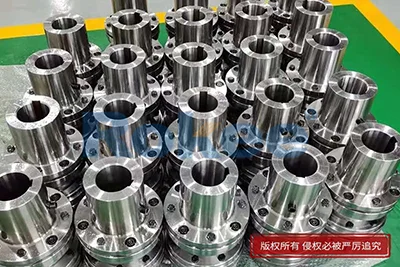
In the modern construction industry, energy conservation and environmental protection have become core drivers of technological innovation and industrial upgrading, and insulation boards have emerged as indispensable materials for improving building energy efficiency, thermal insulation, and sound insulation performance. These boards are widely applied in various construction projects, from residential buildings to commercial complexes, and their quality directly affects the safety, comfort, and energy-saving effect of buildings. The insulation board production line, as the core equipment for mass production of high-performance insulation materials, integrates multiple technological processes such as raw material processing, mixing, molding, curing, and cutting. The stable operation of each link in the production line is crucial to ensuring the consistency of insulation board quality, improving production efficiency, and reducing production costs. Among all the components that support the operation of the production line, flexible coupling plays an irreplaceable role as a key transmission part, which silently connects the power source with various functional equipment, realizing stable and efficient power transmission, and thus empowering the entire insulation board production line to operate smoothly.
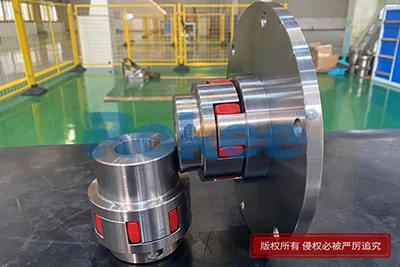
To understand the important role of flexible coupling in the insulation board production line, it is first necessary to clarify its basic working principle and structural characteristics. A flexible coupling is a mechanical device used to connect two rotating shafts at their ends for power transmission, and its core advantage lies in its ability to accommodate a certain degree of misalignment between the shafts while transmitting torque, which is very different from rigid couplings that require precise alignment. Unlike rigid couplings that can only transmit power and cannot compensate for misalignment, flexible coupling achieves flexibility through its unique structural design, which can be divided into several main types according to different structural forms, including mechanical flexible couplings, elastomeric couplings, and metallic membrane couplings. Each type has its own characteristics, but they all share the core functions of transmitting torque, compensating for misalignment, absorbing vibration, and reducing impact, which are perfectly adapted to the complex working environment of the insulation board production line.
The insulation board production line is a systematic equipment combination, and each functional unit undertakes specific production tasks and cooperates closely to form a continuous and efficient production process. From the raw material feeding system to the final cutting system, each link relies on stable power transmission to ensure the smooth progress of the process. The raw material feeding system is the starting link of the production line, responsible for transporting various raw materials such as cement, sand, fly ash, mineral wool, polystyrene foam, and polyurethane to the mixing system in a timely and accurate manner. The conveyors in the feeding system, whether screw conveyors or belt conveyors, need to be connected to the power source through couplings to achieve stable operation. In this link, the flexible coupling can effectively compensate for the installation misalignment between the motor and the conveyor, avoiding the occurrence of jamming or wear caused by rigid connection, ensuring that the raw materials are transported at a uniform speed, and laying a solid foundation for the accurate proportioning of raw materials.
The mixing system is the core link affecting the performance of insulation boards, which requires the mixing equipment to fully stir and mix various raw materials according to a specific ratio to ensure the uniformity and stability of the mixture. The mixing equipment is driven by a motor, and the connection between the motor and the mixing shaft is completed by a flexible coupling. During the mixing process, the mixing shaft will bear a certain load impact due to the resistance of the raw materials, and the flexible coupling can absorb the impact force through its own elastic deformation, reducing the impact on the motor and the mixing shaft. At the same time, due to the possible slight misalignment between the motor and the mixing shaft during long-term operation, the flexible coupling can compensate for this misalignment, ensuring that the torque is transmitted stably, so that the mixing equipment can operate at a constant speed, and the raw materials can be mixed evenly. If a rigid coupling is used in this link, the impact force generated during the mixing process will be directly transmitted to the motor and the mixing shaft, which will easily cause damage to the equipment and affect the mixing effect, resulting in uneven performance of the insulation boards.
After the raw materials are mixed, they enter the molding system, where the mixture is pressed into insulation boards of a specific shape and size through molding equipment. The molding process requires stable pressure and speed control, and the power transmission of the molding equipment also relies on flexible coupling. The molding equipment often needs to adjust the pressure and speed according to different product specifications, which will cause changes in the load on the transmission system. The flexible coupling can adapt to these load changes through its own torsional stiffness adjustment, ensuring that the power transmission is not affected by load fluctuations, and the molding equipment can operate stably. In addition, the molding equipment will generate a certain amount of vibration during operation, and the flexible coupling can absorb these vibrations, reducing the impact of vibration on the entire production line, avoiding the loosening of equipment parts caused by vibration, and extending the service life of the equipment.
The curing system is another key link in the insulation board production line. The molded insulation boards need to be cured at a specific temperature and time to ensure their strength and thermal insulation performance. The curing equipment usually includes a conveyor belt and a heating system, and the conveyor belt needs to run at a constant speed to ensure that each insulation board can be fully cured. The connection between the motor of the conveyor belt and the transmission shaft is also completed by a flexible coupling. In the curing environment, the temperature is usually relatively high, which will cause thermal expansion of the equipment parts, leading to misalignment between the motor and the transmission shaft. The flexible coupling can compensate for this thermal misalignment, ensuring that the conveyor belt runs stably at a constant speed, and the insulation boards can be evenly heated during the conveying process, thus ensuring the curing effect. If the coupling cannot compensate for the thermal misalignment, the conveyor belt will run unsteadily, resulting in uneven heating of the insulation boards, some of which may be under-cured or over-cured, affecting the product quality.
The cutting system is the final link of the insulation board production line, which cuts the cured insulation boards into finished products of the required size. The cutting equipment requires high precision and stability, and the power transmission of the cutting blade is particularly critical. The flexible coupling connects the motor and the cutting blade shaft, ensuring that the cutting blade rotates at a constant speed, and the cutting precision is improved. During the cutting process, the cutting blade will bear a certain resistance, which will generate impact on the transmission system. The flexible coupling can absorb this impact, reducing the wear of the cutting blade and the motor, and ensuring the stability of the cutting process. At the same time, due to the long-term operation of the cutting equipment, the installation position of the motor and the cutting blade shaft may shift slightly, and the flexible coupling can compensate for this shift, avoiding the occurrence of uneven cutting or blade damage.
In addition to playing a key role in each link of the production line, flexible coupling also brings significant economic and practical benefits to the insulation board production line. First of all, the use of flexible coupling can reduce the maintenance cost of the production line. Due to its ability to absorb vibration and compensate for misalignment, the wear of equipment parts is reduced, the failure rate of the production line is reduced, and the maintenance frequency and maintenance cost are significantly reduced. Compared with rigid couplings, flexible coupling has a longer service life, and its replacement cycle is longer, which further reduces the cost of equipment replacement. Secondly, the use of flexible coupling can improve the production efficiency of the production line. The stable power transmission ensures the smooth operation of each link of the production line, avoids the production interruption caused by equipment failure, and improves the continuous operation capacity of the production line. At the same time, the stable operation of the equipment also ensures the consistency of product quality, reduces the number of unqualified products, and improves the production efficiency and economic benefits.
However, to give full play to the role of flexible coupling in the insulation board production line, it is necessary to pay attention to the correct selection, installation and maintenance. In terms of selection, it is necessary to select the appropriate type and specification of flexible coupling according to the working conditions of each link of the production line, such as torque, speed, load characteristics, and environmental temperature. For example, in the mixing system with large load impact, an elastomeric coupling with good shock absorption performance should be selected; in the curing system with high temperature, a metallic membrane coupling with high temperature resistance should be selected. At the same time, it is necessary to ensure that the selected flexible coupling has sufficient torque capacity and misalignment compensation capacity to meet the working requirements of the equipment.
In terms of installation, it is necessary to strictly follow the installation specifications to avoid excessive misalignment between the shafts. Although flexible coupling can compensate for a certain degree of misalignment, excessive misalignment is the most common cause of coupling failure. Before installation, it is necessary to check the alignment of the two shafts and use laser alignment tools to ensure accurate alignment, which can effectively avoid premature failure of the coupling. At the same time, it is necessary to refer to the installation instructions, not to rush for speed, and ensure that each part is installed in place, such as the correct installation of keys on the shaft and the tightening of fixing screws and bolts according to the correct torque requirements. In addition, it is necessary to leave an appropriate gap between the active disc and the driven disc of the coupling to avoid friction between the two discs during operation.
In terms of maintenance, a regular maintenance plan should be formulated to ensure the normal operation of the flexible coupling. The maintenance content should include cleaning the coupling, checking the lubrication status, and supplementing or replacing lubricants in a timely manner. It should be noted that the coupling and the bearing may require different types of lubricants, so it is necessary to carefully check the instructions and select the appropriate lubricant. At the same time, it is necessary to check the wear of the elastic components of the coupling regularly, and replace the worn or distorted elastic components in a timely manner. In addition, it is necessary to check the alignment of the coupling regularly, and adjust it in time if there is any misalignment. For the maintenance team, it is necessary to strengthen training and practice to improve their understanding of the performance, installation and maintenance of flexible coupling, so as to better deal with various problems in the operation process.
With the continuous development of the insulation board industry, the production line is moving towards automation, intelligence and multi-functionality, and the requirements for the stability and efficiency of power transmission are getting higher and higher. Flexible coupling, as a key transmission component, will play a more important role in the future insulation board production line. With the continuous improvement of coupling technology, new types of flexible coupling with better performance, longer service life and more environmental protection will be developed and applied, which will further improve the stability and efficiency of the insulation board production line, promote the upgrading and development of the insulation board industry, and make greater contributions to the cause of energy conservation and environmental protection.
In conclusion, flexible coupling is an indispensable key component in the insulation board production line. It realizes stable power transmission through its unique structural advantages and functional characteristics, compensates for the misalignment between equipment shafts, absorbs vibration and impact, reduces equipment wear and failure rate, and ensures the smooth operation of each link of the production line. The correct selection, installation and maintenance of flexible coupling can not only improve the production efficiency and product quality of the insulation board production line, but also reduce the production cost and bring significant economic benefits to enterprises. In the context of the continuous development of the insulation board industry, flexible coupling will continue to empower the stable operation of the production line, promote the sustainable development of the industry, and provide strong support for the popularization and application of energy-saving and environmental-friendly insulation materials.
Rokee is a professional manufacturer of industrial couplings in china, designing and customizing a wide range of drive shaft coupling products for customers worldwide. Submit your coupling drawings or technical specifications, and we can customize coupling products for you.
Coupling Categories




Links:
- Calibration Weight
- Digital Viscometer
- Carpas Industriales
- Exhibition Tent
- Industrial Cardan Shaft
- PU Sandwich Panel Machine
- PIR Sandwich Panel Line
- Sandwich Panel Machine
- Sandwich Panel Production Line
- PU Sandwich Panel Line
- Sandwich Panel Line
- Flexible Couplings Manufacturer In China
- Elastic Couplings Manufacturer In China