PU Sandwich Panel Machine Transmission Upgrade With Preferred Elastic Coupling Solution

The production of PU sandwich panels involves a complex integration of multiple processes, including uncoiling of facing materials, roll forming, preheating, PU foaming, lamination, curing, and cutting. Each of these links relies heavily on a stable and precise transmission system to ensure the consistency of product quality and the efficiency of the entire production process. As the core component connecting the power source and the executing mechanism, the transmission system directly determines the operational stability, energy consumption, and service life of the PU sandwich panel machine. In recent years, with the increasing demand for high-quality PU sandwich panels in construction, refrigeration, and other fields, the requirements for the transmission system of the production equipment have become more stringent. Traditional transmission systems often face problems such as poor vibration absorption, inability to compensate for shaft misalignment, high wear of components, and unstable power transmission, which not only affect the surface quality and structural uniformity of the panels but also lead to frequent equipment failures, increased maintenance costs, and reduced production efficiency. Therefore, upgrading the transmission system of PU sandwich panel machines has become an urgent need for enterprises to improve production competitiveness and product quality. Among various transmission upgrade solutions, the adoption of elastic couplings as the core connecting component has gradually become the preferred choice due to their excellent performance in torque transmission, vibration damping, misalignment compensation, and equipment protection.
To understand the significance of transmission system upgrade for PU sandwich panel machines, it is first necessary to clarify the working characteristics of the equipment and the core challenges faced by the traditional transmission system. A modern PU sandwich panel machine is a continuous and automated production system that integrates mechanical, electrical, hydraulic, and chemical reaction technologies. It requires the coordinated operation of multiple subsystems, such as the uncoiling system, roll forming system, foaming system, double-belt lamination system, cutting system, and conveying system. Each subsystem is driven by a separate power source, and the power needs to be transmitted to various executing components accurately and stably to ensure that the entire production line operates in a synchronized manner. In the actual production process, the transmission system of PU sandwich panel machines is often in a harsh working environment: the equipment operates continuously for a long time, resulting in high load on the transmission components; the foaming and curing links will generate a certain amount of heat, which causes thermal expansion of the transmission shaft and changes the relative position of the shafts; the installation and layout of each subsystem are often not on the same axis due to the limitations of the production process and the overall structure of the equipment, resulting in angular deviations between the driving shaft and the driven shaft; in addition, the start-up of the motor, the sudden change of load, and the braking of the equipment will all generate impact loads, which will cause vibration of the transmission system and affect the stability of power transmission. Traditional transmission systems usually adopt rigid couplings, which have the advantages of simple structure and high torque transmission efficiency, but they lack the ability of vibration damping and misalignment compensation. When the shaft system has misalignment or vibration, rigid couplings will directly transmit the vibration and stress to the motor, reducer, and other core components, leading to accelerated wear of bearings, shafts, and other parts, increased equipment noise, and even serious failures such as shaft breakage and motor burnout. At the same time, the unstable power transmission of rigid couplings will lead to fluctuations in the speed of the roll forming, lamination, and cutting links, resulting in uneven thickness of the PU sandwich panel, poor bonding between the foam core and the facing materials, and uneven cutting size, which seriously affects the product quality and increases the scrap rate. With the continuous improvement of production automation and product quality requirements, the defects of traditional transmission systems have become increasingly prominent, and the upgrade of the transmission system has become an inevitable trend.
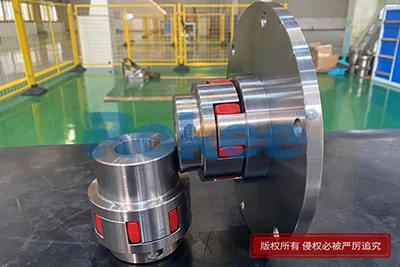
Against this background, elastic couplings have emerged as the preferred solution for the transmission upgrade of PU sandwich panel machines due to their unique structural advantages and comprehensive performance. Different from rigid couplings that realize forced synchronous connection, elastic couplings realize flexible transmission through built-in elastic elements, which have multiple functions such as torque transmission, misalignment compensation, vibration damping, and overload protection, making up for many limitations of rigid connections. Elastic couplings are usually integrally formed metal elastic bodies, which are cut from metal round bars. Common materials include aluminum alloy, stainless steel, and engineering plastics, which are suitable for various deviations and precise torque transmission. The elastic coupling contains an elastic compound of pre-pressed rubber, which can provide additional strength and extend its service life. The hub material is high-strength aluminum alloy, which is both lightweight and corrosion-resistant. The rubber component is mainly used for shock absorption, making power transmission smooth and quiet, thereby protecting the driving force and driving machines. Elastic couplings use parallel or spiral groove systems to adapt to various deviations and accurately transmit torque. Compared with traditional rigid couplings, elastic couplings have obvious advantages in the transmission system of PU sandwich panel machines.
Firstly, elastic couplings have excellent vibration damping and shock absorption performance, which can effectively improve the operational stability of the equipment. In the operation process of PU sandwich panel machines, the motor start-up, load mutation, and equipment operation will generate a lot of vibration and impact loads. If these vibrations and impacts are directly transmitted to the transmission system and core components, it will cause serious damage to the equipment. The elastic elements of the elastic coupling can absorb and dissipate the impact energy, alleviate the impact of the impact load on the shaft system and equipment, and at the same time weaken the vibration transmission, reduce the equipment operation noise, and create a more stable operation environment. In the foaming and lamination links of PU sandwich panels, stable power transmission is particularly important. Even slight fluctuations in transmission speed or torque will affect the density of the PU foam core and the bonding effect between the core and the facing materials. The vibration damping performance of elastic couplings can effectively avoid such fluctuations, ensure the stability of power transmission, and thus improve the product quality. In addition, the vibration reduction effect can also reduce the wear of bearings, gears, and other transmission components, extend the service life of the equipment, and reduce the maintenance cost.
Secondly, elastic couplings have a strong ability to compensate for shaft misalignment, which can reduce the requirements for installation accuracy and reduce the additional loss of the transmission system. In the installation process of PU sandwich panel machines, due to factors such as installation accuracy, foundation settlement, and equipment operation deformation, it is inevitable that there will be coaxiality deviation between the driving shaft and the driven shaft, and there may also be radial, angular, or axial displacement deviations. If the deviation cannot be effectively compensated, it will lead to increased vibration of the shaft system, accelerated wear of bearings, and even equipment failure. The elastic elements of the elastic coupling can absorb the stress caused by such deviations through their own deformation, effectively offset the impact of radial offset, angular tilt, and axial movement, reduce the requirements for installation accuracy, reduce the additional loss in the operation process of the equipment, and extend the service life of the shaft system, bearings, and other components. Different types of elastic couplings have different focuses on the ability to compensate for deviations, which can be flexibly selected according to the working conditions of the PU sandwich panel machine, adapting to the complex installation and operation environment of the equipment.
Thirdly, elastic couplings can realize precise torque transmission, which is suitable for the production needs of PU sandwich panels with different specifications. The production of PU sandwich panels often needs to adjust the speed and torque of each subsystem according to different product specifications and process requirements, which requires the transmission component to have good flexibility and adaptability. Elastic couplings can transmit torque stably and accurately, and have no obvious torque loss in the transmission process. At the same time, they can adapt to the changes of speed and torque in different working conditions, ensuring that each subsystem of the PU sandwich panel machine can obtain stable power support. For example, in the roll forming link, different forming speeds need to be adjusted according to the thickness and width of the panel; in the foaming link, stable torque needs to be maintained to ensure the uniformity of foaming. The elastic coupling can well meet these requirements, realize the stepless adjustment of speed and torque, and improve the flexibility and adaptability of the equipment.
In addition, elastic couplings have the advantages of simple installation, convenient maintenance, and long service life, which can reduce the operation and maintenance costs of enterprises. Elastic couplings do not require complex alignment procedures during installation, and can be installed quickly and simply. In the later maintenance process, only the wear of the elastic elements needs to be checked regularly and replaced in time, without complex disassembly and assembly operations. Compared with traditional rigid couplings, which need frequent maintenance and replacement due to serious wear, elastic couplings can greatly reduce the maintenance frequency and maintenance cost, improve the operation efficiency of the equipment, and reduce the downtime caused by maintenance.
However, it should be noted that not all elastic couplings are suitable for the transmission system of PU sandwich panel machines. The selection of elastic couplings needs to be based on the actual working conditions of the equipment, including the power of the motor, the transmission torque, the operating speed, the working temperature, the type of load, and the deviation of the shaft system. Only by selecting the appropriate elastic coupling can the best upgrade effect be achieved. In the selection process, the following principles should be followed: first, the torque transmission capacity of the elastic coupling should match the motor power and the actual transmission torque of the equipment. The selected elastic coupling should have sufficient torque-bearing capacity to ensure that it can transmit the required torque stably under the maximum load, and at the same time, a certain safety factor should be considered to cope with the impact load caused by start-up and load mutation. Generally, the safety factor is taken as 1.5 to 2.5. Second, the speed adaptation range of the elastic coupling should meet the operating speed requirements of the PU sandwich panel machine. Different types of elastic couplings have different maximum allowable speeds. The selected product should have a maximum speed higher than the maximum operating speed of the equipment to avoid resonance or damage caused by excessive speed. Third, the misalignment compensation capacity of the elastic coupling should match the actual deviation of the shaft system of the equipment. According to the radial, angular, and axial deviations of the equipment, the appropriate type of elastic coupling should be selected to ensure that the deviation can be effectively compensated, and the stable operation of the transmission system can be maintained. Fourth, the working temperature range of the elastic coupling should adapt to the working environment of the PU sandwich panel machine. The foaming and curing links of PU sandwich panels will generate a certain amount of heat, which will increase the operating temperature of the transmission system. The selected elastic coupling should have good high-temperature resistance, and the elastic elements should not be aging or damaged under high-temperature conditions. At the same time, if the equipment is in a humid or corrosive environment, the elastic coupling with corrosion resistance should be selected. Fifth, the structural size of the elastic coupling should match the installation space of the equipment. The installation space of the transmission system of PU sandwich panel machines is often limited. The selected elastic coupling should have a compact structure and a small volume, so as to avoid the problem of installation difficulty due to excessive size.
Common types of elastic couplings suitable for PU sandwich panel machines include plum-blossom elastic couplings, elastic sleeve pin couplings, elastic pin couplings, and diaphragm couplings. Plum-blossom elastic couplings are composed of two half-couplings and a plum-blossom elastic body. The elastic body is mostly made of polyurethane or nylon. It has a good vibration damping effect and is suitable for small and medium-power equipment with frequent start-up, such as stepping motors and servo systems in the transmission system of PU sandwich panel machines. However, it is not suitable for heavy-load working conditions. Elastic sleeve pin couplings transmit torque through oil-resistant rubber elastic sleeves. They have a simple structure, convenient installation, and can compensate for a certain degree of shaft misalignment. They are low in cost and are often used for small and medium-power connections between motors and reducers in PU sandwich panel machines. However, the elastic sleeve is easy to wear and needs to be replaced regularly. Elastic pin couplings use nylon pins as elastic elements, which are oil-resistant and corrosion-resistant, and their compensation capacity is better than that of elastic sleeve types. They are suitable for occasions with frequent positive and negative rotation, such as conveyors in PU sandwich panel production lines. The type integrated with a brake wheel can be used for lifting mechanisms. Diaphragm couplings compensate for deviations through the elastic deformation of the metal diaphragm group. They do not need lubrication, have excellent high and low temperature resistance, and their working temperature range is -50℃ to 200℃. They are suitable for high-precision transmission scenarios, such as the cutting system of PU sandwich panel machines, which require high transmission accuracy. Enterprises can select the appropriate type of elastic coupling according to their own equipment models, production processes, and working conditions to ensure the effect of transmission system upgrade.
The transmission upgrade of PU sandwich panel machines with elastic couplings as the core solution is a systematic project, which needs to go through the links of pre-upgrade inspection, coupling selection, installation and debugging, and post-upgrade maintenance to ensure the smooth progress of the upgrade and the stable operation of the equipment. In the pre-upgrade inspection stage, it is necessary to comprehensively inspect the original transmission system of the equipment, including the wear of the coupling, the deviation of the shaft system, the operation status of the motor and reducer, the vibration of the transmission system, and other indicators. Through the inspection, the existing problems of the original transmission system are identified, the causes of the problems are analyzed, and the key points and requirements of the upgrade are determined. At the same time, the actual working parameters of the equipment, such as motor power, transmission torque, operating speed, and working temperature, are measured to provide a basis for the selection of elastic couplings. In the coupling selection stage, according to the pre-upgrade inspection results and the actual working parameters of the equipment, the appropriate type, model, and specification of the elastic coupling are selected in accordance with the selection principles. It is necessary to ensure that the selected coupling is compatible with the original motor, reducer, and other components, and can meet the requirements of torque transmission, vibration damping, and misalignment compensation. In the installation and debugging stage, first, the original rigid coupling is disassembled, and the shaft ends of the motor and reducer are cleaned to remove rust, oil, and other impurities to ensure the smoothness and cleanliness of the shaft surface. Then, the elastic coupling is installed according to the installation specifications, and the coaxiality of the driving shaft and the driven shaft is adjusted to ensure that the deviation is within the allowable range of the elastic coupling. After the installation is completed, the no-load test and load test of the equipment are carried out. In the no-load test, the operation status of the equipment is observed, including the vibration, noise, and temperature rise of the transmission system, to check whether the installation of the elastic coupling is correct. In the load test, the equipment is operated under actual production conditions, and the performance indicators of the transmission system, such as torque transmission stability, vibration damping effect, and speed adjustment flexibility, are tested to ensure that the upgraded transmission system can meet the production needs. In the post-upgrade maintenance stage, a regular maintenance system is established to regularly inspect the wear of the elastic elements of the coupling, the tightness of the connection bolts, and the coaxiality of the shaft system. The worn elastic elements are replaced in time to avoid equipment failure caused by the damage of the elastic coupling. At the same time, the operation status of the transmission system is recorded, and the maintenance experience is summarized to continuously optimize the maintenance plan and extend the service life of the transmission system.
After the transmission system of the PU sandwich panel machine is upgraded with the preferred elastic coupling solution, the performance of the equipment will be significantly improved, bringing obvious economic and social benefits to the enterprise. In terms of product quality, the stable power transmission and excellent vibration damping performance of the elastic coupling can effectively avoid the fluctuations in the speed and torque of each production link, ensure the uniform thickness of the PU sandwich panel, the firm bonding between the foam core and the facing materials, and the accurate cutting size, thereby improving the product qualification rate and reducing the scrap rate. For example, in the lamination link, the stable transmission of the elastic coupling can ensure that the pressure between the two belts is uniform, avoiding the problems of uneven bonding and bubble generation, making the surface finish of the panel reach a high standard. In terms of equipment operation, the vibration and noise of the equipment are significantly reduced, the wear of core components such as motors, reducers, and bearings is reduced, the service life of the equipment is extended, and the frequency of equipment failures and maintenance times are reduced. The downtime caused by equipment maintenance is shortened, and the production efficiency is improved. In terms of energy consumption, the elastic coupling has high transmission efficiency, which can reduce the energy loss in the power transmission process, and at the same time, the stable operation of the equipment can avoid the energy waste caused by equipment failure and speed fluctuation, thereby reducing the energy consumption of the enterprise and reducing the production cost. In addition, the upgrade of the transmission system can also improve the automation level and operation stability of the equipment, reduce the labor intensity of operators, and create a safer and more comfortable working environment.
With the continuous development of industrial automation and the continuous improvement of product quality requirements, the transmission system of PU sandwich panel machines will face higher challenges. The elastic coupling, as a key component of the transmission system, will play an increasingly important role in the upgrade and transformation of the transmission system. In the future, with the continuous optimization of the material and structure of elastic couplings, their performance will be further improved, and the application scenarios will be more extensive. For example, the development of high-temperature resistant, corrosion-resistant, and high-load elastic couplings will better adapt to the harsh working environment of PU sandwich panel machines; the integration of intelligent monitoring functions into elastic couplings can realize real-time monitoring of the operation status of the coupling, predict potential faults in advance, and further improve the reliability and maintainability of the transmission system. Enterprises engaged in PU sandwich panel production should pay attention to the importance of transmission system upgrade, actively adopt advanced elastic coupling solutions, combine their own actual production conditions, carry out scientific and reasonable upgrade transformation, and continuously improve production efficiency, product quality, and market competitiveness.
In conclusion, the transmission system is the core part of the PU sandwich panel machine, and its performance directly affects the production efficiency and product quality of the equipment. The traditional transmission system based on rigid couplings has been difficult to meet the current high-quality and high-efficiency production requirements. The elastic coupling has become the preferred solution for the transmission upgrade of PU sandwich panel machines due to its excellent vibration damping, misalignment compensation, precise torque transmission, simple installation, and convenient maintenance. By selecting the appropriate elastic coupling, carrying out standardized installation and debugging, and establishing a perfect post-maintenance system, enterprises can effectively improve the operational stability of the equipment, extend the service life of the equipment, reduce production costs, and improve product quality. The transmission upgrade with elastic coupling as the core is not only a necessary measure for enterprises to adapt to market changes but also an important way to promote the sustainable development of the PU sandwich panel industry. In the future, with the continuous progress of technology, the elastic coupling will be more optimized and perfect, and will play a more important role in the upgrading and development of the PU sandwich panel machine transmission system, helping the industry to move towards a more efficient, energy-saving, and high-quality direction.




Links:
- Calibration Weight
- Digital Viscometer
- Carpas Industriales
- Exhibition Tent
- Industrial Cardan Shaft
- PU Sandwich Panel Machine
- PIR Sandwich Panel Line
- Sandwich Panel Machine
- Sandwich Panel Production Line
- PU Sandwich Panel Line
- Sandwich Panel Line
- Flexible Couplings Manufacturer In China
- Elastic Couplings Manufacturer In China