Flexible Coupling Escorts The Stable And Efficient Operation Of Insulation Panel Production Line
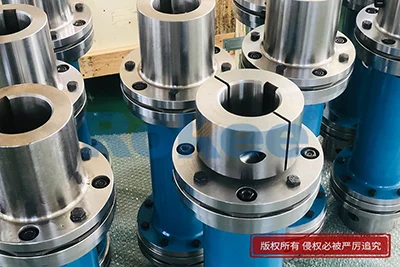
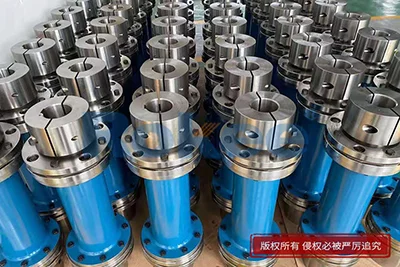
In the modern manufacturing industry, insulation panels have become indispensable materials in construction, refrigeration, industrial and automotive fields due to their excellent thermal insulation, sound absorption, fire resistance and waterproof properties. The insulation panel production line is a complex integrated system that combines multiple processes, from raw material handling and mixing to foaming, lamination, molding and finished product cutting. Each link in this system is closely connected, and the stable operation of each component directly determines the production efficiency, product quality and overall operational safety of the entire line. Among the numerous mechanical components that constitute the production line, flexible coupling, as a key connecting part in the power transmission system, plays an irreplaceable role in escorting the stable and efficient operation of the insulation panel production line. It is like a "flexible bridge" between the driving shaft and the driven shaft of various equipment, which not only realizes the stable transmission of power but also solves the problems of shaft misalignment, vibration and impact that are prone to occur in the operation process, ensuring that each process of the production line can run smoothly and continuously.
To understand the important role of flexible coupling in the insulation panel production line, it is first necessary to clarify its basic working principle and structural characteristics. Unlike rigid couplings that require perfect alignment of two shafts and have no tolerance for positional errors, flexible couplings are designed to connect two shafts (driving shaft and driven shaft) in different mechanisms, enabling them to rotate together to transmit torque, while having the ability to compensate for relative displacements between the shafts and absorb vibrations and impacts. A typical flexible coupling is composed of two half-couplings connected to the driving shaft and the driven shaft respectively, and an intermediate elastic element. The elastic element, which can be made of rubber, polyurethane, engineering plastics or metal materials such as bellows, is the core component that gives the coupling flexibility. When the driving shaft rotates, it drives one half-coupling to rotate, and the torque is transmitted to the other half-coupling through the elastic element, thereby driving the driven shaft to rotate synchronously. During this process, the elastic element can generate appropriate elastic deformation to compensate for axial, radial and angular deviations between the two shafts, which are often caused by manufacturing errors, installation errors, shaft deformation under load, base deformation, bearing wear, temperature changes and other factors. At the same time, the elastic element can also absorb and buffer the vibrations and impacts generated during the power transmission process, converting the impact energy into elastic potential energy and releasing it slowly, thereby reducing the impact on the entire transmission system and related equipment.
The insulation panel production line involves a variety of equipment that requires power transmission, such as raw material conveying pumps, mixing machines, foaming machines, lamination rollers, cutting machines and conveyor belts. Each of these devices relies on the connection and power transmission of flexible couplings to ensure normal operation. Taking the raw material handling stage as an example, the insulation panel production requires a variety of raw materials, including polymers, inorganic fibers, foaming agents, catalysts and flame retardants. These raw materials need to be transported to the mixing module through screw conveyors or pipeline systems. The drive motor of the conveyor is connected to the conveyor shaft through a flexible coupling. During the operation process, due to the long length of the conveyor and the uneven distribution of raw materials, the conveyor shaft is prone to slight radial deviation or angular deviation. If a rigid coupling is used, the deviation will be directly transmitted to the motor shaft, causing increased motor vibration, excessive wear of bearings and even motor burnout. However, the flexible coupling can effectively compensate for these deviations through the elastic deformation of its intermediate elastic element, ensuring that the power is stably transmitted from the motor to the conveyor shaft, making the conveyor run smoothly, avoiding material leakage or blockage caused by unstable operation, and laying a solid foundation for the subsequent mixing and foaming processes.
The mixing and foaming stage is the core part of the insulation panel production line, and the stable operation of the mixing machine and foaming machine directly affects the performance of the insulation panel. The mixing machine needs to fully blend various raw materials at a certain speed to ensure the uniformity of the mixture, while the foaming machine needs to control the foaming reaction stably through precise speed control. Both the mixing machine and the foaming machine are driven by motors, and the connection between the motor and the equipment main shaft is realized through flexible couplings. During the mixing process, the raw materials will generate certain resistance to the mixing blade, which will cause intermittent impact loads on the motor and the main shaft. The flexible coupling can absorb these impact loads through the elastic element, reducing the vibration of the motor and the main shaft, avoiding the damage of key components such as the mixing blade and the motor bearing due to excessive impact, and ensuring the uniformity and stability of the mixing process. For the foaming machine, the precise control of the rotation speed is crucial. The flexible coupling has the characteristics of high transmission accuracy while compensating for deviations, which can ensure that the motor's rotation speed is stably transmitted to the foaming chamber, making the foaming reaction proceed under the optimal speed condition, avoiding uneven foaming caused by speed fluctuations, and ensuring that the insulation panel has uniform density and excellent thermal insulation performance.
In the lamination and molding stage of the insulation panel production line, the lamination roller and the molding machine need to work in coordination to press the foamed core material and the surface layer material into insulation panels of a certain thickness and shape. The lamination roller is driven by a motor through a transmission system, and flexible couplings are used at the connection points of the transmission system. During the lamination process, the lamination roller needs to maintain a stable pressure and rotation speed to ensure that the surface of the insulation panel is flat and the thickness is uniform. Due to the long-term operation of the lamination roller, the wear of the bearing and the deformation of the roller shaft will inevitably occur, leading to slight misalignment between the motor shaft and the roller shaft. The flexible coupling can automatically compensate for these misalignments, ensuring that the lamination roller maintains a stable rotation state, avoiding the occurrence of uneven lamination, edge warping and other quality problems of the insulation panel. At the same time, the vibration generated during the operation of the lamination roller can be absorbed by the flexible coupling, reducing the noise of the equipment and improving the working environment of the production workshop.
The cutting stage is the final link of the insulation panel production line. The cutting machine needs to cut the formed insulation panel into specified sizes according to the production requirements. The cutting machine's cutting blade is driven by a high-speed motor, and the connection between the motor and the cutting blade shaft also relies on a flexible coupling. High-speed rotation is required during the cutting process, and the cutting blade will bear certain resistance when contacting the insulation panel, which will generate vibrations and impacts on the motor and the blade shaft. The flexible coupling can effectively absorb these vibrations and impacts, ensuring that the cutting blade rotates stably at high speed, avoiding the occurrence of cutting deviation, burrs and other quality problems, and improving the cutting accuracy and efficiency. In addition, the flexible coupling can also protect the motor and the cutting blade from damage when the cutting machine is overloaded, such as when the insulation panel is too thick or there are hard impurities in the panel, by virtue of the elastic deformation of the elastic element, which plays a role of overload protection.
The stable and efficient operation of the insulation panel production line not only depends on the performance of the equipment but also on the reliability and durability of the key components. Flexible coupling has the advantages of simple structure, easy installation and maintenance, strong adaptability and long service life, which can effectively reduce the maintenance cost and downtime of the production line. Compared with rigid couplings, flexible couplings do not require extremely high installation accuracy, which reduces the difficulty of on-site installation and shortens the installation cycle. At the same time, the elastic element of the flexible coupling can be replaced separately when it is worn, without replacing the entire coupling, which greatly reduces the maintenance cost. In the long-term operation of the insulation panel production line, the flexible coupling can maintain stable performance under various harsh working conditions, such as high temperature, high humidity, dust and other environments, ensuring the continuous operation of the production line and improving the overall production efficiency.
It is worth noting that the selection of flexible coupling in the insulation panel production line also needs to be based on the actual working conditions of the equipment, such as the transmission torque, rotation speed, working temperature, deviation range and other factors. Different types of flexible couplings have different performance characteristics. For example, elastic pin couplings have good deviation compensation ability and shock absorption performance, which are suitable for medium torque and deviation compensation occasions; diaphragm couplings use thin films to transmit torque, which can compensate for small shaft deviations and are suitable for high-precision and high-speed applications; rubber couplings use the flexibility of rubber to absorb impact and vibration, which are widely used in shock absorption and noise control occasions. In the insulation panel production line, the appropriate type of flexible coupling should be selected according to the specific needs of different equipment to ensure that it can play the best role in power transmission and protection.
In addition to the selection of the type, the regular inspection and maintenance of the flexible coupling are also crucial to ensure the stable operation of the insulation panel production line. During the operation of the production line, the staff should regularly check the flexible coupling for signs of wear, fatigue or damage, such as cracks on the half-coupling, aging or damage of the elastic element, and looseness of the connecting bolts. For the flexible coupling with lubrication requirements, the lubricant should be checked and replaced regularly to ensure the smooth operation of the coupling. If any abnormal situation is found, it should be handled in a timely manner, such as replacing the worn elastic element or tightening the connecting bolts, to avoid the failure of the flexible coupling leading to the shutdown of the production line. Regular maintenance can not only extend the service life of the flexible coupling but also reduce the failure rate of the production line, ensuring the stable and efficient operation of the entire insulation panel production line.
With the continuous development of the insulation panel industry, the production line is developing towards automation, intelligence and high efficiency, which puts forward higher requirements for the performance of key components such as flexible coupling. In the future, flexible couplings will develop towards higher performance, higher precision and longer service life. For example, the development of new elastic materials will further improve the shock absorption and deviation compensation ability of flexible couplings; the application of intelligent monitoring technology will enable real-time monitoring of the operating status of flexible couplings, timely find potential faults and carry out early warning, which will further improve the reliability and stability of the insulation panel production line. At the same time, with the continuous improvement of environmental protection requirements, the development of environmentally friendly flexible couplings that are energy-saving, low-noise and pollution-free will also become an important trend, which will contribute to the green and sustainable development of the insulation panel production industry.
In conclusion, flexible coupling, as a key component in the power transmission system of the insulation panel production line, plays an important role in ensuring the stable, efficient and safe operation of the production line. It solves the problems of shaft misalignment, vibration and impact in the operation process through its unique structural characteristics and performance advantages, ensures the smooth operation of each process of the production line, improves the production efficiency and product quality, and reduces the maintenance cost and downtime of the production line. In the development process of the insulation panel industry, flexible coupling will continue to play an irreplaceable role, escorting the high-quality development of the insulation panel production line. Whether it is the raw material handling, mixing and foaming, lamination and molding, or the final cutting stage, flexible coupling is silently contributing to the stable and efficient operation of the production line, becoming an indispensable "silent hero" in the insulation panel manufacturing industry.
Rokee is a professional manufacturer of industrial couplings in china, designing and customizing a wide range of drive shaft coupling products for customers worldwide. Submit your coupling drawings or technical specifications, and we can customize coupling products for you.
Coupling Categories




Links:
- Calibration Weight
- Digital Viscometer
- Carpas Industriales
- Exhibition Tent
- Industrial Cardan Shaft
- PU Sandwich Panel Machine
- PIR Sandwich Panel Line
- Sandwich Panel Machine
- Sandwich Panel Production Line
- PU Sandwich Panel Line
- Sandwich Panel Line
- Flexible Couplings Manufacturer In China
- Elastic Couplings Manufacturer In China