Flexible Coupling Is The First Choice to Transmission Solution For Polyurethane Insulation Board Production Line

In the modern industrial production system, the polyurethane insulation board production line is widely recognized as a key equipment in the construction and thermal insulation industry, thanks to its efficient continuous production capacity and stable product quality. The core of ensuring the smooth operation of this production line lies in the transmission system, which acts as the "nerve center" connecting various functional components, from raw material transportation and mixing to foaming, shaping, trimming and cutting. Every link requires precise power transmission to maintain consistent speed, stable torque and coordinated operation. Among numerous transmission solutions, flexible coupling stands out and becomes the first choice for polyurethane insulation board production lines, relying on its unique structural advantages and excellent performance, which effectively solves the pain points of traditional transmission components in practical application and provides a reliable guarantee for the high-efficiency and stable operation of the production line.
To understand why flexible coupling is irreplaceable in the polyurethane insulation board production line, it is necessary to first clarify the working characteristics and transmission requirements of the production line. The polyurethane insulation board production process involves multiple links with different working conditions, and each link has strict requirements on the transmission system. Generally, the production line starts with the unwinding of surface materials, such as aluminum plates, color steel plates or non-woven fabrics, which need to be transported at a uniform speed to ensure the flatness and consistency of the surface layer. Then, the polyurethane resin, curing agent, foaming agent and other raw materials are transported to the high-speed mixing head by metering pumps in a specific proportion, and after uniform mixing, they are continuously coated on the upper and lower base materials. Subsequently, the surface material with the foaming mixture enters the double belt machine, where it is foamed and solidified between the heated upper and lower track plates. After solidification and forming, the insulation board passes through the edge trimming device to obtain accurate width dimensions, and finally is cut into finished products of set length by a fixed-length tracking saw. Each of these links is connected by a transmission system, which requires the transmission component to have good adaptability, stability and reliability to cope with different load changes and working environment challenges.
The polyurethane insulation board production line has obvious particularities in the transmission process, which puts forward special requirements for the transmission components. On the one hand, the production line is mostly a continuous operation mode, which requires the transmission system to work continuously for a long time without failure, and the transmission efficiency must be maintained at a high level to avoid affecting the production progress. On the other hand, there are inevitable misalignments between the shafts of different equipment in the production line, such as angular misalignment, parallel misalignment and axial displacement, which may be caused by installation errors, thermal expansion during operation, mechanical vibration or long-term wear. If the transmission component cannot effectively compensate for these misalignments, it will lead to increased wear of the shaft, bearing and other components, generate abnormal noise and vibration, and even cause equipment failure in severe cases. In addition, the mixing and foaming links of the production line will produce a certain degree of impact load, which requires the transmission component to have good shock absorption performance to buffer the impact and protect the motor and other key equipment. At the same time, the production environment may have certain dust and temperature changes, which requires the transmission component to have strong environmental adaptability and wear resistance.
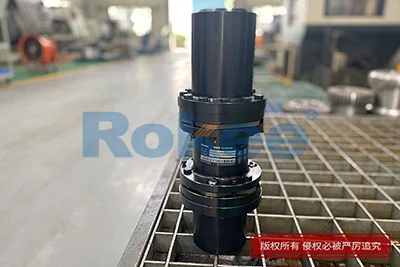
Against this background, flexible coupling has become the most suitable transmission solution for polyurethane insulation board production lines due to its unique structural design and comprehensive performance advantages. Different from rigid coupling, which can only transmit power between two shafts with strict alignment, flexible coupling can connect two shafts and transmit torque while allowing a certain degree of relative displacement and misalignment between the shafts, which is exactly the key to solving the misalignment problem in the production line. The flexibility of flexible coupling comes from its internal flexible components, which can be made of metal or non-metallic materials such as rubber, polyurethane and metal bellows. These flexible components can produce elastic deformation under the action of torque, so as to realize the transmission of torque, and at the same time compensate for the misalignment between the shafts, reduce the additional load caused by misalignment, and protect the shaft and bearing from damage.
One of the core advantages of flexible coupling in the polyurethane insulation board production line is its excellent misalignment compensation capacity. In the actual operation of the production line, due to factors such as installation accuracy, thermal expansion of equipment during operation, and vibration generated by mechanical operation, it is difficult to maintain absolute alignment between the motor shaft, reducer shaft, conveyor shaft and other transmission shafts. If rigid coupling is used, the misalignment between the shafts will cause strong stress on the coupling, shaft and bearing, leading to rapid wear of components, increased energy consumption, and even shaft breakage or bearing burnout in severe cases. Flexible coupling, however, can effectively absorb the misalignment between the shafts through the elastic deformation of its internal flexible components, whether it is angular misalignment, parallel misalignment or axial displacement, it can be well compensated. For example, mechanical flexible couplings obtain flexibility through the rolling or sliding of loose-fitting parts, which can accommodate a considerable degree of angular misalignment, while elastomeric couplings rely on the elastic deformation of non-metallic materials to compensate for various misalignments. This misalignment compensation capacity ensures the smooth operation of the transmission system, reduces the wear of components, and extends the service life of the entire production line equipment.
In addition to excellent misalignment compensation, flexible coupling also has outstanding shock absorption and vibration reduction performance, which is particularly important for the polyurethane insulation board production line. In the production process, the metering pump transporting raw materials, the high-speed mixing head, and the double belt machine for foaming and solidification will all generate certain vibration and impact load during operation. These vibrations and impacts, if not effectively buffered, will be transmitted to the motor, reducer and other key equipment along the transmission shaft, affecting the stability of the equipment and the quality of the products. The flexible components in the flexible coupling can absorb and buffer these impact loads like a buffer, reduce the amplitude of vibration, and reduce the noise generated during operation. For example, beam coupling, also known as helical coupling, can reduce vibration and reaction loads through its helical flexible beam structure, thereby reducing the overall wear of machinery and prolonging the service life of equipment. This shock absorption and vibration reduction performance not only protects the key equipment of the production line, but also ensures the stability of the production process, making the foaming and shaping of polyurethane insulation boards more uniform, and improving the quality of finished products.
High transmission efficiency and stable torque transmission are another important reason why flexible coupling becomes the first choice for polyurethane insulation board production lines. The production of polyurethane insulation boards requires each link to maintain a consistent speed and stable torque to ensure the continuity and consistency of the production process. For example, the speed of the conveyor belt must be consistent with the foaming and solidification speed, otherwise it will lead to uneven thickness of the insulation board or incomplete foaming. The flexible coupling has high torsional rigidity while maintaining flexibility, which can ensure the efficient transmission of torque, reduce energy loss during the transmission process, and maintain the stability of speed and torque. Compared with other transmission components, flexible coupling has small transmission clearance, no obvious backlash, and can realize precise power transmission, which is crucial for the links that require high precision in the production line, such as fixed-length cutting. For example, gear coupling, a type of mechanical flexible coupling, can transmit the highest amount of torque in the smallest diameter, ensuring the stable operation of high-load links such as the double belt machine.
The adaptability and durability of flexible coupling also make it suitable for the working environment of polyurethane insulation board production lines. The production line may generate a certain amount of dust and volatile gas during the foaming process, and the temperature of some equipment surfaces will rise during operation. Flexible coupling made of high-quality materials has good wear resistance, corrosion resistance and high temperature resistance, and can maintain stable performance in such an environment. For example, flexible coupling made of stainless steel or high-performance polyurethane has excellent wear resistance and chemical resistance, and can resist the erosion of dust and mild chemicals, ensuring long-term stable operation. At the same time, flexible coupling has a simple structure, convenient installation and maintenance, and does not require complex maintenance procedures during use, which can reduce the maintenance cost and downtime of the production line. Most flexible couplings have a service life of 3 to 5 years, and some can even last for decades under proper use and maintenance, which greatly reduces the frequency of replacement of transmission components and ensures the continuity of production.
In practical application, the selection of flexible coupling for polyurethane insulation board production lines needs to be based on the specific working conditions of different links. For example, in the link of raw material transportation and mixing, which requires high torque and certain misalignment compensation, mechanical flexible couplings such as gear coupling can be selected, which have high torque density and can adapt to various misalignments. In the link of conveyor belt and fixed-length cutting, which requires high transmission precision and low vibration, beam coupling or metallic membrane coupling can be selected, which have small backlash and high transmission precision. In the links with high environmental temperature and certain corrosion, flexible coupling made of high-temperature resistant and corrosion-resistant materials can be selected to ensure the stable operation of the coupling. In addition, factors such as torsional stiffness, torque capacity, service life and attachment system should also be considered when selecting flexible coupling, so as to ensure that the selected coupling can fully adapt to the working requirements of the production line.
Compared with other traditional transmission solutions, flexible coupling has obvious advantages in the polyurethane insulation board production line. For example, rigid coupling, although simple in structure and low in cost, cannot compensate for shaft misalignment, and is prone to cause equipment wear and failure in the production line with inevitable misalignment, which is not suitable for long-term continuous operation. Universal joint, another common transmission component, has certain misalignment compensation capacity, but its transmission efficiency is low, and it is easy to generate vibration and noise at high speed, which cannot meet the requirements of high efficiency and stability of the production line. Flexible coupling, however, combines the advantages of high transmission efficiency, good misalignment compensation, strong shock absorption and long service life, which can effectively solve the problems existing in traditional transmission components and meet the special transmission requirements of the polyurethane insulation board production line.
With the continuous development of the polyurethane insulation board industry, the production line is developing towards higher automation, higher efficiency and higher precision, which puts forward higher requirements for the transmission system. Flexible coupling, as a key transmission component, is also constantly developing and improving with the progress of technology. The application of new materials, such as high-performance composite materials and engineering plastics, has further improved the performance of flexible coupling, making it have better wear resistance, corrosion resistance and fatigue resistance. At the same time, with the application of modern computer-aided design (CAD) and finite element analysis (FEA) technology, the design of flexible coupling is more precise, which can better meet the specific working requirements of different production lines. The development of intelligent technology also brings new development opportunities for flexible coupling. By integrating sensors and intelligent control systems, flexible coupling can realize real-time monitoring of its own working state, predict potential faults, and further improve the safety and reliability of the transmission system.
In the actual operation and maintenance of the polyurethane insulation board production line, the correct use and maintenance of flexible coupling is also crucial to ensure its performance and service life. During installation, the alignment of the coupling should be checked to minimize the initial misalignment, so as to reduce the additional load on the coupling. Regular inspection of the coupling's flexible components, such as whether there is wear, aging or damage, and timely replacement of damaged components, can avoid equipment failure caused by coupling damage. For flexible couplings that need lubrication, such as gear coupling, regular lubrication should be carried out according to the application requirements to ensure the smooth operation of the coupling and reduce wear. In addition, the working environment of the coupling should be kept clean, and excessive dust and debris should be avoided from entering the coupling, so as to prevent the jamming of the coupling and affect its performance.
In conclusion, the polyurethane insulation board production line, as a key equipment in the thermal insulation industry, has strict requirements on the transmission system, which requires the transmission components to have good misalignment compensation, shock absorption, high transmission efficiency and durability. Flexible coupling, with its unique structural advantages and comprehensive performance, perfectly meets these requirements, and becomes the first choice for the transmission solution of the polyurethane insulation board production line. It not only ensures the smooth, efficient and stable operation of the production line, reduces the equipment failure rate and maintenance cost, but also improves the quality of finished products, providing strong support for the sustainable development of the polyurethane insulation board industry. With the continuous progress of technology, flexible coupling will be further optimized and improved, and its application in the polyurethane insulation board production line will be more extensive and in-depth, bringing more benefits to the production enterprises.
Rokee is a professional manufacturer of industrial couplings in china, designing and customizing a wide range of drive shaft coupling products for customers worldwide. Submit your coupling drawings or technical specifications, and we can customize coupling products for you.
Coupling Categories




Links:
- Calibration Weight
- Digital Viscometer
- Carpas Industriales
- Exhibition Tent
- Industrial Cardan Shaft
- PU Sandwich Panel Machine
- PIR Sandwich Panel Line
- Sandwich Panel Machine
- Sandwich Panel Production Line
- PU Sandwich Panel Line
- Sandwich Panel Line
- Flexible Couplings Manufacturer In China
- Elastic Couplings Manufacturer In China