Flexible Coupling Escorts The Upgrading And Transformation Of PUR Sandwich Panel Production Line

The continuous evolution of the construction and insulation material industries has raised increasingly stringent requirements for the production efficiency, operational stability and product precision of PUR sandwich panel production lines. As composite building materials with excellent thermal insulation, sound insulation and structural strength, PUR sandwich panels are widely applied in modern industrial buildings, cold chain storage facilities and clean engineering spaces. Against the backdrop of industrial intelligent upgrading and production line optimization and transformation, the overall mechanical performance of production equipment has become a core factor determining product quality and manufacturing capacity. Flexible coupling, as an indispensable fundamental transmission component in mechanical systems, undertakes the key tasks of power transmission, vibration damping and displacement compensation in the operation of PUR sandwich panel production lines. Its structural characteristics and functional advantages effectively solve multiple mechanical pain points exposed in the traditional production line operation process, and steadily support the systematic upgrading and intelligent transformation of the entire production line. With the gradual elimination of backward production modes and the popularization of high-efficiency and low-consumption production concepts, the application value of flexible coupling in the iterative optimization of PUR sandwich panel production lines has become increasingly prominent, becoming an important guarantee for improving production stability, reducing operation loss and extending equipment service life.
The processing flow of PUR sandwich panels involves multiple continuous and interconnected mechanical links, including raw material feeding, surface layer rolling, polyurethane foaming, composite pressing, constant-temperature curing, fixed-length cutting and finished product conveying. Each processing link relies on coordinated operation of transmission equipment to realize continuous material transportation and precise processing. The traditional production lines mostly adopt rigid connection structures for power transmission between driving motors, reduction gears and transmission rollers. Although this connection mode can realize basic torque transmission, it has obvious limitations in complex industrial operating environments. During the long-term continuous operation of the production line, mechanical vibration generated by high-speed operation, tiny displacement caused by equipment thermal expansion, and assembly deviations generated in the equipment installation process will produce additional mechanical stress on the rigid connection parts. This kind of stress cannot be effectively released, which will lead to frequent vibration of the transmission shaft system, accelerated wear of mechanical parts, and even abnormal noise and operation jitter in the production line. For PUR sandwich panel production, slight jitter in the pressing and curing stage will cause uneven foaming density of polyurethane materials, inconsistent bonding tightness between the panel surface layer and the core material, and ultimately reduce the flatness and structural stability of finished panels. In addition, the rigid connection structure has poor buffering performance for instantaneous torque impact during equipment start-up, shutdown and load switching, which is easy to cause fatigue damage to key transmission components, increase equipment failure rate and maintenance frequency, and restrict the continuous and efficient operation of the production line.
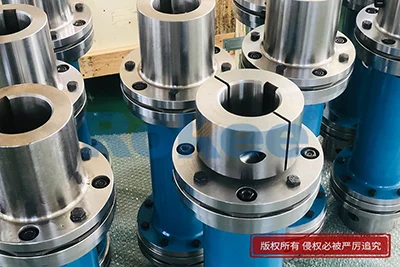
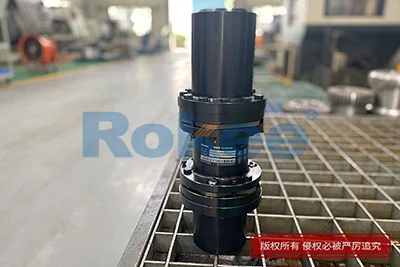
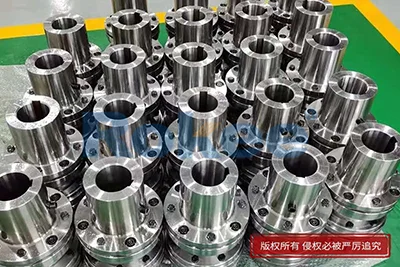
As a high-performance connecting component with elastic deformation capacity, flexible coupling fundamentally optimizes the transmission structure of PUR sandwich panel production lines through unique mechanical design and material characteristics. Different from rigid coupling that pursues rigid and fixed connection, flexible coupling is equipped with elastic intermediate components inside. These elastic parts can rely on their own deformation characteristics to absorb mechanical vibration and buffer instantaneous impact torque during power transmission. In the actual operation of the production line, the driving equipment will inevitably produce axial, radial and angular displacement deviations due to installation errors, temperature changes and mechanical wear. Flexible coupling has excellent displacement compensation capability, which can effectively adapt to tiny misalignment between connecting shafts, avoid additional friction and extrusion between shaft systems, and reduce the mechanical loss caused by position deviation. This compensation function is particularly critical for the long-term continuous operation of PUR sandwich panel production lines. The production line needs to maintain a stable operating state for a long time, and the heat generated by the continuous operation of motors, reducers and rolling equipment will cause slight thermal deformation of metal structural parts. Flexible coupling can automatically absorb the deformation displacement, ensure the stability of the relative position of each transmission shaft, and avoid transmission jitter and material conveying deviation caused by thermal deformation.
In the upgrading and transformation process of PUR sandwich panel production line, the application of flexible coupling covers multiple core transmission links, bringing tangible optimization effects to each production process. In the raw material feeding link, the feeding equipment needs to stably transport metal plates, insulation base materials and chemical raw materials at a constant speed. The vibration generated by unstable transmission will lead to uneven feeding speed and material accumulation. After adopting flexible coupling, the vibration generated by the driving motor during operation is efficiently absorbed, the feeding shaft maintains a stable rotating state, and the synchronization of raw material transportation is significantly improved. In the rolling and composite molding link of sandwich panels, the transmission accuracy and operation stability of the pressing roller directly determine the molding quality of the panels. The elastic structure of flexible coupling can reduce the torsion hysteresis of the transmission system, ensure the consistent rotating speed of each group of pressing rollers, and make the pressing force evenly act on the surface of the composite plates. This optimization effectively avoids the problems of plate warping, surface wrinkles and inconsistent core material thickness caused by asynchronous rotation of rollers, and greatly improves the appearance flatness and dimensional accuracy of finished PUR sandwich panels.
The foaming and curing stage is the core processing link that determines the thermal insulation performance and structural firmness of PUR sandwich panels, and the stability of production equipment in this stage has extremely high requirements for transmission components. The foaming reaction of polyurethane materials requires a constant temperature and stable pressure environment. Any mechanical vibration may break the uniform foaming state of the raw materials, resulting in internal voids and uneven density of the core material. The excellent vibration damping performance of flexible coupling can effectively suppress high-frequency vibration generated by the operation of mixing equipment and circulating transmission equipment, maintain the static and stable processing environment inside the foaming mold, and ensure that polyurethane raw materials undergo uniform and sufficient foaming reaction. At the same time, in the constant-temperature curing tunnel, the production line equipment is in a high-temperature humid environment for a long time. The structural design of flexible coupling can adapt to the temperature change of the operating environment, maintain stable elastic performance within a reasonable temperature range, and will not produce rigid embrittlement or excessive deformation due to temperature fluctuation. This environmental adaptability enables the curing transmission system to keep running smoothly for a long time, ensuring that each batch of sandwich panels completes the curing reaction at a uniform temperature, and improving the bonding strength between the core material and the surface layer.
In the fixed-length cutting and finished product conveying links at the later stage of production, the precise transmission advantage of flexible coupling is fully reflected. The cutting equipment needs to complete fixed-distance cutting according to the preset panel size, and the transmission error of the conveying shaft will directly lead to unqualified dimensional accuracy of finished products. Flexible coupling can reduce the transmission clearance of the shaft system, restrain the angular deviation of the rotating shaft, and ensure that the conveying speed of the finished plate is synchronized with the cutting action. This effectively reduces the dimensional error of cutting and improves the product qualification rate. In the finished product conveying and stacking process, the buffer performance of flexible coupling can alleviate the torque impact generated during equipment start-stop switching, avoid the jitter of the conveying platform causing collision and scratch of finished panels, and protect the surface integrity of high-quality sandwich panels. For the automated production line after upgrading, the coordinated operation of multiple sets of transmission equipment puts forward higher requirements for the consistency of power output. The uniform force-bearing characteristic of the elastic parts inside flexible coupling can realize balanced torque transmission between multiple connected shafts, ensure the synchronous operation of each functional module of the production line, and lay a mechanical foundation for the realization of automated continuous production.
In addition to improving production accuracy and operational stability, the application of flexible coupling also brings significant economic and maintenance benefits to the upgrading of PUR sandwich panel production lines. In traditional production lines, rigid connection structures are prone to metal fatigue and severe wear of connecting parts under long-term vibration and impact, resulting in frequent replacement of bearings, connecting shafts and other parts, and high daily maintenance costs. Flexible coupling converts rigid friction between shaft systems into elastic buffer friction through elastic components, which greatly reduces the wear degree of key mechanical parts. The displacement compensation function avoids abnormal stress concentration on local structures, prolongs the service life of motors, reducers and transmission rollers, and reduces the frequency of equipment shutdown maintenance. The simplified structural form of most flexible couplings does not require complex lubrication systems and tedious daily maintenance procedures, which lowers the technical threshold of equipment operation and maintenance, and saves human and material resources invested in production line maintenance. For manufacturing enterprises, the reduction of equipment failure rate and maintenance cost effectively controls the overall production cost, while the improvement of production continuity increases the daily output of sandwich panels, bringing stable economic benefits to enterprise production and operation.
With the rapid development of the new energy and energy-saving building materials industry, the market demand for high-performance PUR sandwich panels continues to grow, and the industry puts forward higher requirements for the large-scale, intelligent and low-energy consumption of production lines. The upgrading and transformation of production lines is no longer limited to the simple replacement of single equipment, but focuses on the overall optimization of the transmission system, control system and mechanical structure. As a key basic component in the transmission system, flexible coupling is gradually developing towards compact structure, stronger environmental adaptability and higher transmission efficiency. The optimized flexible coupling with high-strength elastic materials can adapt to higher load operation requirements, meet the production demand of thickened and high-strength sandwich panels, and further expand the application scope of production lines. In terms of intelligent production, the stable operating state brought by flexible coupling provides accurate data feedback conditions for the sensing detection system of the production line. The low-vibration operating environment avoids signal interference caused by mechanical jitter, enabling the intelligent monitoring system to accurately collect equipment operating parameters and product processing data, which is convenient for enterprises to realize real-time monitoring, fault early warning and production parameter optimization of the production line.
In the process of industrial iterative upgrading, the optimization of every basic mechanical component is an important driving force for the progress of the entire production industry. The promotion and application of flexible coupling in PUR sandwich panel production lines breaks through many mechanical bottlenecks of traditional production equipment, solves the common problems of unstable transmission, severe vibration and high wear in the production process, and provides reliable mechanical guarantee for the high-quality and high-efficiency production of sandwich panels. From the perspective of long-term industrial development, with the continuous improvement of material science and mechanical design technology, the performance of flexible coupling will be further optimized, and its application scenarios in building material production equipment will be more extensive. It will not only escort the upgrading and transformation of existing PUR sandwich panel production lines, but also provide technical reference for the research and development of new intelligent and integrated production lines. While improving the production level of the industry, it will promote the high-quality development of the energy-saving building material manufacturing industry, and contribute to the innovation and upgrading of the entire construction material supply chain.



Links:
- Calibration Weight
- Digital Viscometer
- Carpas Industriales
- Exhibition Tent
- Industrial Cardan Shaft
- PU Sandwich Panel Machine
- PIR Sandwich Panel Line
- Sandwich Panel Machine
- Sandwich Panel Production Line
- PU Sandwich Panel Line
- Sandwich Panel Line
- Flexible Couplings Manufacturer In China
- Elastic Couplings Manufacturer In China