Adaptation Of PUF Sandwich Panel Production Line And Diaphragm Coupling Reduces Operation And Maintenance Costs Greatly

In the modern manufacturing industry, the pursuit of cost optimization while ensuring production efficiency and product quality has become a core goal for enterprises across various sectors. For manufacturers engaged in the production of PUF (Polyurethane Foam) sandwich panels, the operation and maintenance costs of production lines have long been a key factor affecting profit margins and market competitiveness. Traditional PUF sandwich panel production lines often suffer from low automation levels, poor component compatibility, and high maintenance frequency, while the choice of transmission components such as couplings also directly impacts the stability and maintenance load of the entire production system. In recent years, through targeted adaptation and transformation of PUF sandwich panel production lines, combined with the application of diaphragm couplings, many manufacturers have achieved significant reductions in operation and maintenance costs, while improving production efficiency and product consistency.
PUF sandwich panels are widely used in construction, cold storage, industrial workshops, and other fields due to their excellent thermal insulation, sound insulation, and structural performance. The production process of PUF sandwich panels involves multiple links, including uncoiling of metal facings, roll forming, PUF foaming, compound pressing, and precision cutting. Each link is closely connected, and any problem in a single link may lead to production interruptions, increased waste, and higher maintenance costs. Traditional PUF sandwich panel production line often adopt a semi-automatic or manual operation mode, which not only requires a large number of operators but also easily leads to inconsistencies in product quality due to human errors. In addition, the components of traditional production lines are often designed as independent modules with poor compatibility, making it difficult to achieve coordinated operation between different links. This not only reduces production efficiency but also increases the difficulty and frequency of maintenance. For example, in the foaming link, the traditional manual dosing method often leads to inaccurate mixing ratios of raw materials, resulting in unqualified foam quality, increased raw material waste, and the need for frequent cleaning and maintenance of foaming equipment. In the transmission link, the use of traditional couplings such as gear couplings or elastic couplings often leads to high wear, frequent lubrication requirements, and easy failure under long-term high-load operation, which further increases maintenance costs and production downtime.
To address these problems, targeted adaptation and transformation of PUF sandwich panel production lines have become an inevitable choice for enterprises to reduce costs and increase efficiency. The adaptation of the production line mainly focuses on improving automation levels, optimizing process links, enhancing component compatibility, and reducing energy consumption. Through the integration of advanced automation control systems, the production line can realize automatic control of the entire process from uncoiling to cutting, reducing the dependence on manual operation. For example, the introduction of automatic dosing systems in the foaming link can accurately control the mixing ratio of polyols, isocyanates, catalysts, and other raw materials, ensuring the stability of foam quality and reducing raw material waste. The automatic dosing system can adjust the dosage of raw materials in real-time according to the production speed and product specifications, avoiding the errors caused by manual operation and reducing the frequency of equipment cleaning and maintenance. In addition, the adaptation of the production line also involves the optimization of process links, such as integrating the roll forming and compound pressing links to realize continuous operation, reducing the time interval between processes and improving production efficiency. At the same time, the replacement of worn and outdated components with high-performance, wear-resistant parts can extend the service life of equipment and reduce the frequency of maintenance.
Another key measure to reduce operation and maintenance costs is the application of diaphragm couplings in the transmission system of PUF sandwich panel production lines. Couplings are important components in the transmission system, responsible for connecting the motor and the working machine, transmitting torque, and compensating for the misalignment between shafts. Traditional couplings such as gear couplings have complex structures, require regular lubrication, and are prone to wear and leakage, which not only increases maintenance workload but also may lead to production interruptions due to failure. In contrast, diaphragm couplings have significant advantages in terms of structure, performance, and maintenance, making them an ideal choice for PUF sandwich panel production lines.
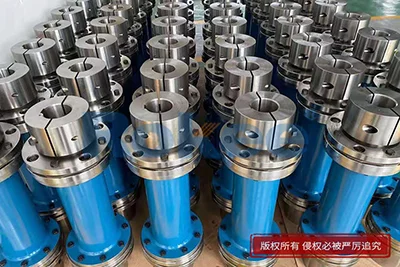
Diaphragm couplings are composed of two hubs and one or more metal diaphragms, which transmit torque through the elastic deformation of the diaphragms. Unlike traditional couplings, diaphragm couplings do not require lubrication, which fundamentally eliminates the maintenance work related to lubrication, such as adding lubricating oil, checking oil levels, and replacing worn seals. This not only reduces the labor intensity of maintenance personnel but also avoids the pollution of equipment and the production environment caused by lubricating oil leakage. In addition, the metal diaphragms of diaphragm couplings have excellent wear resistance and fatigue resistance, which can withstand long-term high-load operation and have a longer service life than traditional couplings. The structure of diaphragm couplings is simple and compact, making installation and disassembly convenient. When maintenance is required, it is only necessary to replace the diaphragms without moving the connected equipment, which greatly shortens the maintenance time and reduces the downtime of the production line.
The application of diaphragm couplings in PUF sandwich panel production lines can also effectively reduce the failure rate of the transmission system, thereby reducing maintenance costs. In the production process of PUF sandwich panels, the transmission system needs to operate continuously under high load and high speed, and the misalignment between shafts is inevitable due to factors such as equipment vibration, thermal expansion, and foundation settlement. Traditional couplings have poor ability to compensate for misalignment, which easily leads to increased wear of shafts and bearings, and even coupling failure. Diaphragm couplings can effectively compensate for angular, parallel, and axial misalignment through the elastic deformation of the diaphragms, reducing the additional stress on shafts and bearings, and extending their service life. This not only reduces the frequency of component replacement but also avoids the high maintenance costs caused by serious equipment failures. For example, in the roll forming link of the PUF sandwich panel production line, the motor and the roll forming machine are connected by a diaphragm coupling. When the roll forming machine vibrates during operation, the diaphragm coupling can absorb the vibration and compensate for the misalignment between the motor shaft and the roll forming machine shaft, ensuring the stable operation of the equipment and reducing the wear of the roll forming machine and the motor.
The adaptation of PUF sandwich panel production lines and the application of diaphragm couplings are complementary, and their combined effect can maximize the reduction of operation and maintenance costs. The automated transformation of the production line reduces the number of operators and the errors caused by manual operation, thereby reducing the labor cost and the waste of raw materials. The optimization of process links and the replacement of high-performance components reduce the frequency of equipment failure and maintenance. The application of diaphragm couplings further reduces the maintenance workload and downtime, and extends the service life of the transmission system and related components. Together, these measures form a comprehensive cost reduction system, enabling enterprises to achieve significant savings in operation and maintenance costs.
In practical applications, many enterprises have achieved remarkable results through the adaptation of PUF sandwich panel production lines and the application of diaphragm couplings. For example, a manufacturer engaged in PUF sandwich panel production carried out automated transformation on its traditional production line, introducing automatic dosing systems, automatic cutting systems, and centralized control systems. At the same time, all traditional couplings in the transmission system were replaced with diaphragm couplings. After the transformation, the number of operators was reduced by nearly 40%, the waste rate of raw materials was reduced by more than 15%, and the frequency of equipment maintenance was reduced by 30%. The downtime of the production line was shortened by half, and the operation and maintenance costs were reduced by nearly 25% annually. In addition, the product quality of the enterprise was significantly improved, the qualification rate of products increased by more than 10%, and the market competitiveness was greatly enhanced.
It should be noted that the adaptation of PUF sandwich panel production lines and the selection of diaphragm couplings need to be combined with the actual production situation of the enterprise. When carrying out the adaptation of the production line, enterprises should conduct a comprehensive investigation and analysis of the existing production line, identify the key links that affect efficiency and increase costs, and formulate targeted transformation plans. For example, for enterprises with serious raw material waste in the foaming link, the focus should be on introducing automatic dosing systems and optimizing the foaming process; for enterprises with low production efficiency, the focus should be on integrating process links and improving the automation level of the production line. When selecting diaphragm couplings, enterprises should consider factors such as the torque, speed, and misalignment of the transmission system, and choose the appropriate type and specification of diaphragm couplings to ensure their compatibility with the production line and stable operation.
In addition, the daily maintenance and management of the adapted production line and diaphragm couplings are also crucial to ensuring long-term cost reduction. Enterprises should establish a sound maintenance system, conduct regular inspections and maintenance of the production line and diaphragm couplings, and find and solve potential problems in a timely manner. For example, regularly check the wear of the diaphragms of the diaphragm couplings, replace the damaged diaphragms in time, and ensure the clean operation of the equipment to avoid the impact of dust and debris on the operation of the equipment. At the same time, strengthen the training of operators and maintenance personnel to improve their professional skills and operational level, ensuring that they can correctly operate and maintain the equipment, and reduce the damage to the equipment caused by improper operation.
With the continuous development of manufacturing technology, the adaptation of PUF sandwich panel production lines and the application of diaphragm couplings will tend to be more intelligent and efficient. In the future, enterprises can further integrate Internet of Things technology, big data technology, and artificial intelligence technology into the production line, realizing real-time monitoring and intelligent diagnosis of equipment operation status. Through real-time data collection and analysis of the production line and diaphragm couplings, potential equipment failures can be predicted in advance, and maintenance can be carried out proactively, further reducing maintenance costs and production downtime. At the same time, the continuous improvement of diaphragm coupling technology will further enhance its performance and service life, providing more reliable support for the stable operation of PUF sandwich panel production lines.
In conclusion, the adaptation of PUF sandwich panel production lines and the application of diaphragm couplings are effective measures to reduce operation and maintenance costs for related enterprises. The automated transformation and process optimization of the production line can improve production efficiency, reduce raw material waste and labor costs; the application of diaphragm couplings can reduce maintenance workload, extend equipment service life, and reduce production downtime. The combination of the two can maximize the reduction of operation and maintenance costs, improve the market competitiveness of enterprises, and promote the sustainable development of the PUF sandwich panel manufacturing industry. For enterprises engaged in PUF sandwich panel production, it is necessary to attach great importance to the adaptation of production lines and the selection of transmission components, and continuously optimize the production system to achieve the goal of cost reduction and efficiency increase.
The adaptation of PUF sandwich panel production lines is not a one-time transformation but a continuous optimization process. Enterprises need to pay attention to the changes in market demand and technological development, and continuously adjust and improve the production line to adapt to the new production requirements. For example, with the increasing emphasis on environmental protection, enterprises can further optimize the production process, adopt environmentally friendly raw materials and energy-saving equipment, and reduce energy consumption and environmental pollution while reducing costs. In the selection of diaphragm couplings, enterprises can also pay attention to the development of new materials and new structures, choose more environmentally friendly and efficient diaphragm couplings, and further improve the overall performance of the transmission system.
In addition, the cooperation between enterprises and technical research institutions is also an important way to promote the adaptation of production lines and the application of new technologies. By cooperating with professional technical institutions, enterprises can obtain more advanced technical support and solutions, accelerate the pace of technological transformation, and achieve better cost reduction effects. At the same time, enterprises can also learn from the successful experience of other enterprises, avoid detours in the process of transformation, and improve the efficiency and effect of transformation.
In the context of increasingly fierce market competition, reducing operation and maintenance costs has become a key factor for enterprises to survive and develop. The adaptation of PUF sandwich panel production lines and the application of diaphragm couplings provide a practical and effective path for enterprises to reduce costs and increase efficiency. Through continuous technological innovation and system optimization, enterprises can not only reduce operation and maintenance costs but also improve product quality and production efficiency, laying a solid foundation for their long-term development in the market. It is believed that with the continuous popularization and improvement of these technologies, the PUF sandwich panel manufacturing industry will usher in a more sustainable and healthy development prospect.
Rokee is a professional manufacturer of industrial couplings in china, designing and customizing a wide range of drive shaft coupling products for customers worldwide. Submit your coupling drawings or technical specifications, and we can customize coupling products for you.
Coupling Categories


Links:
- Calibration Weight
- Digital Viscometer
- Carpas Industriales
- Exhibition Tent
- Industrial Cardan Shaft
- PU Sandwich Panel Machine
- PIR Sandwich Panel Line
- Sandwich Panel Machine
- Sandwich Panel Production Line
- PU Sandwich Panel Line
- Sandwich Panel Line
- Flexible Couplings Manufacturer In China
- Elastic Couplings Manufacturer In China