Choose Flexible Coupling For Efficient Transmission To Upgrade PU Insulation Board Production Line
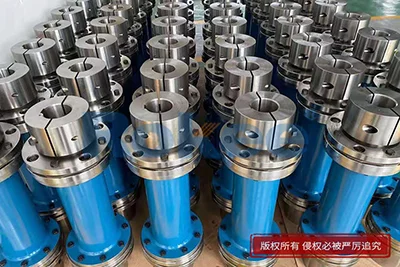
In the modern industrial production landscape, the efficiency and stability of transmission systems directly determine the operational performance and product quality of production lines, especially for PU insulation board production which involves multiple continuous and precision-dependent processes. PU insulation boards have become indispensable materials in construction, cold storage, and many other fields due to their excellent thermal insulation, sound insulation, and structural strength, and the demand for high-quality, high-efficiency production has pushed manufacturers to continuously upgrade their production equipment and transmission systems. Among the numerous components that affect the efficiency of transmission systems, flexible couplings stand out as a key element, as their rational selection and application can effectively solve the common problems existing in the transmission process of PU insulation board production lines, optimize energy transmission, reduce equipment wear, and ultimately achieve the goal of upgrading the production line.
To understand the important role of flexible couplings in upgrading PU insulation board production lines, it is first necessary to clarify the core characteristics of the PU insulation board production process and the special requirements it places on transmission systems. The production of PU insulation boards is a continuous and systematic process, involving multiple key links such as uncoiling and leveling of surface materials, precise mixing and injection of PU foam raw materials, lamination and pressing, curing, and fixed-length cutting. Each link is closely connected, and the transmission system needs to ensure that power is transmitted stably and accurately between different equipment, such as from motors to conveyors, mixers, pressing rollers, and cutting machines. Unlike some single-process production lines, the PU insulation board production line requires the transmission system to adapt to different operating speeds and load changes—for example, the mixing process requires stable low-speed transmission to ensure uniform mixing of raw materials, while the conveying and cutting processes require high-speed and precise transmission to improve production efficiency and cutting accuracy. At the same time, due to the long-term continuous operation of the production line, the transmission system is often subjected to factors such as vibration, axial and radial deviation, and temperature changes, which put forward higher requirements for the flexibility, stability, and durability of transmission components.
Traditional rigid couplings were once widely used in industrial transmission systems, but they have obvious limitations in adapting to the complex operating environment of PU insulation board production lines. Rigid couplings require absolute alignment between the connected shafts; even a small amount of axial, radial, or angular deviation can lead to increased friction, vibration, and noise, which not only affects the transmission efficiency but also accelerates the wear of bearings, shafts, and other components. In the PU insulation board production line, the long-term operation of equipment will inevitably lead to slight deviations due to foundation settlement, temperature expansion, and component wear, and rigid couplings cannot compensate for these deviations, resulting in frequent equipment failures, increased maintenance costs, and reduced production efficiency. In contrast, flexible couplings have unique structural advantages that can effectively solve these problems and provide more reliable support for the stable operation of the production line.
Flexible couplings are mechanical devices used to connect two rotating shafts and transmit torque while allowing a certain degree of relative displacement and angular deviation between the shafts. Their working principle relies on the elastic deformation of internal flexible components to absorb vibration, compensate for misalignment, and achieve smooth power transmission. The flexible components can be made of various materials such as rubber, polyurethane, metal bellows, or composite materials, and different materials and structural designs enable flexible couplings to adapt to different working conditions and load requirements. In the PU insulation board production line, the selection of flexible couplings needs to be closely combined with the specific working conditions of each link, so as to maximize their role in improving transmission efficiency and protecting equipment.
One of the key advantages of flexible couplings in PU insulation board production lines is their ability to compensate for shaft misalignment, which is crucial for ensuring the stable operation of the production line. As mentioned earlier, the long-term continuous operation of the production line will lead to slight misalignment between the shafts of connected equipment due to various factors. If not effectively compensated, this misalignment will cause uneven force on the transmission system, generate vibration, and even damage key components such as motors and bearings. Flexible couplings can effectively absorb these misalignments through the elastic deformation of their internal flexible components, whether it is axial displacement caused by thermal expansion, radial deviation caused by foundation settlement, or angular deviation caused by equipment installation errors. This compensation function not only ensures the smooth transmission of power but also reduces the additional load on the equipment, extends the service life of the transmission system and related components, and reduces the frequency of equipment maintenance and downtime.
Vibration reduction is another important role of flexible couplings in upgrading PU insulation board production lines. In the production process of PU insulation boards, equipment such as mixers, pressing rollers, and motors will generate a certain amount of vibration during operation. These vibrations will not only affect the stability of the transmission system but also spread to the entire production line, leading to problems such as uneven mixing of PU foam, poor bonding between the surface layer and the core layer, and inaccurate cutting dimensions, which directly affect the quality of the final product. Flexible couplings can absorb and dampen these vibrations through their flexible components, reducing the transmission of vibration between connected equipment. For example, flexible couplings with rubber or polyurethane flexible components have excellent vibration absorption performance, which can effectively reduce the impact of vibration on the transmission system and the production line, ensuring the stability of each production link. This not only improves the quality of PU insulation boards but also creates a more stable operating environment for the equipment, reducing the wear caused by vibration and extending the service life of the equipment.
In addition to compensating for misalignment and reducing vibration, flexible couplings can also improve the transmission efficiency of the PU insulation board production line, which is the core goal of production line upgrading. The transmission efficiency of the production line directly affects the output and energy consumption; higher transmission efficiency means lower energy loss and higher production capacity. Traditional rigid couplings have high friction loss during operation, especially when there is slight misalignment, the friction will increase significantly, leading to increased energy consumption and reduced transmission efficiency. Flexible couplings, on the other hand, have a more reasonable structural design, and the flexible components can reduce friction during the transmission process, ensuring that the power output by the motor is transmitted to the working equipment more efficiently. At the same time, the smooth transmission of flexible couplings can avoid the energy loss caused by vibration and impact, further improving the overall transmission efficiency of the production line. For PU insulation board production lines that require long-term continuous operation, even a small improvement in transmission efficiency can bring significant economic benefits, reducing energy consumption and increasing production output.
The adaptability of flexible couplings to different working conditions is also an important factor that makes them suitable for upgrading PU insulation board production lines. The production process of PU insulation boards involves different operating speeds and load changes, and different links have different requirements for transmission components. For example, the mixing link of PU foam requires a stable low-speed transmission to ensure that the polyol, isocyanate, foaming agent, and other raw materials are fully mixed, and the flexible couplings used here need to have good torque transmission performance and stability at low speeds; the conveying and cutting links require high-speed and precise transmission to improve production efficiency and cutting accuracy, and the flexible couplings used here need to have good dynamic balance performance and high transmission accuracy. Flexible couplings have a variety of types and specifications, such as beam couplings, jaw couplings, diaphragm couplings, and tire couplings, each of which has its own unique performance characteristics. Beam couplings, for example, are made of a single piece of material with a helical structure, which has no backlash, high transmission accuracy, and is suitable for precision transmission links such as cutting machines; jaw couplings use elastomeric elements between two metal hubs, which have good vibration absorption performance and are suitable for transmission links with large vibration such as mixers; diaphragm couplings use thin metal diaphragms to transmit torque, which have high temperature resistance and corrosion resistance, and are suitable for high-temperature curing links. By selecting the appropriate type and specification of flexible couplings according to the specific working conditions of each link, the transmission system can be optimized to the greatest extent, ensuring the efficient operation of the entire production line.
The durability and ease of maintenance of flexible couplings also provide important support for the long-term stable operation of PU insulation board production lines. PU insulation board production line usually operate continuously for a long time, and the maintenance of transmission components is not only time-consuming but also affects production progress. Flexible couplings have a simple structure, high reliability, and are not easy to fail under normal operating conditions. At the same time, most flexible couplings are designed for easy installation and maintenance, and the worn flexible components can be replaced quickly without disassembling the entire transmission system, which greatly reduces the maintenance time and labor intensity, and ensures the continuity of the production line. In addition, with the development of material science, new materials such as high-performance composite materials and corrosion-resistant metals are widely used in the production of flexible couplings, which further improves their durability and service life, making them more suitable for the harsh operating environment of PU insulation board production lines, such as high temperature, humidity, and chemical corrosion.
When selecting flexible couplings to upgrade the PU insulation board production line, it is necessary to follow certain principles to ensure that the selected couplings can fully adapt to the working conditions of the production line and achieve the goal of improving transmission efficiency and equipment stability. First of all, it is necessary to clarify the working parameters of the transmission system, including torque, speed, shaft diameter, and the maximum allowable misalignment, so as to select flexible couplings with appropriate load capacity and size. The torque capacity of the coupling should be slightly higher than the actual working torque to ensure that it can work stably under full load conditions and avoid damage due to overload. Secondly, it is necessary to consider the working environment of the production line, such as temperature, humidity, and whether there are corrosive media. For example, in the high-temperature curing link, flexible couplings with high-temperature resistant materials should be selected; in the environment with high humidity or corrosive media, couplings with corrosion-resistant materials or protective coatings should be selected. Thirdly, it is necessary to combine the specific requirements of each production link for transmission accuracy and vibration reduction. For precision links such as cutting and lamination, flexible couplings with high transmission accuracy and low backlash should be selected; for links with large vibration such as mixing and conveying, couplings with good vibration absorption performance should be selected. In addition, it is also necessary to consider the compatibility between the flexible coupling and the existing equipment to ensure that it can be smoothly installed and matched with the original transmission system without major modifications to the equipment, which can reduce the upgrading cost and shorten the upgrading cycle.
The application practice of flexible couplings in PU insulation board production lines has fully verified their important role in improving production efficiency and product quality. Many manufacturers have achieved significant results after upgrading their transmission systems with flexible couplings. For example, a manufacturer engaged in PU insulation board production once faced problems such as frequent equipment failures, high energy consumption, and unstable product quality due to the use of rigid couplings. After replacing the rigid couplings with appropriate flexible couplings in key links such as mixing, conveying, and cutting, the vibration of the production line was significantly reduced, the equipment failure rate was reduced by more than 30%, the transmission efficiency was improved by 15%, and the qualified rate of products was increased by 10%. At the same time, the maintenance cost of the equipment was reduced, and the service life of the transmission components was extended by 50%, bringing significant economic benefits to the enterprise. This practice shows that the rational selection and application of flexible couplings can effectively solve the bottlenecks existing in the transmission system of PU insulation board production lines, realize the upgrading of the production line, and enhance the market competitiveness of the enterprise.
With the continuous development of industrial automation and intelligent technology, the requirements for the transmission system of PU insulation board production lines are becoming higher and higher. Flexible couplings, as a key component of the transmission system, are also constantly developing towards high efficiency, high precision, and intelligence. In the future, with the application of new materials and new technologies, flexible couplings will have better performance, such as higher torque capacity, better vibration reduction effect, and longer service life. At the same time, the integration of sensor technology and intelligent monitoring systems will enable flexible couplings to realize real-time monitoring of their working status, predict potential failures in advance, and further reduce maintenance costs and downtime. For PU insulation board manufacturers, keeping pace with the development trend of flexible couplings, continuously optimizing the selection and application of flexible couplings, and combining them with intelligent upgrading of the production line will be an important direction for improving production efficiency, reducing costs, and enhancing product quality.
In conclusion, the selection of appropriate flexible couplings is an effective way to upgrade the PU insulation board production line. Flexible couplings have the advantages of compensating for shaft misalignment, reducing vibration, improving transmission efficiency, strong adaptability, and easy maintenance, which can effectively solve the common problems existing in the transmission system of PU insulation board production lines, optimize the operation state of the production line, and improve product quality and production efficiency. For PU insulation board manufacturers, in the process of production line upgrading, they should fully consider the working characteristics of each link, select flexible couplings that are suitable for their own production conditions, and pay attention to the installation, debugging, and daily maintenance of the couplings to ensure that they can play their maximum role. With the continuous progress of technology and the continuous optimization of flexible couplings, they will play a more important role in the upgrading and development of PU insulation board production lines, helping manufacturers achieve sustainable development in the increasingly competitive market.
Rokee is a professional manufacturer of industrial couplings in china, designing and customizing a wide range of drive shaft coupling products for customers worldwide. Submit your coupling drawings or technical specifications, and we can customize coupling products for you.
Coupling Categories


Links:
- Calibration Weight
- Digital Viscometer
- Carpas Industriales
- Exhibition Tent
- Industrial Cardan Shaft
- PU Sandwich Panel Machine
- PIR Sandwich Panel Line
- Sandwich Panel Machine
- Sandwich Panel Production Line
- PU Sandwich Panel Line
- Sandwich Panel Line
- Flexible Couplings Manufacturer In China
- Elastic Couplings Manufacturer In China