Flexible Shaft Couplings

A flexible shaft coupling is a critical mechanical component designed to connect two rotating shafts, transmitting torque and motion while accommodating various forms of misalignment that may occur during operation. Unlike rigid couplings, which require precise alignment between the connected shafts, flexible shaft couplings introduce a degree of flexibility that protects machinery from damage caused by misalignment, vibration, and shock loads. This versatility makes them indispensable in a wide range of industrial, automotive, aerospace, and consumer applications, where reliable power transmission and component protection are essential. The design and functionality of flexible shaft couplings are shaped by their structure, performance characteristics, diverse types, and specific application requirements, all of which work in tandem to ensure optimal operation in different working environments.
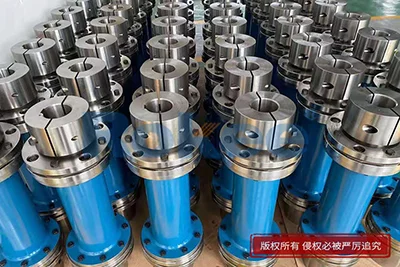
The basic structure of a flexible shaft coupling typically consists of three core components: two hubs that attach to the respective shafts, a flexible element that connects the hubs, and fasteners that secure the assembly. The hubs are usually made from high-strength materials such as steel, aluminum alloy, or engineering plastics, chosen for their ability to withstand torque and resist wear. These hubs are designed with features such as keyways, set screws, or clamping mechanisms to ensure a secure connection to the shafts, preventing slippage during rotation. The flexible element, which is the heart of the coupling, is responsible for accommodating misalignment and absorbing vibrations; its design and material composition vary significantly depending on the type of coupling and the intended application. Common materials for flexible elements include elastomers (such as rubber, nitrile, urethane, and Hytrel), metal springs, steel grids, diaphragms, and even flexible shafts composed of layered wires. Fasteners, such as bolts, pins, or clamps, are used to assemble the components, ensuring that the coupling maintains its integrity under operating loads. Some couplings may also include additional components, such as sleeves, casings, or end fittings, to enhance protection, improve alignment, or facilitate easy installation and maintenance.
The structure of a flexible shaft coupling directly influences its performance, which is defined by a set of key characteristics that determine its suitability for specific applications. Torque capacity is one of the most fundamental performance metrics, referring to the maximum amount of torque the coupling can transmit without failure. This capacity is determined by the size of the coupling, the strength of the materials used, and the design of the flexible element. For example, couplings with metal flexible elements typically have higher torque capacities than those with elastomeric elements, making them suitable for heavy-duty applications. Torsional stiffness is another critical performance factor, describing the coupling’s resistance to twisting under torque. Couplings with high torsional stiffness are ideal for precision applications, such as robotics and machine tools, where accurate motion control is required, as they minimize angular deflection and ensure consistent torque transmission. In contrast, couplings with lower torsional stiffness are better suited for applications where vibration damping is a priority, as they can absorb more torsional vibrations.
Misalignment compensation is a defining performance feature of flexible shaft couplings, as it allows the coupling to accommodate three main types of misalignment: angular, parallel (lateral), and axial. Angular misalignment occurs when the axes of the two shafts intersect at an angle, while parallel misalignment happens when the axes are offset but parallel to each other. Axial misalignment refers to the linear displacement of one shaft relative to the other along the axis of rotation. Different types of couplings are designed to handle varying degrees of these misalignments; for instance, Oldham couplings excel at accommodating parallel misalignment, while universal joints are well-suited for angular misalignment. The ability to compensate for misalignment is crucial because even small amounts of misalignment can cause excessive wear on bearings, shafts, and other components, leading to premature failure and increased maintenance costs.
Vibration damping and shock absorption are additional performance characteristics that make flexible shaft couplings valuable in many applications. Vibrations are inherent in rotating machinery, often caused by imbalances, uneven load distribution, or external factors. If left unaddressed, these vibrations can propagate through the drivetrain, causing noise, reducing component lifespan, and affecting the overall performance of the machinery. Flexible couplings with elastomeric or spring-based flexible elements absorb these vibrations by deforming elastically, converting vibrational energy into heat, which is then dissipated. Similarly, these couplings can absorb shock loads, such as those caused by sudden starts, stops, or load changes, protecting the connected shafts and equipment from damage. The degree of vibration damping and shock absorption depends on the material and design of the flexible element; for example, elastomeric elements provide excellent damping capabilities, while metal elements offer higher shock resistance.
Other important performance factors include operating speed, temperature range, and wear resistance. The maximum operating speed of a flexible shaft coupling is determined by its design, material strength, and balance. High-speed applications, such as those in aerospace or precision machinery, require couplings that are dynamically balanced to minimize centrifugal forces, which can cause vibration and damage at high rotational speeds. Temperature range refers to the range of temperatures in which the coupling can operate effectively without degradation of its materials or performance. Elastomeric elements, for example, have specific temperature limits, with some materials capable of operating in extreme cold (-40°C or lower) or heat (120°C or higher), depending on their composition. Wear resistance is essential for couplings used in harsh environments, such as those with dust, debris, or corrosive substances, as it ensures the coupling maintains its performance over an extended service life. Materials such as stainless steel, hardened steel, and wear-resistant plastics are often used to enhance wear resistance.
Flexible shaft couplings are available in a wide range of types, each designed to meet specific performance requirements and application needs. These types can be broadly categorized into two main groups: couplings with elastomeric flexible elements and couplings with metallic flexible elements. Elastomeric couplings are among the most common types, valued for their excellent vibration damping, shock absorption, and ability to accommodate moderate misalignment. Jaw couplings are a popular example of elastomeric couplings, consisting of two jaw-shaped hubs and an elastomeric spider (or cushion) that fits between the jaws. The spider is typically made from rubber, nitrile, urethane, or Hytrel, and its design allows for angular and parallel misalignment while transmitting torque. Jaw couplings are easy to install and maintain, making them suitable for a variety of applications, including electric motors, pumps, and conveyors. Different elastomeric materials offer varying performance characteristics; for example, nitrile rubber provides a good balance of temperature resistance, chemical resistance, and damping ability, while urethane offers higher torque capacity but less damping.
Another type of elastomeric coupling is the tire coupling, which uses a tire-shaped elastomeric element to connect two hubs. The tire element is typically made from rubber reinforced with帘线 (cord), and it is clamped to the hubs using pressure plates and screws. Tire couplings offer excellent flexibility, accommodating large amounts of angular, parallel, and axial misalignment, as well as superior vibration damping and shock absorption. They are often used in applications where misalignment is significant, such as in marine propulsion systems, heavy machinery, and pumps. Unlike some other couplings, tire couplings do not require lubrication, reducing maintenance requirements.
Metallic flexible couplings, on the other hand, are designed for high torque, high speed, and harsh operating conditions, where elastomeric elements may degrade or fail. Beam couplings (also known as helical couplings) are a common type of metallic coupling, consisting of a single piece of material (usually aluminum alloy, stainless steel, or titanium) with a helical cut that creates a flexible beam. The helical design allows the coupling to accommodate angular misalignment, parallel offset, and axial motion, while maintaining high torsional stiffness and no backlash. Beam couplings are ideal for precision applications, such as robotics, rotary encoders, and motion control systems, where accurate torque transmission and minimal deflection are essential. The number of helical coils can be adjusted to modify the coupling’s flexibility; more coils allow for greater angular misalignment but reduce torsional stiffness.
Diaphragm couplings are another type of metallic flexible coupling, featuring one or more thin metallic diaphragms (usually made from stainless steel) that connect the hubs. The diaphragms are designed to flex elastically, accommodating angular and axial misalignment while transmitting torque without backlash. Diaphragm couplings are known for their high torsional stiffness, high operating speed, and resistance to high temperatures, making them suitable for aerospace, gas turbines, and high-performance industrial machinery. They do not require lubrication and have a long service life, as the metallic diaphragms are resistant to wear and degradation.
Oldham couplings are a type of flexible coupling that uses three members: two outer hubs with grooves and a floating center member (or slider) that fits into the grooves at a 90-degree angle. The floating member allows for significant parallel misalignment (up to 10% of the nominal shaft diameter) and moderate angular misalignment (up to 3 degrees). Oldham couplings transmit torque without velocity variation, making them suitable for applications where precise motion control is required, such as in machine tools and automation systems. They can be made with metal or plastic floating members; plastic members eliminate the need for lubrication, while metal members offer higher torque capacity. One potential disadvantage of Oldham couplings is the possibility of loose members during disassembly, which requires careful handling.
Universal joints (also known as Cardan joints) are flexible couplings designed to transmit torque between two shafts that are not aligned, often at a significant angle. A basic universal joint consists of two yokes (one on each shaft) connected by a cross-shaped spider (or trunnion). While universal joints can accommodate large angular misalignment, they introduce velocity variation, meaning the driven shaft speed fluctuates slightly as the joint rotates. To eliminate this variation, universal joints are often used in pairs, with the two joints aligned in the same plane, ensuring constant velocity transmission. Universal joints are widely used in automotive drivetrains, agricultural machinery, and industrial equipment where shafts are crossed or misaligned.
Flexible shafts, while sometimes considered a separate component, are a type of flexible coupling used to transmit torque over long distances or around obstacles. A flexible shaft consists of a rotating element (a center wire with several layers of wire wrapped around it in alternating directions), a casing (to guide and protect the shaft and retain lubricants), and end fittings (to connect the shaft to the driving and driven components). Flexible shafts are stiff in torsion but very compliant in bending, allowing them to navigate tight spaces and accommodate lateral misalignment. They are commonly used in applications such as automotive speedometer drives, hand-operated controls, and remote-controlled machinery, where traditional couplings would be impractical due to space constraints or complex routing.
Other types of flexible shaft couplings include gear couplings, magnetic couplings, and fluid couplings. Gear couplings consist of two outer gears (mounted on the shafts) and an inner gear sleeve that meshes with both outer gears. They offer high torque capacity and can accommodate axial misalignment but require lubrication and careful alignment to prevent wear. Magnetic couplings use permanent magnets to transmit torque between two shafts without physical contact, making them ideal for applications where a seal is required (such as in pumps with corrosive or hazardous fluids). Fluid couplings transmit torque through a fluid medium, providing smooth startup and overload protection, and are often used in heavy machinery and power generation systems.
The diverse types of flexible shaft couplings make them suitable for a wide range of applications across various industries. In the industrial machinery sector, flexible shaft couplings are used in pumps, compressors, conveyors, and machine tools, where they connect motors to driven components, accommodate misalignment caused by temperature changes or bearing wear, and reduce vibration. For example, in pump applications in pipelines and oil refineries, flexible couplings provide torque transmission with vibration damping, withstand extreme temperatures and pressures, and reduce the risk of equipment damage. In machine tools, precision couplings such as beam couplings and diaphragm couplings ensure accurate motion control, minimizing deflection and ensuring consistent performance.
The automotive industry is another major user of flexible shaft couplings, where they are used in drivetrains, steering systems, and auxiliary components. Universal joints are commonly used in automotive drivetrains to connect the engine’s crankshaft to the transmission and differential, accommodating the misalignment between these components as the vehicle moves. Flexible couplings in steering systems help transmit torque from the steering wheel to the steering gear, while absorbing vibrations and reducing noise, enhancing driver comfort. Additionally, flexible shafts are used in speedometers and other auxiliary systems to transmit motion from the drivetrain to the instrument panel.
In the power generation industry, flexible shaft couplings play a critical role in connecting turbines, generators, and engines. They accommodate misalignment caused by thermal expansion, shaft deflection, and other factors, ensuring efficient power transmission and reducing stress on equipment. For example, in wind turbines, flexible couplings connect the rotor shaft to the gearbox, compensating for misalignment caused by wind loads and tower movements, absorbing vibrations, and protecting the gearbox and generator from damage. In thermal power plants, couplings are used to connect steam turbines to generators, withstanding high temperatures and high torques while maintaining reliable operation.
The marine and offshore industry relies on flexible shaft couplings for propulsion systems, connecting the engine to the propeller shaft. These couplings must withstand harsh marine environments, including saltwater corrosion, extreme temperatures, and high shock loads. Tire couplings and universal joints are commonly used in marine applications, as they can accommodate misalignment caused by hull flexing or engine movements, absorb shocks from rough seas, and transmit high torques efficiently. Flexible couplings in marine applications also help reduce noise and vibration, improving the comfort of the vessel’s crew and passengers.
Aerospace applications require flexible shaft couplings that are lightweight, high-strength, and capable of operating in extreme temperatures and high speeds. Diaphragm couplings and beam couplings are often used in aircraft engines, auxiliary systems, and spacecraft, where they provide precise torque transmission, accommodate misalignment, and resist wear and degradation. For example, in aircraft engines, diaphragm couplings connect the turbine to the compressor, withstanding high temperatures and high rotational speeds while maintaining reliability. In spacecraft, flexible couplings are used in attitude control systems and propulsion systems, where weight and precision are critical.
Consumer and commercial applications also benefit from flexible shaft couplings. In household appliances such as washing machines and dryers, small elastomeric couplings connect the motor to the drum, absorbing vibrations and accommodating minor misalignment, reducing noise and improving the appliance’s lifespan. In 3D printers and lab automation equipment, precision couplings such as beam couplings ensure accurate motion control, allowing for precise printing or sample handling. Flexible shafts are used in hand tools such as electric drills and grinders, transmitting torque from the motor to the tool bit while allowing the user to maneuver the tool in tight spaces.
The selection of the appropriate flexible shaft coupling for a specific application depends on several factors, including torque requirements, operating speed, misalignment type and degree, temperature range, environmental conditions, and maintenance needs. For example, applications requiring high torque and high speed may benefit from metallic couplings such as diaphragm or gear couplings, while applications requiring vibration damping and moderate misalignment may be better suited for elastomeric couplings such as jaw or tire couplings. Precision applications, such as robotics and machine tools, require couplings with high torsional stiffness and no backlash, making beam or diaphragm couplings ideal. Harsh environments, such as marine or chemical processing, require couplings made from corrosion-resistant materials such as stainless steel or specialized elastomers.
In conclusion, flexible shaft couplings are essential mechanical components that enable reliable power transmission while accommodating misalignment, absorbing vibrations, and protecting machinery from damage. Their structure, which consists of hubs, a flexible element, and fasteners, directly influences their performance characteristics, including torque capacity, torsional stiffness, misalignment compensation, and vibration damping. The diverse types of flexible shaft couplings, from elastomeric jaw couplings to metallic diaphragm couplings, cater to a wide range of application needs across industries such as industrial machinery, automotive, power generation, marine, aerospace, and consumer products. By understanding the structure, performance, and types of flexible shaft couplings, engineers and designers can select the optimal coupling for their specific application, ensuring efficient, reliable, and long-lasting operation of machinery and equipment. As technology advances, the design and materials of flexible shaft couplings continue to evolve, offering improved performance, durability, and versatility for increasingly complex and demanding applications.



Links:
- Calibration Weight
- Digital Viscometer
- Carpas Industriales
- Exhibition Tent
- Industrial Cardan Shaft
- PU Sandwich Panel Machine
- PIR Sandwich Panel Line
- Sandwich Panel Machine
- Sandwich Panel Production Line
- PU Sandwich Panel Line
- Sandwich Panel Line
- Flexible Couplings Manufacturer In China
- Elastic Couplings Manufacturer In China