High Speed Flexible Shaft Coupling

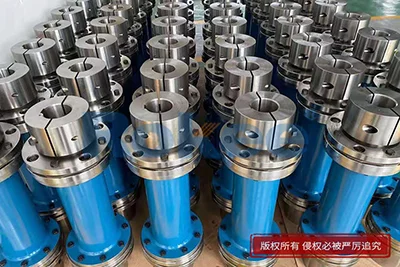
High speed flexible shaft couplings are core precision mechanical components tailored for high-velocity power transmission systems, designed to connect rotating shafts while delivering stable torque transfer and mitigating various operational deviations. Unlike rigid coupling structures that lack adaptive flexibility, these specialized couplings integrate elastic deformation mechanisms to compensate for axial, angular, and parallel shaft misalignments generated during equipment installation, mechanical operation, and thermal expansion. In high-speed operating scenarios where rotational velocity remains consistently elevated, traditional coupling solutions often suffer from excessive vibration, torque loss, and premature component wear, whereas flexible variants maintain structural stability and transmission accuracy. They effectively dampen torsional vibration and mechanical shock generated by high-frequency rotation, reduce load pressure on bearings and transmission accessories, and extend the overall service life of mechanical systems. Widely applied in precision automation, power transmission, and high-speed processing equipment, these couplings balance high torsional stiffness and flexible adaptability, becoming indispensable components for ensuring efficient, stable, and low-consumption operation of modern high-speed mechanical transmission systems.
The fundamental working principle of high speed flexible couplings centers on controlled elastic deformation of internal flexible elements, which enables compliant power transmission while offsetting multi-dimensional shaft misalignments. During high-speed rotation, paired driving and driven shafts inevitably produce tiny positional deviations due to assembly tolerances, equipment vibration, and thermal deformation of metal components. Rigid couplings rigidly fix two shafts together, forcing transmission systems to operate under abnormal stress and triggering severe vibration and friction loss at high speeds. In contrast, high-speed flexible couplings utilize elastic core components such as metal diaphragms, elastic discs, or polymer flexible bodies to generate micro elastic displacement following shaft movement. This subtle deformation absorbs and offsets misalignment errors without interfering with continuous torque transmission. Meanwhile, the optimized structural design ensures uniform stress distribution during high-speed operation, avoiding local stress concentration that causes component fatigue. The torsional rigidity of the flexible elements is precisely calibrated to guarantee synchronous rotation of dual shafts, eliminating rotational hysteresis and backlash that affect transmission precision, which is particularly critical for high-speed systems requiring accurate speed and torque output.
Structural design optimization is the core advantage that enables flexible shaft couplings to adapt to long-term high-speed operating conditions. Most high-performance models adopt compact integrated structures with lightweight hub components and high-strength flexible elastic units, abandoning bulky redundant structures that increase rotational inertia. Lightweight structural design effectively reduces centrifugal force generated during high-speed rotation, minimizing operational vibration and rotational resistance, and lowering the dynamic load of the entire transmission system. The flexible core components are usually made of high-toughness, fatigue-resistant materials that can withstand repeated elastic deformation under high-frequency rotation without permanent structural damage. Connecting structures between hubs and flexible elements adopt precision clamping or staggered bolt assembly modes, ensuring tight fitting and zero relative displacement during high-speed operation. Additionally, the surface of key components is treated with anti-corrosion and wear-resistant processes to adapt to complex industrial operating environments. This scientific structural configuration not only ensures the flexibility required for misalignment compensation but also maintains excellent structural rigidity and stability, perfectly adapting to continuous high-speed cyclic operation and avoiding structural loosening or failure caused by long-term high-load rotation.
Vibration damping and shock absorption performance constitutes the key functional value of high speed flexible shaft couplings in high-precision high-speed transmission systems. High-speed mechanical operation inevitably produces high-frequency torsional vibration and instantaneous mechanical impact due to speed switching, load fluctuation, and equipment start-stop processes. Such vibration and impact will be directly transmitted to the entire transmission chain through rigid connections, causing precision deviation of operating components, accelerated wear of bearings and gears, and even resonance failure of mechanical equipment in severe cases. Flexible couplings rely on the elastic buffer effect of internal flexible units to isolate and attenuate high-frequency vibration energy in real time. When instantaneous impact load occurs during high-speed operation, the flexible structure absorbs impact force through rapid micro-deformation and releases energy slowly, avoiding instantaneous stress impact on rigid components. This excellent vibration isolation performance stabilizes the operating state of high-speed equipment, ensures consistent transmission accuracy during long-term operation, and greatly reduces mechanical noise generated by high-speed friction and vibration, improving the overall operating stability and working environment of mechanical systems.
High speed flexible shaft couplings exhibit outstanding adaptive performance in complex industrial operating environments, adapting to diverse high-speed working conditions and variable load states. In actual industrial production, high-speed transmission equipment often faces variable temperature environments, dynamic load changes, and minor structural displacement during long-term operation. Ordinary coupling products are prone to deformation failure, transmission jitter, and precision decline under such complex conditions. High-speed flexible couplings feature excellent temperature adaptability, maintaining stable elastic performance and structural reliability in fluctuating temperature environments without obvious rigidity attenuation or deformation failure. Their unique flexible adaptive capability can automatically track and compensate for real-time shaft displacement changes caused by equipment aging, operational vibration, and thermal expansion and contraction. Moreover, these couplings perform stably under alternating high-speed loads, maintaining continuous and uniform torque output without jitter or power loss even during frequent speed regulation and load switching. This strong environmental adaptability enables them to operate stably for a long time in complex working scenarios that cannot be adapted by traditional coupling products, reducing equipment failure rates and maintenance frequency.
The application scenarios of high speed flexible couplings cover numerous high-precision and high-efficiency mechanical transmission fields, becoming key supporting components for modern industrial intelligent equipment. In precision automation equipment such as servo drive systems and automated processing machinery, they ensure high-precision synchronous transmission during high-speed operation, guaranteeing the positioning accuracy and operating stability of automated processing. In high-speed rotating equipment including fans, compressors, and pump bodies, couplings effectively isolate operating vibration, protect core equipment components, and improve the continuous operation capacity of equipment. In new energy and power transmission equipment, they adapt to high-speed and high-efficiency energy transmission requirements, reduce energy loss during transmission, and improve overall equipment energy utilization efficiency. Additionally, they are widely used in precision testing instruments, high-speed printing equipment, and automated conveying systems, providing stable and accurate power transmission support for various high-speed precision mechanical systems. Their versatile performance enables them to meet the differentiated transmission demands of multiple industrial fields.
Compared with traditional rigid and ordinary flexible couplings, high speed flexible shaft couplings present comprehensive performance advantages in high-speed operating scenarios. Rigid couplings have simple structures but completely lack misalignment compensation capability, and long-term high-speed operation will aggravate equipment wear and cause transmission precision attenuation. Ordinary flexible couplings have limited vibration damping effect and low structural rigidity, prone to elastic fatigue and torque loss under long-term high-speed operation, failing to meet precision transmission requirements. In contrast, high-speed flexible couplings achieve a perfect balance between flexibility and rigidity through optimized material selection and structural design. They not only retain excellent misalignment compensation and vibration damping functions but also possess high torsional rigidity and low rotational inertia, ensuring zero-backlash and high-precision torque transmission during high-speed rotation. Meanwhile, their fatigue resistance and structural stability are significantly improved, effectively extending service life under high-frequency cyclic operation. These comprehensive performance advantages make them more suitable for modern high-speed, high-precision, and high-stability industrial transmission systems than traditional products.
Regular maintenance and correct installation are crucial to maximizing the service life and operational performance of high speed flexible shaft couplings in long-term high-speed operation. During equipment installation, precise shaft alignment must be completed to minimize initial misalignment errors, reducing long-term elastic deformation load of flexible units and avoiding premature fatigue failure. It is necessary to regularly check the fastening state of connecting parts during daily operation to prevent component loosening caused by high-speed vibration, which may lead to transmission jitter and precision deviation. Meanwhile, the surface integrity and elastic performance of flexible core components should be inspected periodically to replace aging, deformed, or worn parts in a timely manner and ensure stable damping and compensation performance. In addition, maintaining a clean operating environment and avoiding long-term erosion by dust and corrosive substances can effectively protect component surfaces and internal structures. Standardized installation and scientific daily maintenance can fully exert the high-speed adaptive performance of the coupling, reduce equipment failure rates, and ensure long-term stable and efficient operation of high-speed mechanical transmission systems.




Links:
- Calibration Weight
- Digital Viscometer
- Carpas Industriales
- Exhibition Tent
- Industrial Cardan Shaft
- PU Sandwich Panel Machine
- PIR Sandwich Panel Line
- Sandwich Panel Machine
- Sandwich Panel Production Line
- PU Sandwich Panel Line
- Sandwich Panel Line
- Flexible Couplings Manufacturer In China
- Elastic Couplings Manufacturer In China