Keyway Diaphragm Coupling

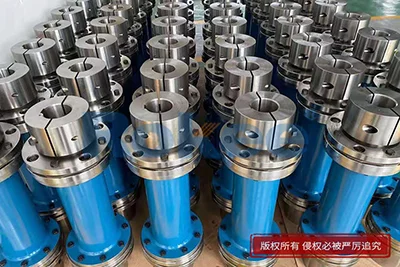
Keyway diaphragm coupling is a high-performance metal flexible transmission component widely adopted in modern mechanical transmission systems, integrating the structural advantages of keyway positioning connection and elastic diaphragm torque transmission. It serves as a core connecting part for driving and driven shafts, mainly used to transmit rotational torque while compensating for minor axial, angular and radial misalignments generated during equipment operation. Different from traditional coupling structures, this type of coupling adopts a keyway matching installation mode between the hub and the shaft, which ensures stable positioning and reliable torque transmission, and combines the elastic deformation characteristics of metal diaphragms to avoid rigid extrusion and mechanical wear between components. With the core attributes of zero backlash, high torsional rigidity and low operation loss, it adapts to various high-precision, high-speed and heavy-duty transmission scenarios. Free from the limitations of lubrication maintenance and environmental interference, it has become an indispensable basic component in industrial automation, precision processing and power transmission equipment, providing stable and efficient power transmission guarantee for mechanical operation.
The structural composition of keyway diaphragm coupling is sophisticated and reasonable, forming a complete and efficient transmission system through the organic combination of multiple core components. The main structure includes two symmetrical coupling hubs with keyway grooves, stacked metal diaphragm groups, and high-strength fastening bolts. The keyway groove machined on the inner wall of the coupling hub is the core positioning structure, which can be precisely matched with the flat key on the transmission shaft to realize circumferential fixation and prevent relative rotation between the shaft and the hub during operation. The metal diaphragm group is usually composed of multiple thin stainless steel diaphragms stacked together, with good elastic deformation ability and structural toughness, and is alternately connected with the two hubs through bolts. This structural design separates the rigid positioning function of the keyway from the flexible compensation function of the diaphragm, realizing the complementary advantages of rigid transmission and flexible buffering. The overall structure is compact and lightweight, without redundant transmission parts, which effectively reduces the rotational inertia of the coupling during operation. Meanwhile, the integrated all-metal structure avoids the aging and failure problems of non-metal elastic parts, laying a solid foundation for long-term stable operation of the equipment.
The working principle of keyway diaphragm coupling is based on mechanical positioning and elastic deformation linkage, realizing efficient and stable torque transmission and misalignment compensation. In the equipment operation process, the flat key installed in the keyway groove locks the relative position between the driving shaft and the coupling hub, and the torque generated by the driving equipment is stably transmitted to the coupling hub through the keyway structure. Then, the torque is evenly transmitted to the driven side hub and the driven shaft through the elastically connected metal diaphragm group. When the installation deviation or operational vibration causes misalignment between the two connected shafts, the thin metal diaphragms will produce tiny reversible elastic deformation to adapt to the displacement change of the shaft system. This elastic deformation can effectively offset axial stretching, angular deflection and radial offset, avoiding additional mechanical stress and vibration generated by rigid connection. Different from traditional couplings that rely on sliding or extrusion transmission, it has no relative friction between parts during operation, realizing zero-wear torque transmission. The whole working process is efficient and stable, with low power loss, which can maximize the output power of the driving equipment and meet the high-precision transmission requirements of modern mechanical equipment.
Keyway diaphragm coupling has outstanding performance advantages in torsional rigidity and transmission accuracy, making it stand out in precision transmission fields. It features extremely high torsional rigidity, which means it will not produce obvious torsional deformation under rated torque load, ensuring synchronous and consistent rotation of the driving and driven shafts. This characteristic completely avoids the rotation lag and angle deviation common in flexible couplings with low rigidity, realizing real-time and accurate torque and angle transmission. In addition, the keyway positioning structure achieves zero-backlash connection, eliminating the circumferential gap between the shaft and the hub. There is no clearance impact or rotation delay during forward and reverse operation, which is particularly suitable for equipment requiring frequent start-stop and forward-reverse switching. The metal diaphragm group has uniform stress distribution during operation, with stable deformation and no local stress concentration, ensuring long-term consistency of transmission accuracy. Compared with rubber elastic couplings and gear couplings, it has higher transmission precision and better stability, and can maintain excellent transmission performance even in long-term continuous operation, effectively improving the overall operation precision of mechanical systems.
In terms of operational stability and environmental adaptability, keyway diaphragm coupling shows strong comprehensive performance and wide application adaptability. Its all-metal manufacturing structure enables it to resist the interference of various complex industrial environments, without being affected by high temperature, low temperature, oil pollution and conventional corrosive media. It will not produce aging, deformation or performance degradation due to environmental changes, and can maintain stable working performance in harsh working conditions that are not suitable for non-metal couplings. During high-speed operation, the compact structural design and balanced processing technology effectively suppress vibration and noise, realizing low-noise and smooth operation. The keyway positioning structure has high connection stability, which can resist the impact load generated by equipment start-up, sudden load change and instantaneous vibration, avoiding loose connection and transmission failure. Moreover, the diaphragm group has excellent fatigue resistance, and the reversible elastic deformation will not cause structural fatigue damage after millions of repeated operations. It can adapt to long-term continuous industrial production and high-frequency variable-load operation scenarios, greatly reducing the probability of equipment failure caused by coupling performance attenuation.
The installation and maintenance characteristics of keyway diaphragm coupling make it have high practical value in industrial production. The keyway matching installation mode is simple and intuitive, with low requirements for installation technology. The staff can quickly complete the positioning assembly of the coupling and the transmission shaft through the matching of flat key and keyway groove, which shortens the equipment assembly cycle. The standardized structural design enables the coupling to realize precise docking with conventional transmission shafts, with high installation compatibility and strong universality. In terms of daily maintenance, the all-metal wear-free structure realizes maintenance-free operation in the whole service cycle. There is no need to add lubricating oil, grease or other lubricants regularly, nor need to replace vulnerable parts frequently, which greatly reduces the daily maintenance workload and maintenance cost of the equipment. During equipment inspection, the operating state of the coupling can be directly observed from the outside, and abnormal deformation or structural damage of the diaphragm can be found in time. The disassembly process is also simple and efficient, which is convenient for equipment overhaul and part replacement, effectively improving the operation efficiency of industrial production lines.
Keyway diaphragm coupling has a wide range of application scenarios, covering most mainstream mechanical transmission fields. In the field of precision automation equipment, it is applied to servo motor transmission, precision positioning platforms and automated processing equipment, relying on its zero-backlash and high-precision transmission characteristics to ensure the accurate execution of equipment actions. In heavy-duty industrial transmission equipment, its large torque bearing capacity and stable connection performance can meet the operation requirements of large mechanical equipment under heavy load and variable load conditions. In high-speed operation equipment such as fans, pumps and compressors, its low inertia, vibration damping and high-speed stability can effectively improve the operating efficiency and service life of the equipment. In addition, it also plays an important role in metallurgical machinery, chemical machinery, transportation machinery and other fields. With the continuous upgrading of industrial manufacturing towards high precision, high efficiency and high stability, the application scope of keyway diaphragm coupling is constantly expanding, and it has become a preferred transmission component for more mechanical system design and transformation.
With the continuous development of industrial transmission technology, the optimization and upgrading of keyway diaphragm coupling is also advancing steadily, and its comprehensive performance is constantly improved to adapt to more complex working conditions. At present, the optimization direction of this coupling mainly focuses on structural lightweight, stress uniformity improvement and adaptability expansion. By optimizing the diaphragm stacking structure and hub contour design, the rotational inertia of the coupling is further reduced, and the dynamic response speed of the transmission system is improved. The optimized keyway processing technology makes the positioning matching more precise, further eliminating tiny assembly gaps and improving transmission stability. Meanwhile, the application of high-strength alloy materials enhances the torque bearing capacity and fatigue resistance of the coupling, enabling it to adapt to higher load and higher speed working environments. In the future, with the continuous progress of mechanical manufacturing technology, keyway diaphragm coupling will develop towards higher precision, stronger stability and wider adaptability, and will provide more reliable core support for the upgrading and innovation of modern industrial mechanical transmission systems.




Links:
- Calibration Weight
- Digital Viscometer
- Carpas Industriales
- Exhibition Tent
- Industrial Cardan Shaft
- PU Sandwich Panel Machine
- PIR Sandwich Panel Line
- Sandwich Panel Machine
- Sandwich Panel Production Line
- PU Sandwich Panel Line
- Sandwich Panel Line
- Flexible Couplings Manufacturer In China
- Elastic Couplings Manufacturer In China