Flexible Shaft Coupling
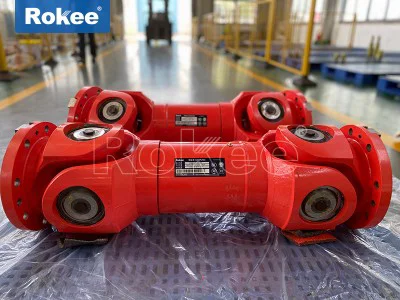
Flexible shaft couplings are essential mechanical components designed to connect two rotating shafts in mechanical systems, serving the dual core functions of stable torque transmission and adaptive misalignment compensation. Unlike rigid shaft couplings that rely on fully fixed connection structures, flexible versions integrate elastic or movable structural elements to tolerate minor deviations between paired shafts during equipment operation. These deviations commonly include parallel offset, angular deflection, and axial displacement caused by mechanical assembly errors, operational vibration, or thermal expansion and contraction. Beyond basic power transmission, they effectively buffer mechanical shock, dampen operational vibration, and reduce friction wear between connected parts, greatly extending the service life of rotating machinery. Widely applied in precision motion control equipment, industrial transmission systems, and automated mechanical devices, flexible shaft couplings balance transmission accuracy and mechanical flexibility, becoming an indispensable foundational part for ensuring stable and efficient operation of modern mechanical transmission systems.
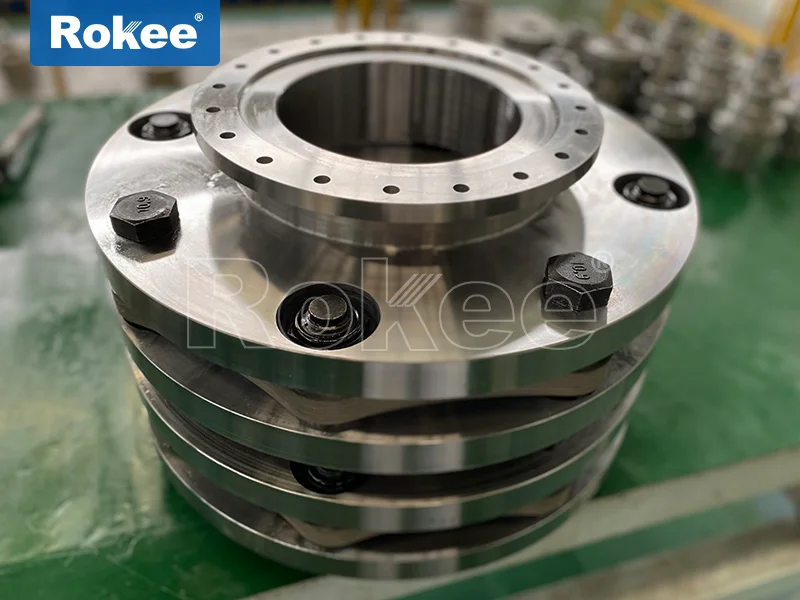
The core working principle of flexible shaft couplings revolves around the elastic deformation and structural displacement of their internal flexible components during power transmission. When the driving shaft rotates and outputs torque, the flexible structure transfers rotational power to the driven shaft through continuous micro-deformation, rather than rigid force conduction. This unique working mode allows the coupling to automatically adapt to various minor misalignment states between shafts without generating additional mechanical stress on the shaft body, bearings, or other matching parts. In the operation process, any offset or deflection between the two connected shafts will be offset by the elastic stretch, compression, or torsion of the flexible medium inside the coupling. Meanwhile, the flexible structure can absorb instantaneous impact force generated by equipment start-stop, load mutation, or external mechanical jitter, preventing rigid collision and stress concentration inside the transmission system. This buffering effect not only optimizes the smoothness of power transmission but also avoids fatigue damage to precision mechanical structures caused by long-term alternating stress, laying a solid foundation for the continuous and stable operation of mechanical equipment in complex working conditions.
There are diverse structural types of flexible shaft couplings, each designed to adapt to different working scenarios and transmission requirements, with mainstream classifications covering elastomeric flexible couplings and metal flexible couplings. Elastomeric flexible couplings typically adopt polymer elastic materials such as polyurethane and rubber as the core force-transmitting components, with the most representative being jaw couplings. This structure consists of two metal jaw hubs and a star-shaped elastic spacer clamped between the hubs, transmitting torque through the compression deformation of the elastic spacer. It features simple structure, convenient assembly and replacement, and excellent vibration damping performance, suitable for low-to-medium torque and high-precision motion scenarios. Metal flexible couplings rely on the elastic deformation of thin-walled metal structures to achieve flexibility, including bellows couplings and diaphragm couplings. These all-metal structures boast high structural rigidity, excellent torque transmission accuracy, and strong resistance to high temperature and aging, making them ideal for high-speed, high-precision, and high-load industrial transmission environments. Different structural designs endow flexible shaft couplings with distinct performance characteristics, enabling targeted matching with various mechanical equipment working conditions.

One of the most prominent advantages of flexible shaft couplings is their outstanding misalignment compensation capability, which solves the common pain point of shaft connection in mechanical assembly and operation. In actual mechanical installation, it is almost impossible to achieve absolute coaxiality of two connected shafts due to manual assembly errors, equipment manufacturing tolerances, and foundation fixation deviations. In subsequent long-term operation, factors such as equipment vibration, temperature changes leading to thermal expansion and contraction of metal parts, and slight foundation settlement will further aggravate shaft misalignment. Rigid couplings cannot adapt to these deviations, which will cause severe eccentric wear of shafts and bearings, increased transmission noise, and even equipment jitter and shutdown failure. Flexible shaft couplings can comprehensively compensate for three common forms of misalignment: parallel misalignment where the two shafts are parallel but offset, angular misalignment where the shaft axes form a tiny included angle, and axial misalignment where there is micro-displacement in the shaft length direction. This adaptive compensation performance greatly reduces the assembly precision threshold of mechanical equipment and improves the operational stability of transmission systems.
Vibration damping and shock absorption performance is another key functional advantage of flexible shaft couplings, which plays a vital role in protecting precision mechanical equipment and optimizing operating environments. Mechanical transmission systems inevitably produce periodic vibration during high-speed operation, and instantaneous impact vibration will be generated during equipment startup, shutdown, load switching, and fault jitter. These vibrations will be directly transmitted along the rigidly connected shaft system, causing resonance of the whole equipment, increasing component wear, and even affecting the working accuracy of precision instruments and automated equipment. The flexible medium inside flexible shaft couplings can effectively intercept and consume vibration energy. The elastic deformation process of polymer materials or thin-walled metal structures converts mechanical vibration energy into internal energy for dissipation, suppressing the transmission of vibration and impact between the driving and driven shafts. In precision motion equipment such as servo systems and encoder matching devices, this vibration damping function can effectively avoid signal distortion and position deviation caused by mechanical vibration, ensuring the repeat positioning accuracy and operational stability of the equipment.

Flexible shaft couplings have extremely wide application coverage, penetrating almost all mechanical fields involving rotating shaft transmission. In precision motion control fields, they are core matching components for servo motors, stepping motors, encoders, and linear actuators, providing high-precision and low-jitter power transmission for automated production equipment, robotic arms, and numerical control machinery. In general industrial manufacturing, they are widely used in pump bodies, fans, reducers, and conveyor equipment, solving the misalignment and vibration problems of conventional transmission systems and reducing equipment maintenance frequency. In new energy and power equipment, flexible shaft couplings connect power generation components and power transmission structures, adapting to the slight displacement and vibration generated during the operation of power equipment to ensure efficient energy conversion and transmission. Additionally, they are also applied in medical mechanical equipment, testing instruments, and light industrial machinery, where high operational stability and precision are required. The diversified performance adaptability enables flexible shaft couplings to meet the differentiated needs of various industrial scenarios.
The material selection of flexible shaft couplings directly determines their service performance, service life, and applicable working conditions, forming a scientific material matching system for different structural types. For elastomeric flexible couplings, elastic polymer materials are mainly used for the intermediate force-transmitting parts. Polyurethane materials are the most widely used due to their excellent wear resistance, moderate elasticity, and good oil resistance, suitable for most conventional industrial environments. Natural rubber and synthetic rubber materials have better softness and vibration damping effects, ideal for low-load and low-noise working scenarios, but with relatively poor high-temperature resistance and aging resistance. The metal hubs of such couplings are mostly made of aluminum alloy or cast iron; aluminum alloy features light weight and high processing precision, suitable for precision lightweight equipment, while cast iron has high rigidity and low cost, applicable for heavy-load conventional equipment. Metal flexible couplings mostly adopt stainless steel and high-strength alloy steel, which have high fatigue resistance, high temperature resistance, and structural stability, meeting the long-term operation requirements of high-speed and high-load equipment.

Scientific selection of flexible shaft couplings is crucial to give full play to their performance and ensure the long-term stable operation of mechanical systems. The first core selection factor is the transmission torque, which needs to match the actual working torque of the equipment and reserve a certain safety margin to avoid structural damage caused by overload operation. Excessively small torque bearing capacity will lead to elastic element failure or metal structure deformation, while excessive specification will cause equipment redundancy and increased operating inertia. The second factor is the operating speed; high-speed rotating equipment needs to select flexible couplings with high structural balance and low vibration characteristics, avoiding resonance and centrifugal force-induced structural instability. In addition, the actual misalignment range of the equipment shaft must be considered, and couplings with matching compensation capability should be selected according to the assembly deviation and operational displacement of the shaft system. Working environment factors including temperature, humidity, oil pollution, and dust also need to be taken into account to select materials with corresponding corrosion resistance and aging resistance, so as to avoid performance degradation caused by environmental interference.
Daily maintenance and inspection of flexible shaft couplings can effectively extend their service life and prevent sudden equipment failures, forming a standardized equipment maintenance link. In routine equipment inspection, operators need to regularly check the connection state of the coupling, focusing on whether the fastening bolts of the metal hub are loose, as loose connection will cause eccentric rotation and aggravated wear during operation. For elastomeric flexible couplings, it is necessary to observe the state of the intermediate elastic spacer regularly, check for aging, cracking, deformation, or excessive wear, and replace the damaged elastic parts in a timely manner, as failed elastic components will completely lose vibration damping and compensation functions. For metal flexible couplings, attention should be paid to detecting fatigue deformation and surface abrasion of the thin-walled structure to avoid structural fracture caused by long-term fatigue operation. Meanwhile, keep the coupling surface clean, avoid long-term adhesion of oil stains, dust, and corrosive substances, and regularly check the operating noise and vibration of the coupling during equipment operation to judge its working state in real time.

Compared with rigid couplings and other traditional transmission connection components, flexible shaft couplings show comprehensive performance advantages in multiple dimensions. Rigid couplings pursue absolute fixed connection and high rigidity transmission, but they cannot adapt to any shaft misalignment, and tiny deviations will be amplified in the transmission process, causing severe wear of shaft parts and low equipment stability. Belt and chain transmission structures have certain flexibility, but they have large transmission clearance, low precision, and poor synchronous performance, which cannot meet the precision transmission requirements of automated and intelligent equipment. In contrast, flexible shaft couplings achieve a perfect balance between transmission rigidity and mechanical flexibility. They can ensure synchronous and accurate torque transmission without obvious speed difference and position deviation, while retaining adaptive compensation and vibration damping capabilities. Moreover, flexible shaft couplings have a compact structure, occupy small installation space, and do not require complex lubrication and maintenance procedures, with lower comprehensive use cost and higher operational reliability than other transmission connection modes.
With the continuous upgrading of modern mechanical equipment towards high precision, high speed, and high intelligence, the technical development of flexible shaft couplings is also constantly advancing. The current development trend focuses on optimizing structural design to achieve higher precision compensation and stronger vibration damping performance while reducing structural volume and weight to adapt to lightweight and miniaturized intelligent equipment. Material technology innovation is also promoting performance upgrading; new composite elastic materials and high-strength lightweight metal materials are being applied to flexible couplings, effectively improving their high temperature resistance, fatigue resistance, and corrosion resistance, and expanding their applicable extreme working conditions. In addition, integrated and modular design has become a mainstream direction, making the installation, disassembly, and replacement of couplings more convenient, and improving the overall assembly efficiency of mechanical equipment. With the continuous progress of industrial manufacturing technology, flexible shaft couplings will further optimize their comprehensive performance and be applied in more emerging mechanical fields.
As a key basic component of mechanical transmission systems, flexible shaft couplings undertake the important tasks of power transmission, misalignment compensation, and vibration protection, and their performance directly affects the operating efficiency, stability, and service life of the whole mechanical equipment. Their unique flexible transmission structure makes up for the functional defects of traditional rigid connection structures, solving many practical problems in mechanical assembly and operation such as assembly errors, operational vibration, and thermal deformation. Through diversified structural designs and scientific material matching, flexible shaft couplings can adapt to complex and variable working scenarios from low-speed ordinary transmission to high-speed precision motion control. With reasonable type selection, standardized installation, and regular maintenance, flexible shaft couplings can maintain long-term stable working performance, reduce equipment failure rates and maintenance costs, and provide reliable basic guarantee for the efficient and safe operation of various modern mechanical and industrial equipment.
Links:
- Calibration Weight
- Digital Viscometer
- Carpas Industriales
- Exhibition Tent
- Industrial Cardan Shaft
- PU Sandwich Panel Machine
- PIR Sandwich Panel Line
- Sandwich Panel Machine
- Sandwich Panel Production Line
- PU Sandwich Panel Line
- Sandwich Panel Line
- Flexible Couplings Manufacturer In China
- Elastic Couplings Manufacturer In China