Flexible Coupling Empowers PU Sandwich Panel Line To Reduce Cost and Increase Efficiency And Improve Quality

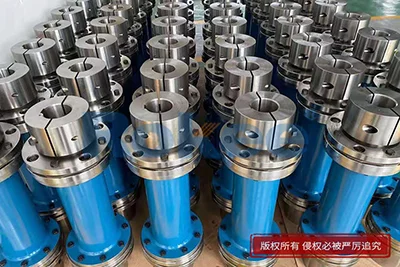
The continuous production of polyurethane sandwich panels relies on highly coordinated mechanical transmission systems, where the stability and accuracy of power transmission directly determine production efficiency, product consistency and overall operational costs. In traditional PU sandwich panel production lines, rigid connection structures have long been the mainstream transmission configuration, yet they inevitably expose prominent limitations in long-term continuous operation. Rigid connections fail to adapt to subtle shaft misalignment, mechanical vibration and thermal deformation generated during equipment operation, resulting in uneven power transmission, excessive component wear, frequent equipment jitter and intermittent production fluctuations. These subtle mechanical problems gradually evolve into large-scale production losses, including increased raw material waste, frequent equipment maintenance, unplanned production downtime and unstable finished product quality, which restrict the high-quality and high-efficiency operation of the entire production line. As a core flexible transmission component, flexible coupling effectively solves the inherent defects of rigid transmission structures through its unique adaptive adjustment performance, bringing comprehensive optimization in cost control, production efficiency and product quality improvement for PU sandwich panel line, and has become a key technical support for the upgrading and transformation of modern building panel manufacturing.
PU sandwich panel manufacturing is a typical continuous flow industrial production process, covering multiple interconnected links including material unwinding, surface leveling, PU foaming, high-pressure compounding, constant-temperature curing, fixed-length cutting and finished product conveying. Each production link is closely linked, and the operating status of a single piece of equipment will affect the overall production rhythm. The transmission system undertakes the core task of power transmission and speed synchronization for all processing equipment. In the long-term high-load operation of production lines, factors such as installation deviation, mechanical fatigue, equipment vibration and temperature changes will cause different degrees of axial displacement and angular deviation between driving shafts and driven shafts. Traditional rigid connection parts cannot compensate for these misalignment errors, so additional mechanical stress will be concentrated on transmission shafts, bearings, gears and other core components during operation. Long-term stress accumulation will accelerate component wear, increase equipment operating resistance, and cause local power loss in the transmission process, which not only raises equipment energy consumption but also leads to unstable operating speed of production equipment.
The adverse impacts of unstable transmission on PU sandwich panel production are reflected in all key processing links. In the raw material unwinding and conveying stage, inconsistent operating speed caused by rigid transmission jitter will lead to uneven tension of metal sheets and base materials, resulting in material deviation and wrinkling in the subsequent compounding process. In the core PU foaming and compounding stage, slight mechanical vibration and speed fluctuation will disrupt the uniform mixing and even foaming of polyurethane materials, causing inconsistent foam density, uneven internal pores and poor bonding tightness between the core material and the surface layer. In the fixed-length cutting stage, unstable equipment operation speed will lead to inaccurate cutting size and uneven cutting edges, producing a large number of defective and waste products. At the same time, frequent wear and failure of transmission components require regular inspection, maintenance and replacement, which consumes a large amount of labor and spare parts costs, and unplanned shutdowns caused by equipment failures will directly interrupt continuous production, resulting in reduced production output and delayed delivery cycles. These cumulative problems have become important bottlenecks restricting the profitability and product quality stability of PU sandwich panel manufacturing enterprises.
Flexible coupling completely changes the passive adaptation state of traditional transmission structures through its flexible compensation and shock absorption characteristics, realizing active adjustment and stable transmission in the operation of PU sandwich panel production lines. Different from rigid connections that pursue absolute fixed-axis rotation, flexible coupling is designed with flexible structural characteristics, which can effectively compensate for axial, radial and angular misalignment between transmission shafts generated by equipment installation errors, mechanical vibration and thermal deformation. This adaptive compensation function eliminates the additional mechanical stress caused by shaft misalignment, reduces the friction and wear of transmission components, and maintains the stability and continuity of power transmission in the full-cycle operation of the production line. In the high-frequency and high-load continuous production scenario of PU sandwich panels, this stable transmission advantage can be fully demonstrated, effectively avoiding production rhythm fluctuations and product quality defects caused by transmission system abnormalities.
In terms of cost reduction, the application of flexible coupling brings multi-dimensional cost optimization benefits for PU sandwich panel production lines, covering equipment maintenance cost, raw material waste cost, energy consumption cost and production loss cost caused by downtime. First of all, the flexible buffer performance of flexible coupling greatly reduces the rigid impact and friction loss between transmission components, effectively delaying the wear and aging of bearings, transmission shafts, gears and other vulnerable parts. This significantly extends the service life of core equipment components, reduces the frequency of spare parts replacement and daily equipment maintenance workload, and saves a large amount of long-term maintenance and labor costs. Secondly, the stable and synchronous operation of the production line eliminates product defects and waste caused by transmission jitter and speed deviation, reducing the waste of high-value raw materials such as metal sheets and polyurethane foaming materials in the production process. The reduction of defective products also avoids the repeated processing and resource consumption of waste products, realizing the efficient utilization of production materials.
In addition, the optimized transmission structure of flexible coupling reduces the operating resistance and power loss of the equipment. The power output of the driving device can be efficiently transmitted to the working equipment, avoiding invalid energy consumption caused by transmission friction and stress loss, thus reducing the overall energy consumption of the production line in long-term operation. More importantly, the stable operating state of the transmission system greatly reduces unplanned equipment shutdowns. Traditional rigid transmission structures are prone to sudden failures under long-term load operation, resulting in production interruption and low equipment operation rate. After adopting flexible coupling, the failure rate of the transmission system is significantly reduced, the continuous operation cycle of the production line is prolonged, and the invalid production loss caused by frequent shutdown and restart is avoided. The superposition of multiple cost-saving effects effectively optimizes the overall production cost structure of the enterprise and improves the marginal profit space of product manufacturing.
In terms of production efficiency improvement, flexible coupling realizes the overall efficiency upgrade of PU sandwich panel line through stabilizing production rhythm, improving equipment operation rate and optimizing processing synchronization. The continuous production characteristics of PU sandwich panels require all equipment links to maintain highly consistent operating speed and synchronous coordination. Rigid transmission is prone to speed deviation and operation lag in long-term operation, resulting in discontinuous production processes and restricted production speed. Flexible coupling ensures real-time synchronization of the speed of each transmission node through precise power transmission and misalignment compensation, making the unwinding, foaming, compounding, curing, cutting and conveying links closely connected and coordinated efficiently. The smooth and continuous production process eliminates the efficiency loss caused by process jitter and equipment stalling, enabling the production line to operate stably at a high-efficiency rated speed for a long time.
At the same time, the reduction of equipment failures and maintenance times greatly improves the effective operating time of the production line. Traditional production lines need frequent shutdown inspections and component replacements to eliminate hidden dangers of transmission failures, which occupies a large amount of effective production time. After the application of flexible coupling, the stability and reliability of the transmission system are comprehensively improved, the cycle of equipment routine maintenance is prolonged, and the number of emergency shutdowns is greatly reduced, which significantly increases the effective production hours of the production line every day. In addition, the stable processing state avoids repeated debugging and secondary processing caused by unqualified products, saves production auxiliary time, and further improves the overall operational efficiency of the production line. For large-scale continuous manufacturing enterprises, the long-term stable high-efficiency operation of the production line can form a huge capacity advantage, effectively improving production output and market supply capacity.
In terms of product quality improvement, flexible coupling provides a stable mechanical foundation for the precision forming and consistent quality of PU sandwich panels, fundamentally solving the quality instability problems caused by transmission system fluctuations. The quality of PU sandwich panels depends on the uniformity of foaming density, the firmness of composite bonding, the flatness of plate surface and the accuracy of dimensional specifications, all of which are extremely sensitive to the operating stability of production equipment. The vibration and speed fluctuation of traditional rigid transmission will directly affect the mixing uniformity of polyurethane raw materials, resulting in inconsistent foaming effect, loose internal structure of the plate, and uneven thickness of the core material. At the same time, unstable conveying speed will cause offset and dislocation between the surface material and the core material in the compounding process, leading to poor bonding performance and easy delamination of finished products.
Flexible coupling uses flexible buffer and shock absorption performance to eliminate micro-vibration and speed fluctuation in the transmission process, ensuring that all processing equipment operates at a constant and stable speed. In the foaming stage, stable equipment operation ensures the precise proportioning and uniform mixing of polyurethane materials, making the foaming process orderly and controllable, forming a dense and uniform internal pore structure of the core material, and effectively improving the thermal insulation performance and structural stability of the sandwich panel. In the compounding and leveling stage, synchronous and stable conveying power ensures the tight fitting and uniform bonding between the surface layer and the core material, avoiding plate wrinkling, deviation and delamination problems, and improving the flatness and overall uniformity of the plate surface. In the cutting stage, constant-speed and stable operation of the cutting equipment ensures accurate fixed-length cutting, smooth and neat cutting sections, and consistent dimensional specifications of finished products, greatly reducing the number of defective products with dimensional errors and appearance defects.
Moreover, the long-term stable transmission performance of flexible coupling realizes the consistency of product quality in batch production. In traditional production modes, the gradual wear of rigid transmission components will lead to continuous changes in equipment operating status, resulting in obvious quality differences between products produced in different time periods. The excellent wear resistance and stable compensation performance of flexible coupling ensure that the transmission state of the production line remains consistent in long-term batch production, so that the structural parameters, appearance quality and performance indicators of each batch of PU sandwich panels maintain high consistency. This stable batch production quality not only reduces the rate of defective products and rework volume, but also improves the overall quality level of products, helping enterprises form standardized and high-quality production advantages.
From the perspective of long-term production and industrial upgrading, the application of flexible coupling brings far-reaching value to the standardized and refined production of PU sandwich panel industry. Traditional PU sandwich panel manufacturing mostly adopts extensive production mode, which relies on frequent equipment maintenance and manual debugging to make up for the defects of rigid transmission, with high production cost, low efficiency and unstable product quality. The popularization of flexible coupling technology promotes the production line to transform from passive fault maintenance to active stable operation, realizing the optimization of production process, cost control and quality management. The efficient and stable production mode not only reduces the production management pressure of enterprises, but also improves the market competitiveness of products with stable quality and cost advantages.
In the actual production and operation process, the systematic empowerment of flexible coupling is reflected in the whole life cycle of production line operation. In the equipment operation stage, it maintains stable power transmission and synchronous operation of each link; in the quality control stage, it reduces process fluctuations and batch quality differences; in the cost management stage, it cuts maintenance consumption, energy waste and material loss; in the capacity guarantee stage, it improves equipment operation rate and continuous production capacity. This all-round optimization effect makes flexible coupling an indispensable core component of modern high-performance PU sandwich panel production lines. With the continuous improvement of market requirements for building energy-saving materials' quality, production precision and delivery efficiency, the technical advantages of flexible coupling in optimizing production systems will be further highlighted, becoming an important driving force for the intelligent and high-quality upgrading of the PU sandwich panel manufacturing industry.
In conclusion, flexible coupling breaks through the multiple bottlenecks of traditional rigid transmission in PU sandwich panel production through its unique adaptive compensation, shock absorption and stable transmission performance. It realizes effective cost reduction by reducing equipment wear, material waste and energy consumption, achieves significant efficiency improvement by stabilizing production rhythm and increasing effective operating time, and completes comprehensive quality upgrading by optimizing processing precision and batch consistency. In the context of increasingly fierce market competition and continuous upgrading of manufacturing standards, the reasonable application of flexible coupling can help PU sandwich panel manufacturing enterprises realize the organic unity of cost control, efficiency improvement and quality optimization, inject lasting power for enterprises to reduce operating pressure, improve product competitiveness and achieve sustainable development, and promote the entire industry to move towards more efficient, economical and high-quality refined production direction.


Links:
- Calibration Weight
- Digital Viscometer
- Carpas Industriales
- Exhibition Tent
- Industrial Cardan Shaft
- PU Sandwich Panel Machine
- PIR Sandwich Panel Line
- Sandwich Panel Machine
- Sandwich Panel Production Line
- PU Sandwich Panel Line
- Sandwich Panel Line
- Flexible Couplings Manufacturer In China
- Elastic Couplings Manufacturer In China