Daily Maintenance Points Of Flexible Coupling For PU Sandwich Panel Line

In the continuous production operation of PU sandwich panel lines, flexible couplings serve as core transmission components that connect various driving and driven equipment, including motors, reduction gearboxes, and roller transmission systems. These components undertake the key task of transmitting rotational torque and operating power, while compensating for minor axial, radial, and angular deviations generated during equipment operation. The stable operation of flexible couplings directly determines the continuity, precision, and operational safety of the entire PU sandwich panel production process. Due to the special operating environment of sandwich panel production lines, which features long-duration continuous operation, high dust accumulation, occasional temperature fluctuations, and cyclic load changes, flexible couplings are prone to wear, fatigue deformation, lubrication failure, and connection looseness if lacking standardized daily maintenance. These minor faults will gradually evolve into transmission jitter, power loss, equipment vibration, and even unexpected production shutdowns, seriously affecting the flatness, dimensional accuracy, and production efficiency of finished PU sandwich panels. Therefore, scientific, standardized, and systematic daily maintenance of flexible couplings is an essential link to stabilize the operating state of the production line, extend component service life, and reduce unplanned production losses.
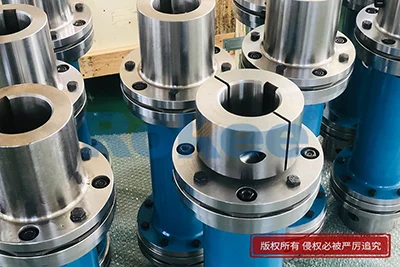
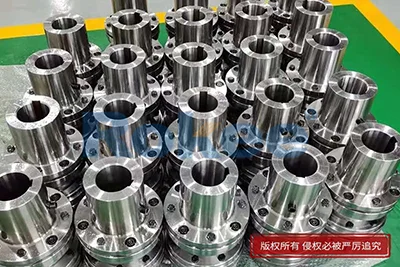
Daily visual inspection is the most basic and fundamental maintenance procedure for flexible couplings in PU sandwich panel line, and it is also the most effective means to capture early potential faults in a timely manner. This inspection work needs to be carried out by professional operators during daily equipment startup pre-checks, production interval shutdowns, and daily post-production maintenance. In the whole inspection process, staff need to observe the overall appearance and operating state of the flexible coupling in a comprehensive and detailed manner, focusing on checking the elastic compensation components, metal connecting hubs, transitional connecting parts, and surface integrity of all matching structures. For the elastic core components of flexible couplings, special attention should be paid to tiny cracks, local deformation, aging hardening, surface peeling, and fatigue lines on the surface. Long-term cyclic torque transmission in sandwich panel production will cause continuous telescopic and torsional deformation of elastic components, and subtle structural damage that cannot be observed during high-speed operation will gradually expand with the extension of operating time, eventually leading to component failure. In addition, it is necessary to check whether there are corrosion spots, rust layers, and dust accumulation attachments on the metal surface of the coupling. The production environment of PU sandwich panels will generate fine raw material dust and tiny chemical particles, which will adhere to the coupling surface for a long time, form abrasive impurities, and accelerate the friction and wear of matching surfaces. Daily visual inspection also needs to confirm the overall symmetry of the coupling operation, observe whether there is abnormal offset or deflection during rotation, and eliminate hidden dangers of structural deviation in the initial stage.
Lubrication maintenance is the core content of daily maintenance of flexible couplings, which directly affects the friction coefficient, wear degree and stable operation cycle of transmission components. The operating load and environmental conditions of PU sandwich panel production lines are relatively fixed, but long-term continuous operation will lead to gradual loss, deterioration and failure of lubricating media inside the coupling. Daily lubrication management needs to adhere to the principles of regular replacement, quantitative supplementation and classified selection, and formulate targeted lubrication strategies according to actual operating conditions. Under conventional production conditions where the temperature is stable and the dust concentration is moderate, the flexible coupling should be supplemented with special lubricating grease every 300 to 500 operating hours, and a comprehensive lubricating medium replacement should be completed every three months. For harsh operating environments often encountered in sandwich panel production, such as high-temperature baking sections, high-dust cutting and trimming sections, and long-term heavy-load continuous transmission sections, the lubrication cycle needs to be appropriately shortened, with supplementary lubrication every 100 to 200 operating hours and thorough grease replacement every month. Before adding new lubricating grease every time, it is necessary to completely clean the residual old grease inside the coupling and the dirt mixed with dust and metal wear debris, so as to avoid the mixing of deteriorated old grease with new lubricant causing lubrication failure, local heating and accelerated component wear. In terms of lubricant selection, it is necessary to match the operating environment of the production line. Conventional normal-temperature working sections adopt universal lubricating grease with good adhesion and wear resistance, while high-temperature working sections need to use high-temperature resistant lubricating media to prevent grease thinning and loss caused by high temperature, and humid and dusty sections need to choose anti-corrosion and dust-proof lubricating grease to ensure long-term stable lubrication effect.
Fastening and connection state inspection is an indispensable daily maintenance link for flexible couplings of PU sandwich panel lines. The equipment will generate continuous mechanical vibration during high-speed and long-term operation, and the cyclic torque impact in the transmission process will easily cause the loosening of coupling fastening bolts, nuts and positioning connecting parts. Slight looseness will lead to inconsistent stress on all parts of the coupling, resulting in operational jitter and transmission deviation, and severe looseness will cause component dislocation, torque transmission interruption and even equipment collision damage. In daily maintenance work, operators need to regularly check all fastening structures of the flexible coupling, focus on confirming the tightening state of each group of connecting bolts, and use professional torque tools to calibrate the fastening force to ensure that all fasteners maintain uniform and stable locking state. It is necessary to check whether there is bolt slippage, thread wear, nut missing and gasket aging failure. The elastic gaskets and shock-absorbing gaskets matched with the coupling fasteners will gradually age and lose their elasticity after long-term vibration, resulting in reduced anti-loosening effect. Therefore, daily inspection should include the aging judgment of auxiliary fastening accessories, and timely replace the failed gaskets and damaged threaded parts. In addition, it is necessary to check the matching tightness between the coupling hub and the transmission shaft, eliminate tiny gaps generated by long-term wear, and ensure the synchronous rotation of the coupling and the shaft body without relative sliding, so as to guarantee the accurate transmission of power and torque and avoid transmission efficiency loss caused by connection gaps.
Shaft alignment calibration maintenance is a key daily maintenance item to prolong the service life of flexible couplings and stabilize production line operation accuracy. Although flexible couplings have certain axial, radial and angular deviation compensation capabilities, long-term operation under unaligned working conditions will bring excessive cyclic stress to elastic components and metal structures, leading to accelerated fatigue wear, permanent deformation and early failure of components. In the daily maintenance system of PU sandwich panel production lines, regular alignment detection and calibration of flexible couplings should be included in daily routine work. During daily shutdown maintenance, professional precision testing tools should be used to detect the radial runout deviation and angular deflection deviation of the coupling operation. For the transmission system of sandwich panel production lines, the radial deviation of the coupling operation should be controlled within a tiny range, and the angular deviation should also be maintained within the allowable precision range of flexible transmission. If the detection data exceeds the standard tolerance range, it is necessary to adjust the installation position and horizontal height of the driving equipment and driven equipment in time, and complete precise alignment calibration. Daily alignment maintenance can eliminate the eccentric wear problem of the coupling caused by equipment position deviation, reduce the additional load generated during transmission, effectively reduce equipment vibration and operating noise, and maintain the stable and precise operating state of the entire transmission system, which is of great significance to ensure the uniform thickness and flatness of PU sandwich panel products.
Daily cleaning and environmental protection maintenance can effectively reduce the external wear and corrosion risk of flexible couplings and maintain the long-term stable performance of components. The production process of PU sandwich panels will produce a large amount of fine polyurethane dust, foam debris and floating particulate impurities. These impurities will continuously adhere to the surface, gaps and rotating matching parts of flexible couplings during long-term production. If not cleaned in time, accumulated dust and debris will form abrasive layers, which will aggravate the friction and wear of coupling surfaces during high-speed rotation, scratch elastic components and metal matching surfaces, and destroy the structural balance of the coupling. In addition, some tiny chemical residues in the production environment will adhere to the coupling surface for a long time, causing slow corrosion and oxidation of metal parts and aging and deterioration of elastic materials. Therefore, daily cleaning work must be implemented in place. After the daily production is completed, operators need to use clean soft tools to thoroughly remove surface dust, debris and residual attachments of the coupling, clean the gaps between connecting parts and rotating structures, and keep the overall structure of the coupling clean and unobstructed. It is necessary to avoid using corrosive cleaning agents to prevent secondary damage to the coupling materials. At the same time, the environmental protection of the coupling installation area should be done well daily, keep the surrounding production area clean and tidy, reduce the accumulation of floating dust and sundries, and create a good operating environment for the stable operation of the flexible coupling.
Abnormal operation monitoring and early fault disposal are important daily maintenance measures to avoid major failures of flexible couplings and production line shutdown losses. Operators need to keep real-time monitoring of the operating state of flexible couplings during daily production operations, and judge the operating state of components through operating sound, vibration amplitude, surface temperature and other intuitive indicators. Under normal operating conditions, the flexible coupling of the PU sandwich panel line runs smoothly, with uniform and low operating sound, no periodic abnormal noise, stable vibration amplitude, and no obvious local overheating phenomenon. If there is harsh friction sound, periodic impact sound and jitter noise during operation, it indicates that there are problems such as insufficient lubrication, loose connection, component wear and alignment deviation inside the coupling. When abnormal vibration of the equipment is found and the local temperature of the coupling is significantly higher than the normal operating temperature, it is necessary to stop the machine for inspection in time to avoid long-term operation with faults leading to expanded damage. In daily maintenance, it is necessary to establish a real-time fault early-warning awareness, record all minor abnormal states of the coupling operation, track and dispose of potential faults in a timely manner, and form a complete daily operation and maintenance record. Through long-term abnormal state accumulation and analysis, the periodic wear law and maintenance cycle of the coupling can be summarized, which provides a basis for scientific maintenance and component replacement in the later stage.
Fatigue state assessment and regular auxiliary maintenance are essential to maintain the long-term reliability of flexible couplings in PU sandwich panel lines. Flexible elastic components will produce cumulative fatigue damage after long-term cyclic torsion and deformation, and metal structures will also have subtle fatigue changes that are difficult to observe visually. Daily maintenance not only needs to complete conventional inspection and cleaning work, but also includes regular fatigue state assessment of couplings. In daily inspection, focus on observing whether the elastic components have permanent deformation, such as bending, warping and shrinkage, and check whether the metal hub has local stress concentration deformation and tiny crack expansion. For couplings that have been in continuous operation for a long time, regular disassembly and inspection should be arranged in daily maintenance plans to check the internal wear state of matching parts, the aging degree of elastic structures and the deterioration of lubricating media. According to the service life and operating state of the coupling, formulate a reasonable component replacement plan, and replace the aging and fatigue failed parts in a timely manner, so as to avoid sudden failure of components during peak production periods and affect the production progress. At the same time, in daily equipment startup and shutdown operations, standardized operation procedures should be followed to avoid sudden startup, sudden shutdown and overload operation, reduce the instantaneous impact load on the flexible coupling, and slow down the fatigue aging speed of components.
In summary, the daily maintenance of flexible couplings for PU sandwich panel lines is a systematic and continuous work that runs through the whole process of equipment operation. Standardized daily visual inspection, scientific lubrication management, rigorous fastening state inspection, precise alignment calibration, thorough cleaning and environmental protection, real-time abnormal monitoring and regular fatigue assessment complement each other and jointly ensure the stable, efficient and safe operation of flexible coupling transmission systems. In the actual production and maintenance work, production and maintenance personnel need to fully combine the operating characteristics and environmental conditions of the PU sandwich panel production line, strictly implement daily maintenance specifications, eliminate potential equipment faults in a timely manner, effectively extend the service life of flexible couplings, reduce equipment operation and maintenance costs, and provide reliable equipment guarantee for the stable output of high-quality PU sandwich panel products and the long-term efficient operation of the production line. Good daily maintenance habits can not only avoid unplanned production shutdown losses caused by coupling faults, but also maintain the transmission precision of the production line, ensure the consistency of product processing accuracy, and create stable economic benefits for industrial production.



Links:
- Calibration Weight
- Digital Viscometer
- Carpas Industriales
- Exhibition Tent
- Industrial Cardan Shaft
- PU Sandwich Panel Machine
- PIR Sandwich Panel Line
- Sandwich Panel Machine
- Sandwich Panel Production Line
- PU Sandwich Panel Line
- Sandwich Panel Line
- Flexible Couplings Manufacturer In China
- Elastic Couplings Manufacturer In China