Analysis Of Application Advantages Of Flexible Coupling In Continuous Sandwich Panel Production Line

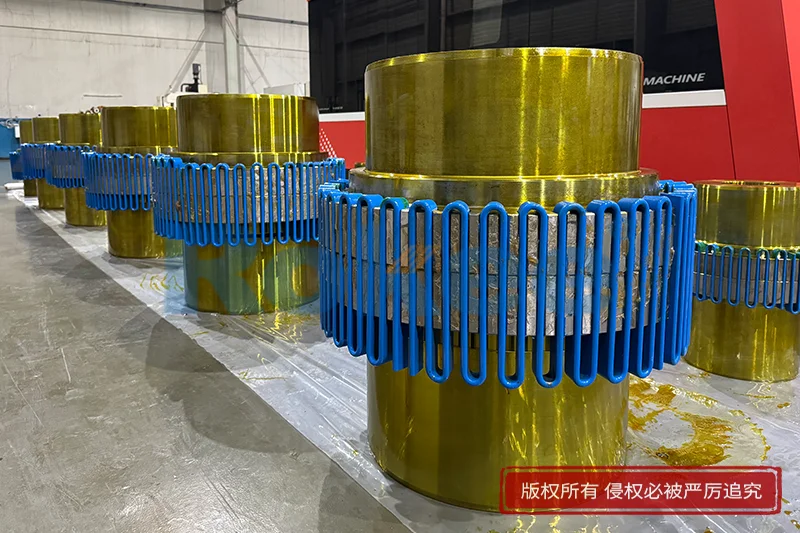
The continuous sandwich panel production line is a complex integrated system that integrates multiple processes, including uncoiling of facing materials, roll forming, preheating, core foaming, lamination, curing, and cutting. Each link requires precise and stable power transmission to ensure the consistency of product quality and the efficiency of the entire production process. As a key component in the transmission system of the production line, the flexible coupling plays an irreplaceable role with its unique structural design and excellent performance. Unlike rigid couplings that require strict coaxial alignment and lack buffering capacity, flexible couplings can effectively compensate for axial, radial, and angular deviations between shafts, absorb vibration and shock, and maintain stable power transmission even under long-term continuous operation. In the continuous sandwich panel production line, where the working environment is complex, the load changes frequently, and the equipment layout is often limited by process requirements, the application of flexible couplings not only solves many pain points in the transmission process but also brings significant economic and operational benefits to enterprises.
In the continuous sandwich panel production line, the consistency of power transmission directly affects the quality of the final product. Sandwich panels, as a kind of high-performance building material, require strict control over the thickness, flatness, and bonding strength of the panel during the production process. Any fluctuation in the transmission speed or torque will lead to defects such as uneven thickness of the core layer, poor bonding between the facing and the core, and irregular cutting size, which will reduce the product qualification rate and increase production costs. Flexible couplings have excellent torque transmission stability, which can ensure that the power generated by the motor is transmitted to each executive component accurately and uniformly. Compared with rigid couplings, flexible couplings can effectively eliminate the impact of torque fluctuations caused by motor startup, load changes, and equipment vibration on the transmission system. The built-in elastic components in flexible couplings, such as springs and elastic sleeves, can absorb the peak torque generated during the transmission process, making the torque transmission more stable and smooth. In the foaming and lamination links of the sandwich panel production line, which have high requirements for transmission stability, the application of flexible couplings can ensure that the conveying speed of the facing material and the foaming speed of the core layer are highly synchronized, avoiding the occurrence of wrinkles, delamination, and other quality problems caused by inconsistent speeds. This stable transmission performance is particularly important for the production of high-precision sandwich panels, which can significantly improve the product qualification rate and reduce the waste of raw materials.
Another important application advantage of flexible couplings in continuous sandwich panel production lines is their strong ability to compensate for shaft deviations. In the actual installation and operation of the production line, due to the limitations of equipment layout, processing accuracy, and thermal expansion during operation, it is difficult to ensure that the driving shaft and the driven shaft of each subsystem are completely coaxial. There are often axial, radial, and angular deviations between the shafts. If rigid couplings are used, these deviations will cause additional radial forces and bending moments on the shafts and bearings, leading to increased wear of equipment components, reduced service life, and even serious failures such as shaft breakage and bearing burnout. Flexible couplings, however, can effectively compensate for these deviations through the elastic deformation of their own components or the relative movement between parts. For example, elastic sleeve pin couplings can compensate for small radial and angular deviations, while universal flexible couplings can adapt to larger angular deviations between cross shafts. In the continuous sandwich panel production line, the uncoiling system, roll forming system, and cutting system are often arranged in different positions due to process requirements, resulting in certain deviations between the shafts of each system. The use of flexible couplings can effectively eliminate the impact of these deviations on the transmission system, reduce the wear of shafts, bearings, and other components, and ensure the stable operation of the entire production line. At the same time, this deviation compensation capacity also reduces the requirements for the installation accuracy of the equipment, simplifies the installation process, shortens the installation cycle, and reduces the installation cost.
Vibration and noise reduction is another prominent advantage of flexible couplings in continuous sandwich panel production lines. The continuous sandwich panel production line involves multiple high-speed rotating equipment, such as motors, reducers, and conveyor rollers. During operation, these equipment will generate a lot of vibration and noise due to unbalanced rotation, load changes, and other factors. If the vibration is not effectively controlled, it will not only affect the normal operation of the equipment but also cause fatigue damage to the production line structure over time, and even affect the physical and mental health of operators. Flexible couplings have good vibration absorption and damping performance. The elastic components in the coupling can absorb and dissipate the vibration energy generated during the operation of the equipment, reducing the transmission of vibration between the motor and other equipment. This not only reduces the noise generated by the production line but also reduces the impact of vibration on the equipment components, extending the service life of the equipment. For example, in the roll forming link of the sandwich panel production line, the roll forming machine generates large vibration during operation. The use of flexible couplings between the motor and the roll forming machine can effectively absorb the vibration, ensure the stable operation of the roll forming machine, and improve the forming accuracy of the facing material. In addition, the reduction of vibration also helps to improve the working environment of the workshop, reduce the noise pollution, and enhance the work efficiency of operators.
The continuous sandwich panel production line often needs to adjust the production parameters according to the different specifications and models of the products, such as the thickness of the panel, the type of core material, and the width of the facing material. This requires the transmission system to have good flexibility and adaptability, which can quickly adjust the speed and torque according to the production needs. Flexible couplings have excellent flexibility and adaptability, which can adapt to the changes of load and speed in the production process. When the production line needs to adjust the production speed, the flexible coupling can smoothly transmit the adjusted torque and speed, avoiding the impact of sudden speed changes on the equipment and products. At the same time, flexible couplings can also adapt to different types of power sources and executive components, making the configuration of the transmission system more flexible. For example, when the production line needs to replace the motor or adjust the transmission ratio, the flexible coupling can be easily disassembled and replaced, without the need for large-scale modification of the equipment, which improves the flexibility of the production line and reduces the downtime caused by equipment adjustment. This adaptability is particularly important for modern continuous production lines that pursue multi-variety and small-batch production, which can help enterprises quickly respond to market changes and improve market competitiveness.
The long-term stable operation of the continuous sandwich panel production line is the key to ensuring production efficiency and reducing costs. The maintenance workload and service life of the transmission components directly affect the operation efficiency of the entire production line. Flexible couplings have the advantages of simple structure, easy maintenance, and long service life, which can effectively reduce the maintenance cost and downtime of the production line. Compared with rigid couplings, flexible couplings have fewer wearing parts and simple structure, which is convenient for daily inspection and maintenance. The elastic components in the coupling, such as elastic sleeves and rubber pads, can be easily replaced when they are worn, without the need for professional maintenance personnel and complex maintenance equipment. At the same time, due to the good vibration absorption and deviation compensation performance of flexible couplings, the wear of shafts, bearings, and other components is reduced, which extends the service life of the entire transmission system and reduces the frequency of equipment replacement. In the continuous sandwich panel production line, which operates 24 hours a day, the reduction of maintenance workload and downtime can significantly improve the production efficiency and reduce the production cost. For example, a production enterprise using flexible couplings found that the maintenance frequency of the transmission system was reduced by 30% compared with the past, and the downtime was reduced by 25%, which effectively improved the continuous operation capacity of the production line.
In addition to the above advantages, flexible couplings also have the characteristics of strong overload protection capacity, which can effectively protect the transmission system and equipment from damage. In the continuous sandwich panel production line, due to unexpected situations such as material jamming and equipment failure, the load of the transmission system may suddenly increase, resulting in overload. If there is no effective overload protection measure, it will lead to damage to the motor, reducer, shafts, and other components, causing serious production accidents. Flexible couplings can play a good overload protection role through their own structural characteristics. When the load exceeds the rated torque, the elastic components of the flexible coupling will be elastically deformed to a certain extent, or the friction surface will slip, thereby cutting off or reducing the transmission of torque, avoiding the damage of equipment components due to overload. This overload protection function not only protects the expensive equipment in the production line but also reduces the economic loss caused by production accidents. At the same time, after the fault is eliminated, the flexible coupling can quickly return to normal operation without the need for replacement, which ensures the continuity of production.
It is worth noting that the application advantages of flexible couplings in continuous sandwich panel production lines are also reflected in their ability to adapt to harsh working environments. The continuous sandwich panel production line often has harsh working conditions, such as high temperature, dust, and humidity, especially in the curing link, where the ambient temperature is relatively high, which has high requirements for the performance of transmission components. Flexible couplings are usually made of high-quality materials, such as stainless steel, alloy steel, and high-temperature resistant elastic materials, which have good corrosion resistance, high-temperature resistance, and wear resistance. They can work stably in harsh environments such as high temperature and dust, without being easily damaged, which ensures the stable operation of the transmission system. Compared with other transmission components, flexible couplings have better environmental adaptability, which can adapt to the different working environments of the continuous sandwich panel production line and reduce the impact of environmental factors on the transmission system.
To further understand the application advantages of flexible couplings in continuous sandwich panel production lines, we can compare them with rigid couplings, which are widely used in traditional production lines. Rigid couplings have the advantages of simple structure and low cost, but they require strict coaxial alignment between shafts, lack buffering and vibration absorption capacity, and cannot compensate for shaft deviations. In the continuous sandwich panel production line, the use of rigid couplings often leads to frequent equipment failures, high maintenance costs, and low product qualification rates. In contrast, flexible couplings can effectively solve these problems. They can compensate for shaft deviations, absorb vibration and shock, maintain stable power transmission, and have good flexibility and adaptability. Although the initial investment of flexible couplings is slightly higher than that of rigid couplings, from the long-term operation perspective, the reduction of maintenance costs, the improvement of production efficiency, and the increase of product qualification rates brought by flexible couplings can offset the initial investment, and even bring more economic benefits to enterprises. Many sandwich panel production enterprises have proved through practice that after replacing rigid couplings with flexible couplings, the product qualification rate has increased by 10%-15%, the maintenance cost has decreased by 20%-30%, and the production efficiency has increased by 15%-20%, which fully reflects the obvious application advantages of flexible couplings.
In the context of the continuous development of industrial automation, the continuous sandwich panel production line is moving towards the direction of high speed, high precision, and flexibility. The performance requirements of the transmission system are also getting higher and higher. As a key component in the transmission system, flexible couplings will play a more important role. With the continuous progress of technology, the structure and performance of flexible couplings are also constantly optimized. For example, the newly developed flexible couplings with adjustable elastic force can better adapt to the changes of load and speed in the production process, and the flexible couplings with intelligent monitoring functions can realize real-time monitoring of the operation status, timely find potential faults, and further improve the stability and reliability of the transmission system. In the future, with the continuous popularization and application of flexible couplings in continuous sandwich panel production lines, it will help enterprises improve production efficiency, reduce production costs, and enhance market competitiveness, promoting the healthy and sustainable development of the sandwich panel industry.
In summary, flexible couplings have significant application advantages in continuous sandwich panel production lines, including stable torque transmission, strong deviation compensation capacity, good vibration and noise reduction performance, excellent flexibility and adaptability, simple maintenance, long service life, strong overload protection capacity, and good environmental adaptability. These advantages not only solve many pain points in the transmission process of the continuous sandwich panel production line but also improve the production efficiency, product quality, and operational stability of the production line, bringing significant economic and social benefits to enterprises. Therefore, in the design, transformation, and operation of the continuous sandwich panel production line, enterprises should fully consider the application advantages of flexible couplings, select appropriate flexible coupling types according to the actual production needs and working conditions, and give full play to the role of flexible couplings in the transmission system, so as to promote the continuous improvement of the production level of the sandwich panel industry.
Rokee is a professional manufacturer of industrial couplings in china, designing and customizing a wide range of drive shaft coupling products for customers worldwide. Submit your coupling drawings or technical specifications, and we can customize coupling products for you.
Coupling Categories




Links:
- Calibration Weight
- Digital Viscometer
- Carpas Industriales
- Exhibition Tent
- Industrial Cardan Shaft
- PU Sandwich Panel Machine
- PIR Sandwich Panel Line
- Sandwich Panel Machine
- Sandwich Panel Production Line
- PU Sandwich Panel Line
- Sandwich Panel Line
- Flexible Couplings Manufacturer In China
- Elastic Couplings Manufacturer In China