Flexible Spring Coupling
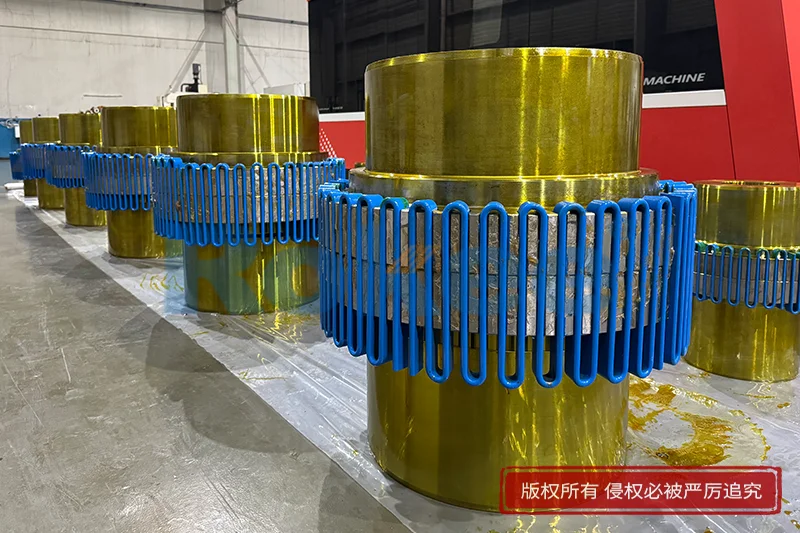
In the intricate and interconnected framework of modern mechanical transmission systems, the seamless transfer of rotational power between adjacent shafts stands as an indispensable foundational requirement for the stable operation of diverse mechanical equipment. Among numerous transmission components, flexible spring coupling has emerged as a pivotal mechanical part with unique structural logic and outstanding comprehensive performance, gradually becoming a preferred connecting component in medium and heavy-duty transmission machinery. Unlike rigid connecting parts that pursue absolute rigidity and precise alignment, this type of coupling relies on the elastic deformation characteristics of metal spring components to realize power transmission, effectively balancing the dual demands of efficient torque transmission and flexible buffering. Its distinctive structural design endows it with incomparable advantages over traditional coupling products in terms of displacement compensation, vibration damping and impact resistance, making it widely applicable in complex and harsh working environments across multiple industrial fields.
The basic structural composition of flexible spring coupling follows a concise and practical mechanical design concept, with each component cooperating closely to form a complete and stable transmission assembly. The core constituent parts include two symmetrical half couplings with specially designed tooth grooves, an integral serpentine elastic spring sheet, a split outer protective shell and auxiliary sealing components. The two half couplings are respectively fixed on the driving shaft and the driven shaft through standard connection structures, and the evenly distributed tooth grooves on the outer edge of the half couplings provide accurate embedding positions for the spring sheet. The serpentine spring sheet, processed through precise cold forming and heat treatment processes, is embedded in the staggered tooth grooves of the two half couplings, forming a multi-point contact transmission structure between the spring and the tooth body. The split outer shell is wrapped on the outer side of the half couplings and the spring sheet, which not only provides stable structural protection for the internal elastic components but also prevents external impurities such as dust, moisture and particulate debris from invading the internal transmission gap. The sealing components installed at the joint of the shell and the shaft body further optimize the internal sealing environment, reducing the wear of moving parts caused by foreign matter interference and extending the continuous service cycle of the coupling.
The power transmission mechanism of flexible spring coupling is based on the elastic mechanical properties of metal materials, presenting a gentle and efficient torque transfer logic. During the operation of mechanical equipment, the driving shaft drives the connected half coupling to perform synchronous rotational motion. The inner wall of the tooth groove on the half coupling continuously applies uniform axial pressure to the embedded spring sheet, and the elastic spring sheet transmits the torque to the tooth groove of the other half coupling through self-deformation, thereby driving the driven shaft to rotate synchronously and realizing the power transmission between the shafts. In this transmission process, the spring sheet does not maintain a rigid fixed state. Instead, it produces micro elastic bending and shear deformation with the rotation of the shaft body. This reversible elastic deformation acts as a natural buffer link in the transmission chain. When the transmission system encounters instantaneous load fluctuation, rotational speed mutation or external impact force, the spring sheet can absorb and consume part of the mechanical energy through deformation, avoiding the instantaneous concentrated impact of torque on the shaft body and mechanical components. Compared with the rigid transmission mode of traditional couplings, this elastic transmission method effectively weakens the mechanical stress peak inside the equipment and reduces the risk of structural fatigue damage of parts.
Material selection is the core factor determining the service performance and service life of flexible spring coupling, and each component has strict material selection standards based on functional requirements. The half couplings that bear main torque and mechanical pressure are mostly made of high-strength cast steel or forged steel materials. These metal materials have excellent compressive strength, torsional resistance and structural rigidity, which can maintain stable dimensional accuracy under long-term high-load operation and avoid structural deformation or tooth groove wear caused by torque impact. The serpentine spring sheet, as the key elastic component, usually adopts high-quality alloy spring steel with optimized carbon and manganese element ratio. After precise quenching and tempering heat treatment, the material obtains uniform internal metallographic structure, with high elastic limit, good fatigue resistance and stable mechanical toughness. It can withstand repeated elastic deformation for a long time without permanent deformation or fracture. The outer protective shell is commonly made of cast iron or lightweight aluminum alloy materials. Cast iron shells are suitable for heavy-duty and harsh working conditions due to their high hardness and strong impact resistance, while aluminum alloy shells have the advantages of light weight and good heat dissipation performance, which are more suitable for medium-speed and lightweight transmission scenarios. The sealing auxiliary parts are made of wear-resistant elastic polymer materials, which have good compression resistance and aging resistance to adapt to temperature changes and friction wear in different working environments.
Flexible spring coupling possesses multiple prominent performance advantages that distinguish it from other types of elastic couplings, laying a solid foundation for its wide industrial application. Firstly, it has excellent comprehensive displacement compensation capability. Limited by manufacturing errors, assembly deviations and mechanical operation vibration, it is difficult to achieve absolute coaxiality between the driving shaft and the driven shaft of mechanical equipment. There are often tiny radial, axial and angular displacements between the two shafts. The elastic deformation of the serpentine spring sheet can effectively adapt to these three-dimensional displacement deviations, reducing the additional mechanical stress generated by shaft misalignment on the transmission system and avoiding abnormal vibration and noise during equipment operation. Secondly, the coupling has outstanding vibration damping and impact buffering performance. The multi-contact elastic structure of the spring sheet can convert the instantaneous vibration energy and impact energy generated by load changes into elastic potential energy, and slowly release the energy in a stable form, realizing smooth attenuation of mechanical vibration. This characteristic is particularly critical for mechanical equipment with frequent start-stop and fluctuating loads, which can effectively protect motors, reducers and other core power components.
In addition to vibration reduction and displacement compensation, flexible spring coupling also has remarkable torque transmission efficiency and structural stability. The long contact line between the serpentine spring sheet and the tooth groove of the half coupling increases the force-bearing area of torque transmission, realizing uniform distribution of mechanical stress. This structural design enables the coupling to transmit large torque within a compact spatial size, with high torque density and transmission efficiency exceeding ninety-nine percent. There is no idle rotation gap in the transmission process, ensuring synchronous and accurate rotation of the driving and driven shafts. Meanwhile, the overall structure of the coupling is compact and reasonable, with a small axial and radial occupation space, which can adapt to the limited installation space of various integrated mechanical equipment. Moreover, the internal friction mode of the coupling is mild during operation, and the matching precision between components is high, resulting in low operation noise and stable rotation state, which meets the noise control requirements of modern industrial production environments.
The adaptability of flexible spring coupling to working conditions is one of its important competitive advantages, and it can maintain stable working performance in various complex and harsh industrial environments. In terms of temperature adaptability, the metal spring components can work normally within a wide temperature range, without obvious performance attenuation caused by ambient temperature changes, avoiding the aging and failure problems of non-metal elastic components in high or low temperature environments. In dusty, humid and corrosive working scenes such as mines, metallurgy and chemical industry, the closed protective shell structure can isolate internal transmission parts from external harmful media. The smooth metal surface of the spring sheet and half coupling is not easy to adhere to dust and impurities, and has strong corrosion resistance after anti-rust treatment. For mechanical equipment with frequent start-stop, forward and reverse rotation, the flexible spring coupling can withstand alternating torque loads, and the elastic structure can buffer the instantaneous torque change during rotation direction switching, reducing the shear force on the shaft body and extending the service life of the transmission system.
The installation, debugging and daily maintenance processes of flexible spring coupling have obvious simplicity, which reduces the operation cost and technical threshold for industrial users. In the installation stage, workers only need to fix the two half couplings on the driving and driven shafts respectively, adjust the coaxiality of the two shafts within the allowable deviation range, embed the spring sheet into the tooth groove, and then fasten the split outer shell to complete the assembly. The installation process does not require complex professional tools and high-precision debugging equipment, and the assembly cycle is short. In the daily use stage, the closed shell structure can reduce the wear of internal parts, and the metal spring components have long fatigue service life with no need for frequent replacement. Different from rubber elastic couplings that are prone to aging and deformation, the performance attenuation of metal spring sheets is extremely slow under normal working conditions. The regular maintenance work only includes checking the fastening degree of shell bolts, observing the sealing state of auxiliary parts and cleaning external dust. The maintenance frequency is low and the operation difficulty is small, which is very suitable for large-scale continuous production industrial equipment.
In the industrial application field, flexible spring coupling covers multiple heavy-duty and medium-speed mechanical transmission scenarios, showing strong industry applicability. In the mining machinery industry, it is applied to crushing equipment, screening machines and mining conveyor transmission devices. These devices often bear irregular impact loads during operation, and the vibration damping and buffering performance of the coupling can effectively relieve the impact pressure of materials on the mechanical transmission structure. In the metallurgical industry, the coupling is used for the transmission connection of rolling mills, mixing equipment and metal processing machinery. The high temperature resistance and torque transmission stability enable it to adapt to the high-temperature production environment of metallurgical workshops. In the field of construction machinery, it is matched with reducers, hoisting equipment and mixing machinery to realize stable power transmission under heavy load conditions.
Besides heavy industrial machinery, flexible spring coupling also plays an important role in general industrial manufacturing and public infrastructure equipment. In mechanical processing factories, it is applied to the transmission systems of large fans, compressors and water pump equipment. These equipment need long-term continuous operation, and the low wear and low failure rate characteristics of the coupling reduce the downtime loss caused by component replacement. In port logistics and transportation equipment, the coupling is used for the transmission connection of conveyor belts and handling machinery. Its excellent displacement compensation capability can adapt to the vibration and position deviation of equipment during handling operations. In agricultural heavy machinery such as large tillage machines and harvesting machines, the coupling can cope with the complex working conditions of uneven ground and fluctuating load, ensuring the stable output of mechanical power.
Compared with other common types of elastic couplings in the market, flexible spring coupling has clear performance differentiation advantages and targeted application orientation. Elastic sleeve pin couplings mainly rely on non-metallic elastic sleeves for buffering, with low bearing torque and poor high-temperature resistance, which are only suitable for light-load and low-speed transmission scenarios. Diaphragm couplings adopt metal diaphragm elastic deformation for transmission, with high transmission precision, but poor impact resistance and high manufacturing cost, mostly used for high-precision and low-load mechanical equipment. Rubber tire couplings have good vibration damping effect, but non-metallic materials are easy to age and deform in harsh environments, with short service life. In contrast, flexible spring coupling takes metal elastic components as the core, combining high torque bearing capacity, strong impact resistance, wide temperature adaptability and long service life. Although its vibration damping performance for high-frequency tiny vibration is slightly inferior to that of non-metallic elastic couplings, it has unparalleled comprehensive advantages in medium and heavy-duty transmission scenes with frequent impact and complex working conditions.
In the actual application process, the service performance and service life of flexible spring coupling are affected by multiple external factors, so standardized selection and use specifications need to be followed. When selecting the coupling model, users need to comprehensively calculate key parameters such as equipment rated torque, instantaneous peak torque, rotation speed and shaft diameter, and reserve a reasonable safety margin according to the actual load fluctuation range of the equipment to avoid long-term overload operation of the coupling. In the assembly process, the coaxiality deviation of the two shafts must be strictly controlled. Excessive radial and angular deviation will increase the deformation amplitude of the spring sheet, accelerate fatigue wear and reduce the service life. During the operation of the equipment, extreme overload and sudden braking should be avoided as much as possible. Although the coupling has impact resistance, long-term extreme instantaneous load will cause irreversible fatigue damage to the internal spring sheet.
With the continuous progress of modern mechanical manufacturing technology, the production and processing technology of flexible spring coupling is also constantly optimized and upgraded. In terms of material processing, the precision forging technology is adopted to process the half coupling, which makes the internal metal structure denser and the surface smoothness higher, effectively reducing the friction resistance between the tooth groove and the spring sheet. The spring sheet is processed by numerical control precision stamping and integrated heat treatment technology, with uniform elastic performance and stable structural toughness. In terms of structural optimization, the tooth groove curve of the half coupling is designed with bionic mechanics to make the contact between the spring sheet and the tooth groove more smooth, reduce local stress concentration, and further improve the wear resistance and fatigue resistance of the coupling. In terms of surface treatment, advanced anti-corrosion and anti-rust processes such as phosphating and spraying are adopted for metal parts to enhance the environmental adaptability of the coupling and extend the service cycle in humid and corrosive environments.
The development trend of flexible spring coupling is closely linked with the intelligent and high-efficiency development direction of the modern machinery industry. At present, the industrial demand for mechanical transmission components is gradually developing towards high load-bearing, low energy consumption, long life and intelligent monitoring. In the future, flexible spring coupling will further optimize the material formula, develop high-strength and high-toughness alloy spring materials, improve the torque density and fatigue resistance of products, and adapt to higher load industrial equipment. In terms of structural design, the lightweight and integrated optimization will be realized. Under the premise of ensuring mechanical performance, the overall volume and weight of the coupling will be reduced to meet the lightweight assembly demand of modern integrated machinery. In terms of functional expansion, combined with sensing technology, some coupling products will be embedded with tiny monitoring components to realize real-time monitoring of operating torque, vibration amplitude and temperature parameters, providing data support for equipment fault early warning and predictive maintenance.
From the perspective of industrial transmission system, flexible spring coupling is not only a simple shaft connecting component, but also an important protection unit for mechanical equipment. In the complex mechanical transmission chain, it undertakes the key functions of power transmission, vibration isolation and impact buffering, effectively isolating the vibration generated by a single equipment component to the whole transmission system, reducing the mutual mechanical interference between adjacent equipment. Its reliable structural performance and simple maintenance mode reduce the comprehensive operation cost of industrial equipment, improve the overall operation stability of the production line, and create higher economic benefits for industrial production. With the continuous upgrading of industrial manufacturing standards and the expansion of heavy machinery application scenarios, the market demand for flexible spring coupling with excellent comprehensive performance will continue to grow.
In conclusion, flexible spring coupling relies on its unique serpentine spring elastic structure, excellent displacement compensation capability, stable vibration damping and impact resistance, as well as simple installation and maintenance characteristics, occupying an irreplaceable important position in the field of medium and heavy-duty mechanical transmission. Its reasonable mechanical structure, optimized material configuration and wide working condition adaptability make it applicable to multiple industrial fields such as mining, metallurgy, construction and general manufacturing. With the continuous innovation of processing technology and the continuous upgrading of industrial demand, flexible spring coupling will keep pace with the development of the machinery industry, continuously optimize product performance, expand application boundaries, and provide more reliable and efficient basic component support for the stable operation of modern mechanical equipment. In the future industrial system focusing on high efficiency, stability and low consumption, flexible spring coupling will surely maintain its unique competitive advantage and become an indispensable key part of the modern mechanical transmission system.


Links:
- Calibration Weight
- Digital Viscometer
- Carpas Industriales
- Exhibition Tent
- Industrial Cardan Shaft
- PU Sandwich Panel Machine
- PIR Sandwich Panel Line
- Sandwich Panel Machine
- Sandwich Panel Production Line
- PU Sandwich Panel Line
- Sandwich Panel Line
- Flexible Couplings Manufacturer In China
- Elastic Couplings Manufacturer In China