Flexible Coupling Ensures Continuous And Stable Operation Of Sandwich Panel Production Line

In the modern industrial production landscape, the sandwich panel production line stands as a critical component in the construction, automotive, and packaging industries, where the demand for efficient, high-quality, and continuous production is ever-growing. These production lines are complex integrated systems composed of multiple interconnected components, each playing a vital role in the overall manufacturing process. From the unwinding of raw materials to the forming, bonding, composite processing, and final cutting of finished products, every link requires precise coordination and stable power transmission to ensure the consistency and quality of the sandwich panels produced. Among these essential components, the flexible coupling emerges as an unsung hero, silently ensuring the continuous and stable operation of the entire production line by addressing the inherent challenges of mechanical transmission, such as shaft misalignment, vibration, and torque fluctuations. Unlike rigid couplings that offer little to no flexibility, flexible couplings are designed to accommodate small deviations between connected shafts, absorb shocks and vibrations, and transmit torque efficiently, making them indispensable in the dynamic environment of a sandwich panel production line.
To understand the critical role of flexible couplings in sandwich panel production line, it is first necessary to grasp the operational characteristics and challenges of these production systems. A typical sandwich panel production line involves a series of sequential processes, each driven by separate motors and mechanical components that must work in perfect synchronization. The core processes include metal coil unwinding, surface pretreatment, roll forming, core material feeding, foaming or bonding, composite pressing, and fixed-length cutting. Each of these processes relies on the stable transmission of power from motors to the respective mechanical components, such as rollers, conveyors, foaming machines, and cutting tools. Any disruption in power transmission, no matter how minor, can lead to production delays, defective products, and increased maintenance costs. For instance, if the power transmission to the roll forming rollers is unstable, the metal sheets may be formed unevenly, resulting in sandwich panels with inconsistent thickness or shape. Similarly, fluctuations in the power supplied to the foaming system can lead to uneven foam distribution, affecting the thermal insulation and structural integrity of the final product. These challenges are compounded by the fact that during long-term operation, the production line components are subject to wear and tear, thermal expansion, and minor misalignments, all of which can disrupt the smooth transmission of torque.
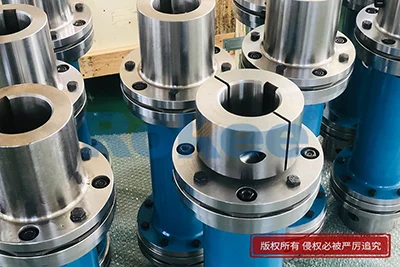
Flexible couplings address these challenges through their unique design and functional characteristics, which are tailored to the specific needs of industrial production lines. At its core, a flexible coupling is a mechanical device used to connect two shafts—typically the output shaft of a motor and the input shaft of a driven component—in a way that allows for a certain degree of relative movement between them while transmitting torque efficiently. This flexibility is achieved through the use of elastic elements or specialized mechanical structures that can deform slightly to accommodate misalignments, absorb shocks, and dampen vibrations. Unlike rigid couplings, which require precise alignment of the connected shafts and can transfer vibrations and shocks directly to the connected components, flexible couplings act as a buffer, isolating the motor and driven components from harmful forces that could lead to premature failure.
One of the key functions of flexible couplings in sandwich panel production lines is the compensation of shaft misalignment. In any mechanical system, perfect alignment of two connected shafts is nearly impossible to achieve and maintain over time. Factors such as manufacturing tolerances, installation errors, thermal expansion during operation, and structural deformation due to long-term use can all lead to three types of misalignment: angular misalignment, where the shafts are not parallel but intersect at a point; parallel misalignment, where the shafts are parallel but offset from each other; and axial misalignment, where the shafts move along their central axes relative to each other. If left unaddressed, these misalignments can cause excessive wear on bearings, seals, and other mechanical components, leading to increased friction, heat generation, and eventual component failure. In a sandwich panel production line, where precision is paramount, even a small misalignment can disrupt the synchronization of the production processes, resulting in defective products. Flexible couplings effectively mitigate this issue by allowing for small amounts of misalignment, ensuring that torque is transmitted smoothly even when the shafts are not perfectly aligned. This not only reduces wear and tear on the connected components but also ensures that the production line operates continuously without frequent shutdowns for alignment adjustments.
Another critical role of flexible couplings in sandwich panel production lines is shock absorption and vibration damping. The operation of a sandwich panel production line involves numerous mechanical components working simultaneously, which can generate significant vibrations and shocks. For example, the roll forming process involves the metal sheets being passed through a series of rollers, which can create vibrations as the metal is bent and shaped. Similarly, the foaming system may generate shocks when the foam is injected and expands, and the cutting process can produce vibrations as the saw blade cuts through the sandwich panels. These vibrations and shocks can be transmitted throughout the production line, affecting the stability of the equipment and the quality of the finished products. Moreover, excessive vibrations can lead to fatigue failure of mechanical components over time, reducing the overall lifespan of the production line. Flexible couplings absorb these shocks and dampen vibrations through their elastic elements, which act as a cushion between the motor and the driven component. When a shock or vibration occurs, the elastic elements deform, absorbing the energy and preventing it from being transferred to other parts of the system. This not only protects the mechanical components from damage but also ensures that the production line operates smoothly, reducing the risk of product defects caused by vibration-induced inconsistencies.
Efficient torque transmission is yet another essential benefit of flexible couplings in sandwich panel production lines. The production line requires a consistent and reliable supply of torque to drive the various components, from the unwinding rollers to the cutting tools. Any loss of torque or fluctuation in torque transmission can lead to inconsistent operation, resulting in variations in product quality and production efficiency. Flexible couplings are designed to transmit torque efficiently, with minimal energy loss, ensuring that the power from the motor is transferred directly to the driven component. This efficiency is particularly important in high-speed sandwich panel production lines, where even a small loss of torque can lead to significant reductions in production output. Additionally, flexible couplings can accommodate variations in torque demand, such as those that occur during the start-up of the production line or when processing materials of varying thicknesses. By adjusting to these changes in torque, flexible couplings ensure that the production line maintains a stable operating speed, preventing bottlenecks and ensuring continuous production.
There are several types of flexible couplings commonly used in sandwich panel production lines, each with its own unique characteristics and applications, depending on the specific requirements of the production process. Mechanical flexible couplings, one of the most common types, obtain their flexibility from loose-fitting parts that roll or slide, allowing for a considerable degree of angular misalignment. These couplings are known for their high torque capacity and torsional rigidity, making them suitable for heavy-duty applications in the production line, such as driving the main roll forming rollers. Gear couplings, a subtype of mechanical flexible couplings, consist of two hubs with external gear teeth that mesh with internally splined flanged sleeves. They are capable of transmitting high amounts of torque in a compact design and can accommodate all types of misalignment, making them ideal for use in the foaming and composite pressing sections of the production line, where high torque and precision are required. However, gear couplings require periodic lubrication to ensure smooth operation and prevent wear.
Elastomeric couplings are another type of flexible coupling widely used in sandwich panel production lines. These couplings use elastic materials, such as rubber or polyurethane, as the flexible element, which provides excellent shock absorption and vibration damping capabilities. Elastomeric couplings are particularly suitable for applications where vibration is a major concern, such as the cutting section of the production line, where the saw blade generates significant vibrations. They are also maintenance-free in most cases, as the elastic elements do not require lubrication, reducing the overall maintenance burden of the production line. Metallic membrane couplings, on the other hand, use thin metal membranes as the flexible element, which can compensate for axial and angular displacements while transmitting torque efficiently. These couplings are characterized by their compact structure, high temperature resistance, and corrosion resistance, making them suitable for use in the surface pretreatment section of the production line, where the equipment may be exposed to harsh chemicals or high temperatures.
The selection of the appropriate flexible coupling for a sandwich panel production line depends on several key factors, including the torque requirements, the level of misalignment expected, the operating speed, and the environmental conditions. For example, in sections of the production line that require high torque transmission, such as the roll forming and composite pressing sections, gear couplings or mechanical flexible couplings may be the preferred choice. In contrast, in sections where vibration is a major concern, such as the cutting section, elastomeric couplings may be more suitable. Additionally, the operating environment must be considered; for example, in areas with high temperatures or corrosive substances, metallic membrane couplings may be more durable than elastomeric couplings. Proper selection of the flexible coupling is critical to ensuring the long-term stability and efficiency of the production line, as an improperly selected coupling can lead to frequent breakdowns, increased maintenance costs, and reduced production output.
In addition to their role in ensuring continuous operation, flexible couplings also contribute to the overall reliability and longevity of the sandwich panel production line. By reducing wear and tear on bearings, seals, motors, and other mechanical components, flexible couplings extend the service life of these components, reducing the frequency of maintenance and replacement. This not only lowers the overall maintenance costs of the production line but also minimizes the downtime associated with component failure. For example, a well-selected and properly installed flexible coupling can prevent premature failure of the roll forming rollers, which are critical components in the production line. Without a flexible coupling, the misalignment and vibrations generated during operation would cause excessive wear on the roller bearings, leading to frequent replacements and production delays. By absorbing these vibrations and accommodating misalignments, flexible couplings ensure that the rollers operate smoothly, extending their service life and reducing maintenance requirements.
Proper installation and maintenance of flexible couplings are also essential to ensuring their optimal performance in sandwich panel production lines. During installation, it is important to ensure that the coupling is properly aligned with the connected shafts, even though the coupling can accommodate small misalignments. Excessive misalignment beyond the coupling’s capacity can lead to premature wear of the flexible elements and reduced torque transmission efficiency. Additionally, the coupling must be securely fastened to the shafts to prevent slippage, which can cause inconsistent torque transmission and damage to the shafts. Regular maintenance of flexible couplings involves inspecting the coupling for signs of wear, such as cracks in the flexible elements, loose fasteners, or excessive play. For gear couplings, periodic lubrication is necessary to ensure smooth operation and prevent wear of the gear teeth. Elastomeric couplings should be inspected for signs of degradation, such as hardening, cracking, or deformation of the elastic elements, which can reduce their shock absorption capabilities. By conducting regular maintenance, potential issues can be identified and addressed before they lead to coupling failure and production downtime.
The impact of flexible couplings on the efficiency and productivity of sandwich panel production lines cannot be overstated. In a production environment where downtime is costly and product quality is critical, the ability of flexible couplings to ensure continuous and stable operation directly translates to increased productivity and reduced costs. For example, a production line equipped with high-quality flexible couplings can operate continuously for longer periods without shutdowns, increasing the total output of sandwich panels. Additionally, the consistent torque transmission and vibration damping provided by flexible couplings ensure that the finished products meet the required quality standards, reducing the number of defective products and the associated waste. This not only improves the overall efficiency of the production line but also enhances the competitiveness of the manufacturer in the market.
Furthermore, flexible couplings contribute to the safety of the sandwich panel production line. By absorbing shocks and vibrations, they reduce the risk of mechanical failure, which can lead to dangerous situations for the operators. For example, a sudden failure of a rigid coupling due to excessive misalignment or vibration could cause the connected component to malfunction, potentially leading to injury or damage to the equipment. Flexible couplings minimize this risk by providing a buffer between the motor and the driven component, ensuring that any shocks or vibrations are absorbed before they can cause significant damage. Additionally, the reduced wear and tear on mechanical components due to the use of flexible couplings means that there are fewer instances of unexpected component failure, further enhancing the safety of the production line.
As the demand for sandwich panels continues to grow, manufacturers are increasingly looking for ways to improve the efficiency and reliability of their production lines. In this context, the role of flexible couplings becomes even more important. With advancements in materials and design, modern flexible couplings are becoming more durable, efficient, and adaptable to the changing needs of the production process. For example, the development of high-performance elastomeric materials has improved the shock absorption and vibration damping capabilities of elastomeric couplings, making them suitable for even more demanding applications. Similarly, the use of advanced manufacturing techniques has improved the precision and durability of gear couplings and metallic membrane couplings, ensuring that they can withstand the high torque and harsh operating conditions of modern sandwich panel production lines.
In conclusion, flexible couplings are an essential component of sandwich panel production lines, playing a critical role in ensuring their continuous and stable operation. By accommodating shaft misalignment, absorbing shocks and vibrations, and transmitting torque efficiently, flexible couplings address the inherent challenges of mechanical transmission in these complex production systems. They reduce wear and tear on mechanical components, extend the service life of the production line, improve product quality, and enhance productivity and safety. The selection of the appropriate flexible coupling, along with proper installation and maintenance, is critical to maximizing the benefits of these devices and ensuring the long-term success of the sandwich panel production line. As industrial technology continues to advance, flexible couplings will remain a key factor in the efficiency and reliability of sandwich panel production, helping manufacturers meet the growing demand for high-quality sandwich panels in a competitive market.




Links:
- Calibration Weight
- Digital Viscometer
- Carpas Industriales
- Exhibition Tent
- Industrial Cardan Shaft
- PU Sandwich Panel Machine
- PIR Sandwich Panel Line
- Sandwich Panel Machine
- Sandwich Panel Production Line
- PU Sandwich Panel Line
- Sandwich Panel Line
- Flexible Couplings Manufacturer In China
- Elastic Couplings Manufacturer In China