Flexible Coupling For Conveyor
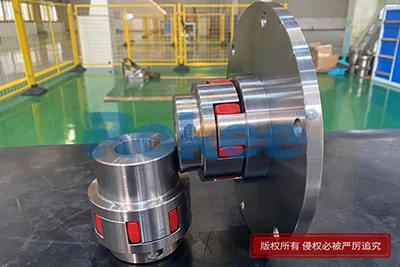
Flexible couplings serve as indispensable core transmission components in modern conveyor systems, undertaking the critical task of connecting driving and driven shafts to achieve stable torque and rotational power transmission. Unlike rigid coupling structures that pursue absolute shaft alignment, flexible couplings are designed with elastic deformation characteristics, enabling them to adapt to multiple types of shaft misalignment, absorb mechanical vibration, and buffer instantaneous impact loads generated during conveyor operation. Conveyor equipment often operates in variable load environments, with frequent start-stop cycles and minor shaft displacement caused by mechanical wear or installation deviations. Flexible couplings effectively resolve these operational pain points, reduce rigid friction and stress concentration between transmission parts, and maintain continuous and efficient power output.
The working principle of flexible couplings for conveyors centers on the elastic deformation of internal flexible elements, which realizes compliant power transmission while compensating for shaft position deviations. In the operating state of a conveyor system, the driving end transmits rotational torque to the driven end through the coupling. When minor angular, parallel, or axial misalignment occurs between the two connected shafts due to installation errors, long-term operational vibration, or structural micro-deformation, the flexible components inside the coupling will produce controllable elastic distortion. This subtle deformation does not interfere with the basic efficiency and continuity of torque transmission but effectively offsets the dislocation stress between shafts that would otherwise accumulate in rigid transmission structures. During conveyor start-up, sudden load changes, or shutdown processes, the instantaneous impact force generated by power mutation will be converted into elastic potential energy and absorbed by the flexible elements. Once the operating load stabilizes, the elastic structure automatically resets to its original state, ensuring the consistency of shaft rotation. This unique working mechanism fundamentally avoids rigid collision and hard friction between transmission parts, forming a stable and buffer-type power transmission mode suitable for the frequent dynamic operation of conveyor equipment.
Core functional advantages make flexible couplings irreplaceable in conveyor transmission systems, covering vibration damping, misalignment compensation, equipment protection, and noise reduction. Vibration and mechanical impact are inevitable during long-term conveyor operation, especially in scenarios with uneven material feeding or intermittent load changes. Flexible couplings can effectively attenuate high-frequency vibration generated by shaft rotation and load fluctuation, preventing vibration from spreading to the entire conveyor frame and transmission system. For unavoidable shaft misalignment in actual installation and operation, the coupling’s elastic tolerance eliminates additional shear stress and torsional stress on shafts, bearings, and reducers, greatly reducing abnormal wear of core transmission components. Meanwhile, the flexible buffering effect weakens rigid impact during equipment start and stop, avoiding instantaneous overload damage to motors and transmission devices. In terms of operational experience, the elastic deformation structure reduces mechanical friction noise in the transmission process, optimizing the on-site operating environment. These comprehensive functions work synergistically to solve multiple common failure problems of traditional rigid transmission structures in conveyor systems.
Material selection of flexible couplings directly determines their service performance and environmental adaptability in conveyor working scenarios, with different materials matching distinct operational demands. The rigid framework of couplings usually adopts high-strength structural materials with excellent rigidity and wear resistance, which can withstand long-term torque load and external mechanical extrusion without structural deformation. The core flexible elements are mostly made of high-elasticity polymer materials or special elastic alloy materials. Polymer elastic materials have good vibration absorption performance and fatigue resistance, suitable for conventional light and medium-load conveyor systems, with outstanding buffer effects and low operating noise. Elastic alloy materials feature higher structural strength and temperature resistance, adapting to heavy-load, high-speed, or high-temperature harsh conveyor working environments, maintaining stable elastic deformation performance under extreme working conditions. All selected materials undergo anti-aging and anti-corrosion treatment, which can resist the erosion of dust, moisture, and industrial debris commonly found in conveyor operation sites, effectively delaying material aging and wear, and ensuring long-term stable functional output of the coupling in complex industrial environments.
Flexible couplings exhibit outstanding application adaptability in different types of conveyor systems, covering light-duty, medium-duty, and heavy-duty conveying scenarios. In light-duty material conveying equipment such as small belt conveyors and packaging conveyors, flexible couplings provide precise and stable power transmission, ensuring uniform and consistent material conveying speed, and avoiding material accumulation and deviation caused by unstable transmission. In medium-duty industrial conveyors used for grain, chemical raw materials, and building materials transportation, the coupling’s vibration damping and impact resistance functions reduce equipment failure rates caused by frequent load changes, maintaining continuous and efficient production operation. For heavy-duty mining and bulk material conveyors with large load and long-distance operation, high-strength flexible couplings bear huge torque transmission pressure, compensate for large-range shaft misalignment caused by long-term heavy-load operation, and protect high-power transmission equipment from damage. Whether it is fixed indoor conveying equipment or mobile and adjustable conveyor devices, flexible couplings can match the operating characteristics of the equipment, realizing customized transmission protection and stable operation support for diversified conveyor systems.
Scientific daily maintenance and standardized use can effectively extend the service life of flexible couplings for conveyors and maintain long-term stable transmission performance. Daily maintenance work mainly includes regular appearance inspection, operational state monitoring, and structural fastening checking. During routine equipment inspection, staff need to observe whether the flexible elements have aging deformation, crack damage, or excessive wear, and check whether the rigid connecting parts have looseness or abnormal friction traces. In the equipment operation process, abnormal vibration, noise, and transmission jitter are important judgment bases for coupling failure, and timely shutdown inspection is required once abnormal conditions are found. Regular cleaning of dust and debris attached to the coupling surface can avoid foreign matter abrasion and corrosion of structural components. It is necessary to avoid long-term overload operation of the conveyor, as excessive torque will cause irreversible plastic deformation of flexible elements and lose buffer compensation function. Timely replacement of aging and damaged parts and regular debugging of shaft alignment accuracy can maximize the working efficiency of flexible couplings, reduce equipment downtime and maintenance costs, and ensure the long-term reliable operation of the entire conveyor transmission system.
With the continuous upgrading of industrial conveying equipment towards high efficiency, high stability, and low energy consumption, flexible coupling technology for conveyors is also constantly optimized and iterated to adapt to evolving industrial demands. Modern conveyor systems pursue higher operating speed and longer continuous working cycle, putting forward higher requirements for the fatigue resistance, high-speed stability, and environmental adaptability of flexible couplings. The iterative optimization of coupling structure focuses on improving the uniformity of elastic deformation, realizing more precise misalignment compensation and vibration damping effects, and reducing power loss in the transmission process. Material innovation is committed to developing new composite elastic materials with stronger wear resistance, aging resistance, and extreme environment adaptability, breaking through the performance limitations of traditional materials in special working scenarios. In addition, the integrated and lightweight design of couplings further optimizes the spatial layout of conveyor transmission structures, reduces overall equipment weight, and lowers operational energy consumption. As a key supporting component of conveyor systems, flexible couplings will continue to play a core role in improving industrial conveying efficiency, reducing equipment failure rates, and promoting the intelligent and high-efficiency development of conveying machinery.


Links:
- Calibration Weight
- Digital Viscometer
- Carpas Industriales
- Exhibition Tent
- Industrial Cardan Shaft
- PU Sandwich Panel Machine
- PIR Sandwich Panel Line
- Sandwich Panel Machine
- Sandwich Panel Production Line
- PU Sandwich Panel Line
- Sandwich Panel Line
- Flexible Couplings Manufacturer In China
- Elastic Couplings Manufacturer In China