Flange Diaphragm Coupling

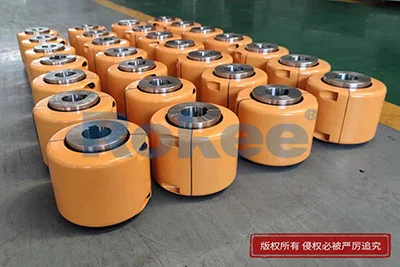
Flange diaphragm coupling is a high-performance flexible transmission component widely adopted in modern mechanical drive systems, designed to connect driving and driven shafts while achieving efficient torque transmission and automatic misalignment compensation. Integrating the structural advantages of flange connection and diaphragm elastic transmission, this coupling stands out for its compact structure, high transmission precision and excellent operational stability. Unlike traditional rigid couplings that lack deviation adaptability and elastic couplings prone to wear and deformation, it relies on the reversible elastic deformation of metal diaphragms to absorb axial, radial and angular shaft misalignments generated during equipment operation. It features zero rotational backlash, ultra-high transmission efficiency and no need for lubrication, making it suitable for medium and high-speed, high-power mechanical transmission scenarios. With strong environmental adaptability and fatigue resistance, it effectively reduces mechanical vibration and noise, protects transmission components from impact damage, and improves the overall service life and operational reliability of mechanical systems.
The basic structural composition of flange diaphragm coupling is sophisticated and reasonably optimized, laying a solid foundation for its superior transmission performance. The core components mainly include symmetric flange hubs, precision metal diaphragms, fastening bolts and positioning structures, all of which are processed with high precision to ensure matching accuracy and structural stability. The flange hubs on both sides adopt an integrated forming design, with smooth and flat connecting surfaces that can achieve tight fitting and stable connection with the shaft ends of mechanical equipment. The thin metal diaphragm is the key functional component of the coupling, usually made of high-strength alloy materials with excellent elasticity and fatigue resistance, and is fixed between the two flange hubs through evenly arranged fastening bolts. The overall structure eliminates redundant transmission parts, realizing a lightweight and compact layout. This streamlined structure not only minimizes the overall occupied space of the transmission assembly but also avoids the mechanical wear and clearance problems caused by meshing or sliding parts. In addition, the split assembly design allows for convenient installation, disassembly and maintenance, without the need to displace or disassemble the connected mechanical equipment, greatly improving the convenience of daily equipment debugging and later maintenance work.
The working principle of flange diaphragm coupling centers on the elastic deformation characteristics of metal diaphragms, realizing stable torque transmission and dynamic misalignment compensation simultaneously. During the operation of mechanical equipment, the torque output by the driving shaft is first transmitted to the flange hub on the driving side, and then evenly transferred to the metal diaphragm fixed with the flange. Driven by rotational power, the diaphragm generates tiny, controllable and reversible elastic deformation, which further transmits the torque to the driven-side flange hub and finally drives the driven shaft to operate synchronously. In actual mechanical operation, it is impossible to maintain absolute coaxiality between the driving and driven shafts due to machining errors, assembly deviations, equipment vibration and thermal deformation during operation. When misalignment occurs between the two shafts, the flexible diaphragm can automatically adjust its deformation state to adapt to axial displacement, radial deflection and angular deviation. This flexible compensation mechanism eliminates additional mechanical stress and friction loss caused by shaft misalignment, ensuring that the torque and speed are transmitted accurately without hysteresis or backlash. The uniform stress distribution on the diaphragm avoids local stress concentration, enabling the coupling to adapt to long-term cyclic rotation and frequent start-stop working conditions.
Flange diaphragm coupling possesses outstanding transmission performance advantages that distinguish it from other traditional coupling products in industrial applications. Its most prominent feature is ultra-high transmission accuracy and efficiency, with zero rotational clearance in the entire transmission process, which can realize synchronous and consistent transmission of speed and torque without rotation deviation. The transmission efficiency remains at an extremely high level, effectively reducing energy loss in the transmission process and improving the comprehensive energy utilization rate of mechanical equipment. Different from gear couplings and chain couplings that rely on mechanical meshing for transmission, it has no meshing wear and no need for regular lubrication and oil replacement, which greatly reduces daily operation and maintenance costs. Meanwhile, the coupling has excellent torsional rigidity, which can maintain stable transmission accuracy under high-speed and high-load working conditions, avoiding torque fluctuation and operation jitter. In addition, its unique elastic damping performance can effectively absorb mechanical vibration and impact load generated during equipment operation, reduce transmission noise, and buffer the instantaneous impact force generated by equipment start-stop and load switching, realizing smooth and stable mechanical operation.
The environmental adaptability and durability of flange diaphragm coupling make it applicable to various complex and harsh working scenarios. Adopting high-quality alloy metal materials and precision surface treatment processes, the coupling has excellent high-temperature resistance, low-temperature resistance and corrosion resistance, and can maintain stable working performance in extreme temperature environments and humid, dusty working conditions. It is not affected by conventional industrial environmental factors such as atmospheric oxidation and slight chemical corrosion, and will not produce aging, deformation or performance attenuation in long-term operation. Compared with elastic couplings using rubber and polymer materials, it avoids the problems of aging, cracking and failure of non-metal parts under high temperature and long-term fatigue load. Its integral stress balance design enables it to withstand continuous vibration and alternating load impact, with excellent fatigue resistance and structural stability. In harsh working environments with frequent load changes and continuous mechanical impact, it can still maintain accurate transmission and stable connection, effectively preventing mechanical failure caused by coupling performance attenuation and ensuring the continuous and safe operation of mechanical equipment.
Flange diaphragm coupling has a wide range of application coverage, covering multiple high-precision and high-power mechanical transmission fields. It is widely used in precision processing equipment such as numerical control machine tools and precision testing instruments, where high transmission accuracy and stable operation are required to ensure the processing precision and testing reliability of equipment. In high-speed rotating power equipment including compressors, turbines and fans, its high-efficiency transmission and vibration damping performance can adapt to long-term high-speed operation and effectively improve the operational stability of power equipment. It also plays an important role in automated production equipment, robotic transmission systems and logistics transmission machinery, meeting the precise synchronous transmission requirements of automated production lines. In addition, it is applicable to heavy-duty mechanical equipment in energy, chemical and industrial manufacturing fields, adapting to high-load and long-cycle working conditions. Whether it is high-precision micro-transmission or high-power heavy-load transmission, the coupling can adjust its working state according to different working conditions, giving full play to its structural and performance advantages to meet the diversified transmission needs of modern industrial equipment.
In terms of operational stability and safety, flange diaphragm coupling shows extremely reliable comprehensive performance, which is crucial for protecting mechanical transmission systems. The overall structure has no loose movable parts, and the fixed connection mode of flange and diaphragm ensures high structural rigidity and connection stability, avoiding operational faults such as part loosening and dislocation during high-speed rotation. The elastic deformation of the diaphragm is within the safe elastic range for a long time, with no permanent deformation or structural damage, ensuring long-term stable transmission performance. When the equipment encounters abnormal load or instantaneous overload, the diaphragm can absorb excess impact energy through elastic deformation, buffer the overload pressure on the transmission shaft and bearings, and avoid damage to core mechanical parts caused by sudden load changes. This passive protection mechanism effectively improves the fault tolerance of the mechanical system and reduces the failure rate of transmission components. Moreover, the coupling runs smoothly without friction and impact, generating almost no mechanical noise and wear debris during operation, which not only improves the working environment of the equipment but also avoids secondary pollution and component abrasion caused by wear debris.
With the continuous upgrading of modern industrial mechanical equipment towards high speed, high precision and high efficiency, the application value and development potential of flange diaphragm coupling are constantly highlighted. Traditional coupling products are gradually unable to meet the increasingly stringent transmission requirements of precision industrial equipment due to their low accuracy, easy wear and poor environmental adaptability. In contrast, flange diaphragm coupling perfectly matches the development trend of modern mechanical transmission by virtue of its high precision, high efficiency, low maintenance and high stability. Continuous optimization of material technology and structural design further improves its fatigue resistance, load resistance and misalignment compensation capability, enabling it to adapt to more extreme working conditions and more precise transmission scenarios. In the future, with the continuous innovation of intelligent manufacturing and high-end mechanical equipment, this coupling will be further popularized and applied in more industrial fields, becoming a core basic component to ensure the efficient, stable and safe operation of modern mechanical transmission systems, and providing reliable technical support for the high-quality development of industrial manufacturing industry.




Links:
- Calibration Weight
- Digital Viscometer
- Carpas Industriales
- Exhibition Tent
- Industrial Cardan Shaft
- PU Sandwich Panel Machine
- PIR Sandwich Panel Line
- Sandwich Panel Machine
- Sandwich Panel Production Line
- PU Sandwich Panel Line
- Sandwich Panel Line
- Flexible Couplings Manufacturer In China
- Elastic Couplings Manufacturer In China