Flexible Coupling Hub

In all mechanical power transmission systems that rely on rotating shafts to transfer kinetic energy and torque, minor deviations between driving shafts and driven shafts are inevitable during equipment assembly, long-term operational wear, thermal expansion caused by continuous high-speed rotation, and slight structural deformation of machine bases. These unavoidable shaft misalignments, if left uncompensated, will generate continuous additional radial and axial stress on shaft bearings, accelerate abrasion of core transmission components, induce periodic vibration and running noise in the whole equipment, and even lead to premature fatigue fracture of shafts and complete shutdown of mechanical systems in severe working conditions. Rigid connecting components that lock two shafts into an integrated rotating structure cannot offset such inherent displacement errors, making them unable to adapt to complex and variable industrial operating environments. Under this industry demand, flexible coupling hubs have become indispensable foundational mechanical parts for modern rotating machinery, serving as the key rigid connecting carrier matched with flexible intermediate components in flexible coupling assemblies. Unlike flexible elastomer or metal elastic elements responsible for deformation and shock absorption, flexible coupling hubs undertake dual core missions of stable shaft fixation and uniform torque transmission, and coordinate with flexible mediums to realize integrated functions of power delivery, misalignment compensation, vibration attenuation and impact buffering for the entire coupling system. A deep understanding of structural characteristics, mechanical operating logic, material matching rules, application limitations and iterative design directions of flexible coupling hubs helps engineers optimize transmission system matching schemes, extend the overall service life of rotating equipment, and improve the operational stability and energy utilization efficiency of mechanical power transmission chains.
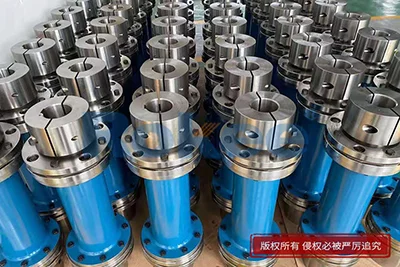
A complete flexible coupling assembly consists of two symmetrical flexible coupling hubs installed on driving and driven shafts respectively, and a central flexible intermediate component clamped and connected between the two hubs. The flexible coupling hub is generally processed into an integrated metal structural part with high dimensional accuracy, featuring a central shaft hole for interference or keyway connection with rotating shafts, circumferential matching structures used for docking with intermediate flexible elements, and circumferential fastening structures to ensure synchronous rotation between hubs and flexible components. In the overall working structure of the coupling system, the two hubs are the only rigid parts directly connected with the power input and output shafts, so their structural rigidity, concentricity manufacturing precision and surface wear resistance directly determine the basic running stability of the whole transmission system. While the middle flexible component bears all elastic deformation to compensate shaft misalignment, absorb instantaneous impact load and isolate mechanical vibration, flexible coupling hubs need to maintain stable geometric shapes without obvious deformation under continuous cyclic torque and alternating stress. This differentiated performance requirement puts forward clear design boundaries for hubs and flexible mediums: hubs focus on structural stability, torsional rigidity and connection firmness, while intermediate flexible parts focus on elastic deformation capacity, fatigue resistance and vibration damping performance. This complementary performance matching mode avoids the common defects of single-structure transmission connectors, namely insufficient rigidity leading to torque transmission loss or excessive overall rigidity leading to poor misalignment tolerance.
From the perspective of actual mechanical operation principles, the working process of flexible coupling hubs can be divided into three continuous and coordinated stages during equipment rotation. In the torque input stage, the driving shaft drives the connected flexible coupling hub to perform synchronous high-speed rotation, and the keyway or interference matching structure inside the hub eliminates relative slip between the shaft and the hub, ensuring that almost all input torque can be stably transmitted to the circumferential matching structure of the hub without power loss. In the torque transfer stage, the protruding tooth structures, groove structures or clamping platforms distributed on the outer circumference of the hub are closely fitted with the flexible intermediate component, and the rigid hub pushes the flexible medium to rotate synchronously through mechanical extrusion. At this stage, the hub itself does not produce elastic deformation, and all displacement compensation required by misaligned shafts is completed by the compression, stretching and bending deformation of the middle flexible part. In the torque output stage, the flexible medium transmits the received rotational power to the driven flexible coupling hub on the other side, and the driven hub further transfers complete and stable torque to the load shaft, finally realizing seamless power transmission between two misaligned rotating shafts. Throughout the whole working cycle, flexible coupling hubs act as rigid power transmission bridges, isolating shaft vibration and displacement deviation from the core shaft structure, preventing alternating stress generated by misalignment from directly acting on precision bearings and motor spindle structures, and protecting core power components from fatigue damage.
Material selection is one of the most critical design links affecting the comprehensive performance and service life of flexible coupling hubs, and material matching needs to be adjusted according to different operating speeds, load types and working environment parameters of transmission equipment. Common manufacturing materials for flexible coupling hubs in industrial scenarios are divided into three mainstream categories with differentiated performance advantages. Aluminum alloy materials are widely used in medium and high-speed light-load transmission scenarios such as precision automation equipment, servo motor transmission systems and small intelligent mechanical arms. Aluminum alloy hubs feature low overall density, excellent dynamic balance performance during high-speed rotation, small centrifugal force generated in operation, and good thermal conductivity which can quickly dissipate heat accumulated by frequent torque impact. Meanwhile, aluminum alloy hubs can be processed into complex circumferential matching structures through high-precision CNC machining, meeting the assembly requirements of diversified flexible intermediate parts. However, the limitation of aluminum alloy lies in its low hardness and poor resistance to heavy impact load, so it is not suitable for heavy-duty mechanical transmission scenarios with frequent startup, sudden load increase and large cyclic impact. Carbon steel is the most versatile universal material for flexible coupling hubs, with balanced mechanical strength, torsional rigidity and processing cost. Carbon steel hubs can withstand medium and heavy cyclic torque, maintain stable structural shapes under long-term alternating load, and adapt to most conventional industrial working conditions including conveyor transmission, fan and pump rotating systems. After surface quenching treatment, carbon steel hubs obtain enhanced surface wear resistance, effectively reducing abrasion loss between hubs and flexible components during long-term extrusion contact. Stainless steel materials are mainly applied to special harsh working environments with high humidity, chemical corrosion, oil pollution and salt fog erosion, such as food processing production lines, chemical fluid transmission equipment and marine auxiliary mechanical transmission systems. Stainless steel has excellent corrosion resistance and oxidation resistance, avoiding surface rust and structural corrosion failure of hubs in humid and corrosive environments. Nevertheless, stainless steel has higher material hardness and poorer cutting processing performance, leading to higher processing difficulty, and its own weight will reduce the dynamic balance upper limit of high-speed rotating equipment, making it more suitable for medium-speed and high-corrosion working conditions rather than ultra-high-speed transmission scenarios.
Flexible coupling hubs need to adapt to three typical types of shaft misalignment existing in actual engineering assembly and operation, and the cooperation mode between hubs and flexible components varies for different misalignment forms. The first type is parallel misalignment, which refers to the horizontal offset between the central axes of driving shaft and driven shaft without angle deviation. In this condition, the opposite circumferential structures of the two flexible coupling hubs produce staggered horizontal displacement, and the flexible intermediate component fills the offset gap through transverse elastic bending, while the two hubs still keep their own circular runout stable without eccentric rotation. The second type is angular misalignment, formed by a tiny included angle between two shaft central axes. During rotation, the gap between the corresponding matching positions of the two hubs changes periodically, and the flexible medium adapts to periodic gap changes through repeated compression and rebound, while the hubs always maintain synchronous rotational speed to avoid rotational speed difference between driving and driven ends. The third type is axial misalignment, caused by thermal expansion of rotating shafts after long-time operation or axial movement of equipment bases. The axial distance between two flexible coupling hubs changes dynamically, and the reserved assembly gap between hubs and flexible components cooperates with the axial deformation ability of intermediate parts to absorb axial displacement. It is worth emphasizing that flexible coupling hubs cannot compensate misalignment independently, and their reasonable structural size design is the premise to ensure the maximum misalignment tolerance of the whole coupling system. Excessively thick hub structures will limit the deformation space of flexible components and reduce misalignment compensation ability, while excessively thin hub structures will lead to local stress concentration and structural deformation of hubs under large torque, damaging overall transmission stability.
Compared with the rigid hub structures matched with traditional rigid couplings, flexible coupling hubs bring multiple prominent systematic advantages to rotating mechanical transmission systems. First of all, they effectively reduce equipment maintenance frequency and overall operating costs. By isolating impact stress and vibration, flexible coupling hubs protect precision bearings, motor spindles and gear structures from long-term alternating stress damage, greatly reducing the replacement frequency of vulnerable transmission parts and downtime maintenance time of production equipment. Secondly, they improve the smoothness of power transmission. In servo control systems requiring high-precision rotational speed synchronization, rigid hubs will transmit tiny rotational fluctuation of driving shafts to driven loads completely, resulting in positioning errors of precision automation equipment. The matching structure design of flexible coupling hubs cooperates with flexible elements to filter high-frequency fine vibration, realizing smoother and more accurate synchronous transmission. Thirdly, they reduce assembly difficulty of mechanical equipment. Complete coaxial alignment of two rotating shafts during on-site assembly requires extremely high-precision debugging tools and long working hours. Flexible coupling hubs allow reasonable reserved assembly deviation, reducing the requirement for coaxial alignment accuracy during equipment installation and shortening the overall equipment debugging cycle. In addition, flexible coupling hubs improve the safety margin of equipment operation during sudden load changes. When mechanical equipment encounters instantaneous load stalling or sudden startup impact in operation, the rigid hub will directly transfer huge instantaneous impact torque to the motor and load equipment, while flexible coupling hubs match with elastic intermediate parts to buffer impact energy, avoiding instantaneous damage to core power equipment.
Flexible coupling hubs are widely covered in full-scene modern mechanical transmission fields, and their structural parameters are optimized pertinently according to different working condition characteristics in each application scenario. In industrial fluid transmission equipment including water pumps, fans and compressors, equipment runs continuously for 24 hours with stable load and slight temperature rise generated by long-time operation, which produces axial thermal expansion displacement of shafts. Conventional carbon steel flexible coupling hubs are adopted in this scenario, with standard keyway connection structures to meet long-term stable operation needs, and matched elastomer flexible parts to absorb axial displacement and running vibration, reducing operating noise of fan and pump equipment. In automated production equipment such as servo motors, linear motion modules and industrial robotic arms, transmission systems put forward strict requirements for rotational speed synchronization, positioning accuracy and dynamic balance performance. Lightweight high-precision aluminum alloy flexible coupling hubs are selected here, with fine grinding treatment on inner holes and outer matching surfaces to ensure ultra-low circular runout, guaranteeing no positioning deviation during high-frequency forward and reverse rotation of automation equipment. In heavy-duty engineering machinery including belt conveyors, mixers and crushing equipment, transmission systems bear heavy cyclic load and frequent startup impact. Thickened high-strength carbon steel flexible coupling hubs are designed to improve torsional resistance, preventing hub cracking or keyway slipping under heavy impact torque. In pharmaceutical production equipment, food processing machinery and chemical processing devices with strict hygiene and corrosion resistance requirements, all-metal polished stainless steel flexible coupling hubs are applied, avoiding surface coating peeling pollution and resisting medium corrosion in production environments, meeting clean production standards of special industries.
Reasonable installation operation and regular routine maintenance of flexible coupling hubs are essential prerequisites to exert the maximum performance of flexible coupling systems and extend overall service life. During installation, the coaxiality of two hubs should be debugged within the allowable misalignment range specified by mechanical design parameters; excessive manual forced alignment will cause pre-deformation of internal flexible components, leading to premature fatigue failure of intermediate parts in early operation. The fastening torque of hub set screws or clamping rings needs to follow uniform stress standards, and asymmetric fastening will cause eccentric stress of hubs during rotation, generating additional vibration and new shaft misalignment. In daily equipment operation management, regular visual inspection of flexible coupling hubs is required to check surface scratches, local deformation and keyway wear conditions. For hubs operating in high-temperature environments, periodic thermal stress detection should be arranged to confirm whether long-term high-temperature operation leads to microstructural changes of metal materials and reduction of structural rigidity. Different from vulnerable flexible intermediate parts that need regular replacement, flexible coupling hubs as rigid metal components have far longer service life, but they will still suffer from accumulated fatigue damage after long-term operation under alternating torque. Timely replacement of aging flexible elements can avoid direct hard contact between two hubs caused by failure of intermediate parts, which is the most effective maintenance measure to protect flexible coupling hubs from collision damage.
With the continuous upgrading of high-end intelligent manufacturing, high-speed precision transmission and green energy power equipment, the design and manufacturing technology of flexible coupling hubs are also evolving towards high precision, lightweight, intelligent monitoring and multi-scene universal adaptation. In terms of structural optimization, integrated hollow lightweight hub structures are gradually popularized. Under the premise of ensuring original torsional rigidity, hollow design reduces the overall weight of hubs, lowers centrifugal force during high-speed rotation, improves dynamic balance performance, and reduces extra energy consumption of transmission systems. In terms of processing technology, five-axis linkage CNC precision machining replaces traditional turning processing, realizing micron-level dimensional tolerance control of hub inner holes and circumferential matching structures, further improving the running smoothness of high-precision transmission systems. In terms of functional iteration, some newly designed flexible coupling hubs reserve embedded installation positions for miniature vibration and temperature sensing chips. Combined with industrial Internet monitoring systems, the real-time operating vibration amplitude, temperature change and stress state of hubs can be fed back remotely, realizing predictive maintenance of coupling components instead of traditional regular manual inspection. In terms of material innovation, composite metal alloy materials with both lightweight advantage and high impact resistance are being developed, breaking the performance bottlenecks of single aluminum alloy and carbon steel materials, and adapting to emerging transmission equipment such as new energy motor drive systems and high-speed intelligent logistics sorting machinery.
In conclusion, although flexible coupling hubs are inconspicuous basic mechanical parts in the whole mechanical transmission chain, they undertake irreplaceable rigid connection and stable torque transmission functions, and are the core carrier supporting all misalignment compensation and vibration damping functions of flexible coupling systems. All performance advantages of flexible couplings including shaft displacement adaptation, impact buffering, vibration isolation and equipment protection cannot be realized without dimensionally accurate, structurally stable and well-matched flexible coupling hubs. The coordinated design of hub material selection, geometric structure size, surface machining precision and assembly matching clearance determines the comprehensive operating performance and service cycle of the entire transmission connector. As modern mechanical equipment develops towards higher rotating speed, higher operating precision, heavier load and more severe working environments, the iterative optimization of flexible coupling hub design will continue to promote the upgrading of power transmission system technology. Reasonable type selection, standardized installation and scientific maintenance of flexible coupling hubs can effectively improve the overall operating efficiency of rotating machinery, reduce equipment failure rates, and provide reliable basic guarantee for stable and efficient operation of various industrial power transmission systems.
Rokee is a professional manufacturer of industrial couplings in china, designing and customizing a wide range of drive shaft coupling products for customers worldwide. Submit your coupling drawings or technical specifications, and we can customize coupling products for you.
Coupling Categories



Links:
- Calibration Weight
- Digital Viscometer
- Carpas Industriales
- Exhibition Tent
- Industrial Cardan Shaft
- PU Sandwich Panel Machine
- PIR Sandwich Panel Line
- Sandwich Panel Machine
- Sandwich Panel Production Line
- PU Sandwich Panel Line
- Sandwich Panel Line
- Flexible Couplings Manufacturer In China
- Elastic Couplings Manufacturer In China