Flexible Coupling Injects New Transmission Power Into Rockwool Sandwich Panel Production Line

In the fast-paced development of the modern construction industry, prefabricated buildings have emerged as a revolutionary solution, offering unparalleled efficiency, sustainability, and practicality compared to traditional on-site construction methods. At the core of mass-producing high-quality prefabricated components lies the rockwool sandwich panel production line, a sophisticated integration of mechanical engineering, electrical control, and material science that enables the continuous manufacturing of rockwool sandwich panels—essential materials renowned for their exceptional fire resistance, thermal insulation, sound absorption, and structural stability. These panels, consisting of a rockwool core sandwiched between two protective surface layers, have become indispensable in prefabricated building projects, ranging from residential complexes and commercial buildings to industrial warehouses and temporary structures, due to their ability to meet strict performance requirements while accelerating construction timelines. The rockwool sandwich panel production line is designed to streamline the manufacturing process, minimize human intervention, ensure consistent product quality, and adapt to the diverse needs of prefabricated construction, making it a cornerstone of the modern prefabrication industry. However, the smooth operation of this production line heavily relies on the efficiency and stability of its transmission system, which connects various key components and ensures the seamless flow of power and materials throughout the manufacturing process. In recent years, flexible coupling has gradually replaced traditional rigid transmission components in many rockwool sandwich panel production lines, injecting new vitality and transmission power into the entire production process, optimizing operational efficiency, reducing maintenance costs, and promoting the high-quality development of the rockwool sandwich panel manufacturing industry.
To understand the transformative role of flexible coupling in rockwool sandwich panel production line, it is first necessary to clarify the structural characteristics and operational requirements of the production line itself. A typical rockwool sandwich panel production line is a modular system composed of several interconnected units, each performing a specific function in the manufacturing process, from raw material feeding to the final stacking of finished panels. These units include the uncoiling system, roll forming unit, rockwool processing system, adhesive application unit, lamination and pressing system, cutting system, stacking system, and central control system. Each unit is engineered to work in perfect synchronization, ensuring a seamless flow of materials and processes that maximizes efficiency and reduces production downtime. The uncoiling system marks the starting point of the production process, responsible for feeding the surface layer materials—typically color-coated steel coils or aluminum coils—into the production line, equipped with hydraulic control and automatic centering mechanisms to ensure stable and uniform feeding. The roll forming unit then shapes the surface layer materials into the desired profile through a series of rollers, while the rockwool processing system cuts and trims the rockwool slabs to the required thickness and width, preparing them for lamination with the surface layers. The adhesive application unit evenly applies adhesive to the surface layers, ensuring strong bonding between the surface layers and the rockwool core, followed by the lamination and pressing system that compresses the three layers together to form a solid sandwich panel. Finally, the cutting system trims the continuous panel into fixed lengths according to production requirements, and the stacking system neatly arranges the finished panels for storage or transportation. Throughout this entire process, the transmission system acts as the "nerve" and "blood vessel" of the production line, transmitting power from the motor to each unit, ensuring that each component operates at the correct speed and torque, and maintaining the coordination and synchronization of the entire production process.
In the early stages of rockwool sandwich panel production, most production lines adopted rigid coupling as the core component of the transmission system. Rigid coupling, characterized by its simple structure, low manufacturing cost, and ability to transmit large torques, was widely used in various industrial transmission scenarios. However, as the rockwool sandwich panel production line becomes more automated, intelligent, and efficient, the limitations of rigid coupling have become increasingly prominent, gradually failing to meet the high-standard operational requirements of modern production lines. Rigid coupling requires strict alignment between the two connected shafts; even a small deviation in alignment can lead to excessive wear on the coupling itself, bearings, and other components, increasing the risk of equipment failure. In the rockwool sandwich panel production line, the long-term operation of units such as the roll forming machine and the pressing system will inevitably cause slight deviations in the shaft alignment due to factors such as vibration, thermal expansion, and mechanical wear. Under such conditions, rigid coupling cannot compensate for these deviations, resulting in increased vibration and noise during operation, accelerated component wear, and frequent maintenance shutdowns. Moreover, the rockwool sandwich panel production process involves frequent start-up, shutdown, and load changes, especially during the cutting and stacking stages. Rigid coupling has no buffering capacity, so the impact force generated during start-up and load changes will be directly transmitted to the motor and other key components, reducing the service life of the equipment and affecting the stability of the production process. In addition, rigid coupling has poor adaptability to changes in production specifications; when the production line needs to adjust the panel thickness, width, or other parameters, the rigid coupling often needs to be disassembled and replaced, which is time-consuming and labor-intensive, affecting production efficiency.
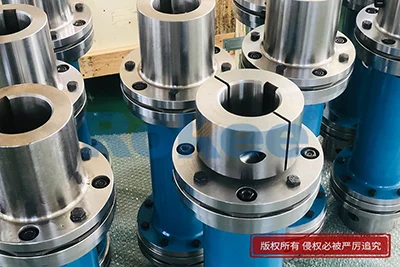
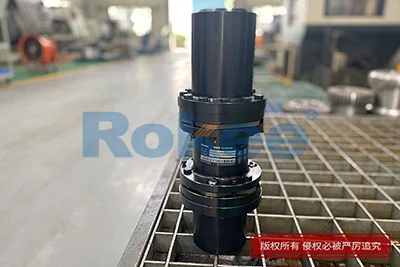
Against this background, flexible coupling has emerged as an ideal alternative to rigid coupling in rockwool sandwich panel production lines, thanks to its unique structural design and excellent performance characteristics. Flexible coupling is a mechanical device used to connect two shaft ends (or shafts and rotating parts) to transmit torque. Unlike rigid coupling, it has a certain degree of flexibility, which can compensate for relative displacements between the two shafts, such as radial deviation, angular deviation, and axial deviation, caused by installation errors, mechanical wear, thermal expansion, and other factors. At the same time, flexible coupling also has buffering and shock-absorbing functions, which can absorb the impact force generated during equipment start-up, shutdown, and load changes, reduce vibration and noise, and protect the motor, bearings, and other key components from damage. These characteristics of flexible coupling perfectly match the operational needs of rockwool sandwich panel production lines, effectively solving the problems existing in the traditional rigid transmission system and injecting new transmission power into the production line.
The application of flexible coupling in rockwool sandwich panel production lines has brought significant improvements in operational efficiency. In the past, due to the limitations of rigid coupling, the production line often needed to be shut down for maintenance due to component wear and alignment deviations, resulting in reduced production efficiency and increased production costs. Flexible coupling, with its ability to compensate for shaft deviations, can effectively reduce the wear of bearings, shafts, and other components, extend the service life of the equipment, and reduce the frequency of maintenance shutdowns. For example, in the roll forming unit, which is one of the core units of the production line, the long-term high-speed operation will cause slight radial deviations of the roller shaft. Flexible coupling can automatically compensate for these deviations, ensuring that the roller operates stably, avoiding uneven forming of the surface layer materials, and reducing the rate of defective products. In addition, flexible coupling has a simple structure and is easy to install and maintain. Compared with rigid coupling, which requires precise alignment during installation, flexible coupling can tolerate a certain degree of installation errors, reducing the difficulty of installation and shortening the installation time. When maintenance is required, flexible coupling can be disassembled and replaced quickly, minimizing the impact of maintenance on production progress. Furthermore, flexible coupling can adapt to the variable load requirements of the production line. During the production process of rockwool sandwich panels, the load of each unit will change with the changes in raw material specifications, production speed, and other factors. Flexible coupling can adjust the transmission torque in real time according to the load changes, ensuring the stable operation of each unit, avoiding overload damage to the equipment, and improving the overall operational efficiency of the production line.
Another important role of flexible coupling in rockwool sandwich panel production lines is to improve product quality. The quality of rockwool sandwich panels is closely related to the stability of the production process; any instability in the transmission system will affect the accuracy of each production link, leading to quality problems such as uneven panel thickness, poor bonding between layers, and irregular cutting. Flexible coupling, with its excellent buffering and shock-absorbing performance, can reduce the vibration generated during the operation of the production line, ensuring that each unit operates stably and accurately. For example, in the adhesive application unit, the stability of the transmission system directly affects the uniformity of adhesive application. If the transmission system vibrates excessively, the adhesive will be applied unevenly, leading to poor bonding between the surface layers and the rockwool core, reducing the structural stability and service life of the panels. Flexible coupling can absorb the vibration generated by the motor and other components, ensuring that the adhesive application roller rotates stably, so that the adhesive is evenly applied on the surface layers, improving the bonding quality of the panels. In the cutting unit, the stability of the transmission system affects the cutting accuracy of the panels. Flexible coupling can ensure that the cutting blade operates at a stable speed, avoiding cutting deviation and ensuring that the length and size of the finished panels meet the design requirements. In addition, the use of flexible coupling can reduce the noise generated during the operation of the production line, creating a better working environment for operators, reducing the impact of noise on operators' physical and mental health, and indirectly improving work efficiency and product quality.
In addition to improving operational efficiency and product quality, flexible coupling also helps reduce the overall operating costs of rockwool sandwich panel production lines. On the one hand, flexible coupling can extend the service life of key components such as motors, bearings, and shafts, reducing the frequency of component replacement and the cost of spare parts. Compared with rigid coupling, which is prone to wear and damage due to alignment deviations and impact forces, flexible coupling has better wear resistance and durability, requiring less frequent replacement and maintenance. On the other hand, the reduction in maintenance shutdown time and the improvement in production efficiency can help enterprises reduce production losses and improve economic benefits. For example, a rockwool sandwich panel production line that originally required 2-3 maintenance shutdowns per month, each lasting 4-6 hours, can reduce the number of maintenance shutdowns to 1 time per month, each lasting 2-3 hours after adopting flexible coupling. This not only saves maintenance time and labor costs but also increases the effective production time of the production line, improving the output of finished panels. In addition, the energy-saving effect of flexible coupling cannot be ignored. The smooth transmission of flexible coupling can reduce energy loss during the power transmission process, improve the energy utilization rate of the motor, and reduce energy consumption. For rockwool sandwich panel production lines with high energy consumption, this can save a considerable amount of energy costs over the long term.
The application of flexible coupling in rockwool sandwich panel production lines is not a simple replacement of components but a comprehensive optimization of the transmission system, which requires combining the actual operational characteristics of the production line to select the appropriate type and specification of flexible coupling. There are various types of flexible coupling, which can be divided into flexible coupling without elastic elements and flexible coupling with elastic elements according to their characteristics. Flexible coupling without elastic elements only has the ability to compensate for relative displacement between two shafts but cannot buffer and absorb shock, such as slider coupling, gear coupling, and universal coupling. Flexible coupling with elastic elements can not only compensate for relative displacement but also buffer and absorb shock through the elastic deformation of elastic elements, such as elastic sleeve pin coupling, elastic pin coupling, and tire coupling. In rockwool sandwich panel production lines, flexible coupling with elastic elements is more widely used because it can better adapt to the frequent start-up, shutdown, and load change scenarios of the production line, and effectively reduce vibration and noise. When selecting flexible coupling, enterprises need to consider factors such as the transmission torque, rotating speed, shaft deviation, and working environment of each unit, so as to select the most suitable flexible coupling type and specification, ensuring the best transmission effect and operational stability.
With the continuous development of the prefabricated construction industry, the demand for rockwool sandwich panels is increasing, and the requirements for production efficiency, product quality, and operational stability of the production line are also getting higher and higher. Flexible coupling, as a key component of the transmission system, will play an increasingly important role in the rockwool sandwich panel production line. In the future, with the continuous advancement of material science and mechanical manufacturing technology, flexible coupling will be further optimized and improved, with better performance, longer service life, and wider applicability. For example, the development of new composite materials will make flexible coupling have higher wear resistance, corrosion resistance, and temperature resistance, adapting to the harsh working environment of some rockwool sandwich panel production lines. The integration of intelligent technology will enable flexible coupling to realize real-time monitoring of operating status, timely early warning of potential faults, and further reduce maintenance costs and improve operational reliability. At the same time, with the popularization of intelligent production lines, flexible coupling will be better integrated with intelligent control systems, realizing the coordinated operation of the entire transmission system, and providing stronger support for the intelligent and high-efficiency development of rockwool sandwich panel production lines.
In conclusion, the application of flexible coupling has brought a revolutionary change to the transmission system of rockwool sandwich panel production lines. It not only solves the problems of poor adaptability, high maintenance frequency, and low transmission efficiency of the traditional rigid transmission system but also injects new transmission power into the production line, improving operational efficiency, product quality, and economic benefits. In the context of the rapid development of the prefabricated construction industry, enterprises engaged in rockwool sandwich panel production should pay full attention to the role of flexible coupling, actively adopt advanced flexible coupling technology, optimize the transmission system of the production line, and continuously improve the core competitiveness of enterprises. With the continuous innovation and development of flexible coupling technology, it will surely promote the rockwool sandwich panel manufacturing industry to move towards a more efficient, stable, and sustainable development path, making greater contributions to the development of the prefabricated construction industry.
Rokee is a professional manufacturer of industrial couplings in china, designing and customizing a wide range of drive shaft coupling products for customers worldwide. Submit your coupling drawings or technical specifications, and we can customize coupling products for you.
Coupling Categories


Links:
- Calibration Weight
- Digital Viscometer
- Carpas Industriales
- Exhibition Tent
- Industrial Cardan Shaft
- PU Sandwich Panel Machine
- PIR Sandwich Panel Line
- Sandwich Panel Machine
- Sandwich Panel Production Line
- PU Sandwich Panel Line
- Sandwich Panel Line
- Flexible Couplings Manufacturer In China
- Elastic Couplings Manufacturer In China