Flexible Coupling Is The First Choice For Transmission Optimization Of Sandwich Panel Line
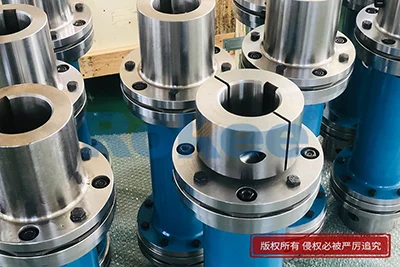
In the modern manufacturing industry, the sandwich panel line is a key equipment for producing high-quality building and industrial panels, which integrates multiple processes such as uncoiling, roll forming, foaming, lamination, curing and cutting. The stable and efficient operation of the transmission system is the core guarantee for the quality and production efficiency of sandwich panels. Any deviation or failure in the transmission process will directly lead to defects such as uneven panel thickness, poor bonding, and inaccurate cutting, resulting in increased material waste, reduced production efficiency, and increased maintenance costs. In the process of optimizing the transmission system of the sandwich panel line, flexible coupling has gradually become the first choice of engineers and manufacturers due to its unique structural characteristics and excellent performance advantages, which effectively solves the pain points of the traditional transmission system and promotes the upgrading and development of the sandwich panel production industry.
To understand why flexible coupling can become the core component of transmission optimization for sandwich panel lines, it is first necessary to clarify the working characteristics of the sandwich panel line and the core challenges faced by its transmission system. A modern sandwich panel line is a continuous and automated production system that integrates mechanical, electrical, and chemical technologies. Each process link requires precise and synchronized power transmission to ensure the consistency of product quality. The transmission system of the sandwich panel line is composed of multiple power units and transmission components, which need to connect the motor, reducer, roll forming machine, conveyor, cutting machine and other equipment in series to form a complete power transmission chain. However, in the actual production process, the transmission system often faces many challenges. Due to the limitations of equipment layout and production process, the driving shaft and driven shaft of each equipment are difficult to achieve absolute coaxiality, and there will be angular, parallel or axial misalignment. At the same time, during the long-term continuous operation of the production line, the equipment will generate vibration due to factors such as motor operation, roll rotation, and material movement. In addition, the start-up and stop of the production line, the change of production load, and the thermal expansion of equipment will also bring impact loads to the transmission system. These problems will not only affect the stability of power transmission, but also accelerate the wear of bearings, shafts and other components, leading to frequent equipment failures and affecting the normal operation of the production line.
Compared with traditional rigid couplings, flexible coupling has obvious advantages in solving the above problems, which is the fundamental reason why it becomes the first choice for transmission optimization of sandwich panel lines. Flexible coupling is a kind of transmission component that connects two shafts and transmits power through elastic elements. It can not only realize the stable transmission of torque, but also effectively compensate the misalignment between shafts, absorb vibration and buffer impact, thus protecting the connected equipment and improving the stability and reliability of the transmission system. Unlike rigid couplings that adopt forced synchronous connection, flexible coupling realizes flexible transmission through built-in elastic elements, which avoids the stress concentration caused by rigid connection and effectively extends the service life of the transmission system and related equipment.
The ability to compensate for shaft misalignment is one of the most important performance advantages of flexible coupling, which is particularly critical for the transmission system of sandwich panel lines. In the installation and operation process of the sandwich panel line, due to factors such as installation accuracy, foundation settlement, and equipment operation deformation, it is inevitable that there will be coaxiality deviation between the driving shaft and the driven shaft of each equipment. If such deviation cannot be effectively compensated, it will lead to increased shaft system vibration, accelerated bearing wear, and even damage to the motor and reducer. Flexible coupling can absorb the stress caused by such deviation through the deformation of its own elastic elements, effectively offset the impact of radial offset, angular tilt and axial movement, reduce the requirements for installation accuracy, and reduce the additional loss during equipment operation. For example, in the roll forming link of the sandwich panel line, the roll forming machine needs to maintain a stable rotation speed to ensure the uniformity of the panel shape. The flexible coupling connected between the motor and the roll forming machine can compensate for the slight misalignment between the two shafts caused by the long-term operation of the equipment, ensuring that the power is transmitted stably and evenly, thus avoiding the defects such as uneven panel thickness caused by the unstable rotation of the roll.
The vibration absorption and shock buffering performance of flexible coupling also plays an important role in optimizing the transmission system of the sandwich panel line. During the operation of the sandwich panel line, the motor start-up, load mutation, equipment braking and other processes will generate impact loads, and the operation of the equipment itself will also generate vibration. These impacts and vibrations, if directly transmitted to the shaft system and working machinery, will damage precision components, affect the stability of equipment operation, and even cause safety hazards. The elastic elements of flexible coupling can absorb impact energy, alleviate the impact of impact loads on the shaft system and equipment, and at the same time weaken the transmission of vibration, reduce the noise of equipment operation, and create a more stable operation environment. In the foaming and lamination links of the sandwich panel line, the stability of power transmission is particularly important. Even slight fluctuations in transmission speed or torque will affect the density of the foam core and the bonding effect between the core and the surface material, thereby reducing product quality. Flexible coupling can effectively absorb the vibration generated by the transmission system, ensure the stability of power transmission, and provide a reliable guarantee for the quality of sandwich panels. In addition, when the equipment is overloaded, the elastic elements of some flexible couplings will undergo plastic deformation or fracture, playing a role of overload protection, preventing the shaft system and core equipment from being damaged due to excessive torque.
The adaptability of flexible coupling to complex working conditions is also an important reason why it is widely used in sandwich panel lines. The production environment of sandwich panel line is often accompanied by dust, oil pollution, temperature changes and other factors, which put forward high requirements for the performance of transmission components. High-quality flexible couplings can adapt to such complex environments by selecting oil-resistant, corrosion-resistant and high-temperature resistant elastic materials and main materials, maintaining stable transmission performance without frequent maintenance. For example, in the curing link of the sandwich panel line, the equipment needs to work in a high-temperature environment. The flexible coupling made of high-temperature resistant materials can still maintain good flexibility and transmission performance, ensuring the smooth progress of the curing process. At the same time, the flexible coupling has a compact structure, which can be installed in the space-constrained parts of the sandwich panel line without affecting the normal operation of other equipment. Its lightweight design also makes installation and maintenance more convenient, saving valuable time during maintenance and reducing maintenance costs.
In addition to the above performance advantages, the application of flexible coupling can also effectively improve the transmission efficiency of the sandwich panel line and reduce energy consumption. In the traditional transmission system, the misalignment between shafts and the vibration generated during operation will lead to energy loss, increasing the energy consumption of the production line. Flexible coupling can reduce energy loss by compensating for shaft misalignment and absorbing vibration, improve the efficiency of power transmission, and thus reduce the overall energy consumption of the sandwich panel line. In the context of global energy conservation and emission reduction, this advantage of flexible coupling is particularly important, which can help manufacturers reduce production costs and achieve green production.
The practical application effect of flexible coupling in the transmission optimization of sandwich panel lines has been fully verified in many production practices. In a large-scale sandwich panel production enterprise, after replacing the traditional rigid coupling with flexible coupling in the transmission system of the production line, the equipment failure rate caused by transmission problems has been reduced by more than 60%, the maintenance cycle has been extended by 30%, and the material waste rate has been reduced by nearly 20%. At the same time, the stability of the production line has been significantly improved, the production efficiency has been increased by 15%, and the product qualification rate has been maintained above 99%. In another enterprise specializing in the production of thermal insulation sandwich panels, the application of flexible coupling has effectively solved the problem of uneven panel thickness caused by unstable transmission, improved the product quality, and enhanced the market competitiveness of the enterprise. These practical cases fully show that flexible coupling can effectively optimize the transmission system of the sandwich panel line, bring significant economic benefits to manufacturers.
It should be noted that although flexible coupling has many advantages, in order to give full play to its role in the transmission optimization of sandwich panel lines, it is necessary to select the appropriate type and specification of flexible coupling according to the actual working conditions of the production line. Different types of flexible couplings have different performance characteristics and application scopes. For example, metallic flexible couplings have the advantages of high torque bearing capacity and zero backlash, which are suitable for high-speed and high-precision transmission links such as cutting machines; elastomeric flexible couplings have better vibration absorption and shock buffering performance, which are suitable for links with large vibration such as roll forming machines. When selecting flexible couplings, factors such as the torque required by the transmission system, the speed of the equipment, the type and degree of shaft misalignment, and the working environment should be comprehensively considered to ensure that the selected flexible coupling can perfectly match the transmission needs of the sandwich panel line.
In addition, the correct installation and regular maintenance of flexible coupling are also important links to ensure its stable operation. During installation, the alignment of the shafts should be checked as much as possible to ensure that the misalignment does not exceed the rated range of the flexible coupling. At the same time, the installation process should be standardized to avoid damage to the elastic elements of the flexible coupling. During the operation of the production line, the flexible coupling should be regularly inspected, including checking the wear of the elastic elements, the tightness of the connecting parts, and whether there is abnormal noise or vibration. If any problems are found, they should be handled in a timely manner to avoid further damage to the transmission system. Regular maintenance can not only extend the service life of the flexible coupling, but also ensure the long-term stable operation of the transmission system of the sandwich panel line.
With the continuous development of industrial automation technology, the sandwich panel line is moving towards the direction of high speed, high precision and intelligence, which puts forward higher requirements for the performance of the transmission system. As the core component of transmission optimization, flexible coupling is also constantly innovating and upgrading. The new type of flexible coupling developed in recent years integrates advanced design concepts and materials, which has better performance in torque transmission, misalignment compensation, vibration absorption and other aspects, and can better adapt to the development needs of the modern sandwich panel production line. For example, the flexible coupling with intelligent monitoring function can real-time monitor its own operation status, timely feedback potential faults, and help manufacturers realize predictive maintenance, further reducing the downtime of the production line.
In conclusion, the flexible coupling has become the first choice for the transmission optimization of the sandwich panel line due to its excellent performance advantages such as misalignment compensation, vibration absorption, shock buffering, strong adaptability, high transmission efficiency and energy saving. Its application not only solves the pain points of the traditional transmission system, improves the stability and reliability of the sandwich panel line, but also reduces production costs, improves product quality and production efficiency, and promotes the healthy and sustainable development of the sandwich panel production industry. With the continuous progress of technology, the performance of flexible coupling will be further optimized, and its application in the sandwich panel line will be more extensive and in-depth, bringing more value to the manufacturing industry.
Rokee is a professional manufacturer of industrial couplings in china, designing and customizing a wide range of drive shaft coupling products for customers worldwide. Submit your coupling drawings or technical specifications, and we can customize coupling products for you.
Coupling Categories


Links:
- Calibration Weight
- Digital Viscometer
- Carpas Industriales
- Exhibition Tent
- Industrial Cardan Shaft
- PU Sandwich Panel Machine
- PIR Sandwich Panel Line
- Sandwich Panel Machine
- Sandwich Panel Production Line
- PU Sandwich Panel Line
- Sandwich Panel Line
- Flexible Couplings Manufacturer In China
- Elastic Couplings Manufacturer In China