Flexible Coupling Optimizes Transmission Performance Of PIR Sandwich Panel Line

In the modern manufacturing industry, the production efficiency and product quality of PIR sandwich panel lines are closely related to the stability and reliability of the transmission system. As a key component connecting the power source and various functional units in the transmission system, the coupling plays an irreplaceable role in ensuring the smooth operation of the entire production line. Among various types of couplings, flexible couplings have gradually become the preferred choice for PIR sandwich panel lines due to their unique structural characteristics and excellent performance, effectively optimizing transmission performance, reducing equipment failure rates, and promoting the high-quality development of the PIR sandwich panel manufacturing industry. PIR sandwich panels, known for their excellent thermal insulation, fire resistance, and structural strength, are widely used in construction, cold storage, industrial workshops, and other fields. The production process of PIR sandwich panels involves multiple links, including unwinding of facing materials, pre-treatment, adhesive application, foaming, pressing, cutting, and handling. Each link relies on the stable transmission of power to ensure the coordination and synchronization of equipment operation. Any instability in the transmission system will directly affect the production efficiency, product accuracy, and even the service life of the equipment. In the past, rigid couplings were widely used in some PIR sandwich panel lines. Although rigid couplings have the advantages of simple structure and high torsional rigidity, they have strict requirements on the coaxiality of the connected shafts. In the actual production process, due to factors such as equipment installation errors, foundation settlement, thermal expansion and contraction during operation, and mechanical vibration, it is difficult to maintain absolute coaxiality between the driving shaft and the driven shaft. This misalignment will cause additional stress on the rigid coupling, bearings, and shafts, leading to increased wear of components, increased noise, and even equipment jamming or damage in severe cases, which seriously affects the normal operation of the production line.
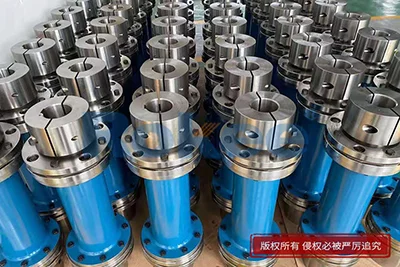
Flexible couplings, different from rigid couplings, realize flexible connection between shafts through their own elastic components, which can effectively compensate for the misalignment between shafts, including angular misalignment, parallel misalignment, and axial misalignment. This compensation function is particularly important in PIR sandwich panel lines. For example, in the unwinding unit of facing materials, the unwinding shaft and the motor shaft are often affected by the installation accuracy and the weight of the coil, resulting in a certain degree of misalignment. If a rigid coupling is used, this misalignment will cause uneven tension of the facing material, leading to wrinkles, deformation, or even breakage of the material, affecting the subsequent bonding effect with the PIR core. However, the flexible coupling can absorb the misalignment through the deformation of its elastic components, ensure the stable transmission of torque, make the unwinding speed uniform, and maintain the flatness and integrity of the facing material. In the foaming and pressing links, the high-pressure foaming machine and the double belt press need to maintain a high degree of synchronization. The flexible coupling can effectively reduce the impact of vibration on the transmission system, ensure that the foaming agent is evenly distributed, and the pressing force is stable, thus improving the density and uniformity of the PIR core, and enhancing the overall performance of the sandwich panel. The core advantage of flexible couplings lies in their excellent vibration and shock absorption performance. In the operation process of PIR sandwich panel lines, various equipment such as motors, reducers, and pumps will generate a certain amount of vibration. These vibrations, if not effectively isolated and absorbed, will be transmitted along the transmission shaft to other components, leading to fatigue damage of equipment, increased noise, and reduced service life. Flexible couplings can absorb and buffer the vibration and impact generated during equipment operation through the elastic deformation of their internal components, such as elastic sleeves, diaphragms, or grid structures. This not only reduces the vibration amplitude of the entire transmission system but also reduces the noise generated during operation, creating a more stable and quiet production environment. For example, in the high-pressure foaming link, the foaming machine will generate periodic pressure shocks during the mixing and spraying of raw materials. The flexible coupling can buffer these shocks, prevent the shocks from being transmitted to the motor and reducer, reduce the wear of the motor bearing and the reducer gear, and extend the service life of the equipment.
In addition, flexible couplings can also improve the transmission efficiency of the PIR sandwich panel line. Transmission efficiency is an important indicator to measure the performance of the transmission system, which directly affects the energy consumption and production efficiency of the production line. Rigid couplings have high transmission efficiency in the case of perfect coaxiality, but once misalignment occurs, the transmission efficiency will decrease significantly, and additional energy loss will be generated due to friction and stress. Flexible couplings, on the other hand, can maintain high transmission efficiency even in the presence of a certain degree of misalignment. Because their elastic components can adapt to the misalignment between shafts through deformation, avoiding the friction and wear caused by forced alignment, thus reducing energy loss. At the same time, the flexible coupling has the characteristics of small backlash, which can ensure the accuracy of torque transmission, make the speed of each functional unit of the production line consistent, and avoid the production defects caused by speed asynchrony. For example, in the cutting link of the PIR sandwich panel, the flying saw cutting machine needs to be synchronized with the conveying speed of the panel. If the transmission system has large backlash or low efficiency, it will cause the cutting length to be inaccurate, resulting in waste of materials and reduction of product qualification rate. The flexible coupling can effectively reduce the backlash, ensure the precise transmission of speed and torque, make the cutting length accurate, and improve the product qualification rate.
The selection of flexible couplings for PIR sandwich panel lines needs to be combined with the actual working conditions of the production line, including factors such as transmission torque, rotating speed, misalignment, working environment, and maintenance requirements. Different types of flexible couplings have different structural characteristics and performance advantages, which are suitable for different working conditions. For example, diaphragm couplings have the advantages of high torsional rigidity, small backlash, and good high-temperature resistance, which are suitable for high-speed and high-precision transmission links, such as the transmission of the double belt press and the cutting machine. Gear couplings have strong torque transmission capacity and can adapt to large misalignment, which are suitable for heavy-duty transmission links, such as the transmission of the unwinding unit and the conveying system. Grid couplings have good vibration absorption performance and are easy to maintain, which are suitable for general transmission links, such as the transmission of the pre-treatment equipment and the handling system. In the selection process, it is necessary to comprehensively consider the working parameters of each link of the production line, select the appropriate type and specification of flexible couplings, so as to give full play to their performance advantages and optimize the transmission effect. In addition to the selection of appropriate types, the installation and maintenance of flexible couplings also have an important impact on the transmission performance of the PIR sandwich panel line. Correct installation can ensure that the flexible coupling exerts its due performance, while regular maintenance can extend its service life and avoid equipment failures caused by improper use. During installation, it is necessary to ensure that the coaxiality of the connected shafts is within the allowable range of the flexible coupling, and the installation torque is uniform to avoid damage to the elastic components. At the same time, it is necessary to check the fit between the coupling and the shaft, and ensure that there is no looseness, so as to prevent the coupling from slipping during operation. In terms of maintenance, it is necessary to regularly check the wear of the elastic components of the flexible coupling, such as the elastic sleeve, diaphragm, and grid. If wear, aging, or damage is found, it should be replaced in time to avoid affecting the transmission performance. In addition, it is necessary to regularly clean the coupling, remove dust, oil, and other pollutants, and check the lubrication condition. For couplings that need lubrication, it is necessary to add lubricating oil or grease regularly to reduce friction and wear and ensure the smooth operation of the coupling.
The application of flexible couplings in PIR sandwich panel lines not only optimizes the transmission performance but also brings significant economic benefits to enterprises. On the one hand, the use of flexible couplings reduces the failure rate of the transmission system, reduces the downtime of the production line, and improves production efficiency. For example, in a PIR sandwich panel production line that originally used rigid couplings, the equipment failure rate caused by transmission problems was relatively high, and the average monthly downtime was about 8 hours. After replacing with flexible couplings, the failure rate was reduced by more than 60%, and the monthly downtime was shortened to less than 3 hours, which greatly improved the effective production time of the production line. On the other hand, flexible couplings reduce the wear of components such as bearings, shafts, and reducers, extend the service life of the equipment, reduce the cost of equipment maintenance and replacement, and reduce the production cost of enterprises. At the same time, the optimization of transmission performance makes the product quality more stable, the qualification rate of products is improved, and the waste of raw materials is reduced, which further reduces the production cost and enhances the market competitiveness of enterprises. With the continuous development of the PIR sandwich panel manufacturing industry, the requirements for production efficiency, product quality, and equipment reliability are getting higher and higher. The flexible coupling, as a key component of the transmission system, will play a more important role in the future. With the continuous progress of material science and manufacturing technology, the performance of flexible couplings will be further optimized. For example, the use of new high-performance elastic materials will improve the wear resistance, high-temperature resistance, and fatigue resistance of flexible couplings, making them more suitable for the harsh working environment of PIR sandwich panel lines. The application of intelligent technology will also make the monitoring and maintenance of flexible couplings more convenient. Through the installation of sensors on the coupling, real-time monitoring of the operating status of the coupling, such as vibration amplitude, temperature, and wear, can be realized, and early warning of potential failures can be given, so as to achieve predictive maintenance and further improve the reliability and stability of the transmission system.
In the production process of PIR sandwich panels, the stability and efficiency of the transmission system are the key to ensuring the normal operation of the production line. Flexible couplings, with their unique advantages such as misalignment compensation, vibration absorption, shock buffering, and high transmission efficiency, effectively solve the problems existing in the traditional rigid coupling transmission system, optimize the transmission performance of the PIR sandwich panel line, and promote the improvement of production efficiency and product quality. For enterprises engaged in the production of PIR sandwich panels, selecting appropriate flexible couplings, strengthening their installation and maintenance, and giving full play to their performance advantages are important measures to reduce production costs, improve market competitiveness, and achieve sustainable development. In the future, with the continuous innovation and development of flexible coupling technology, it will bring more possibilities for the upgrading and development of the PIR sandwich panel manufacturing industry, and make greater contributions to the development of the construction and industrial insulation material industry.
It is worth noting that the application of flexible couplings in PIR sandwich panel lines is not a one-size-fits-all solution. Different production lines have different production scales, process requirements, and working environments, so the selection and application of flexible couplings also need to be adjusted according to actual conditions. For example, for small and medium-sized PIR sandwich panel lines with low transmission torque and low speed, grid couplings or pin bush couplings with simple structure and low maintenance cost can be selected; for large-scale production lines with high transmission torque, high speed, and high precision requirements, diaphragm couplings or gear couplings with high performance and high reliability can be selected. In addition, the compatibility between the flexible coupling and other components of the transmission system, such as motors, reducers, and shafts, also needs to be considered to ensure the coordination and matching of the entire transmission system, so as to achieve the best transmission effect. In the actual application process, enterprises should summarize experience in a timely manner, continuously optimize the selection and use of flexible couplings, and make them better serve the production of PIR sandwich panels. At the same time, they should pay attention to the research and development of new technologies and new products of flexible couplings, keep up with the development trend of the industry, and continuously improve the technical level and competitiveness of their own production lines.
Another important aspect of the role of flexible couplings in PIR sandwich panel lines is their ability to adapt to the complex working environment of the production line. PIR sandwich panel production involves chemical raw materials such as foaming agents and adhesives, which may produce corrosive gases or liquids during the production process. In addition, the production line may also face harsh conditions such as high temperature and high humidity. Flexible couplings made of corrosion-resistant and high-temperature resistant materials can effectively resist the erosion of corrosive substances, maintain stable performance in high-temperature and high-humidity environments, and avoid performance degradation or damage caused by environmental factors. For example, some flexible couplings use stainless steel or engineering plastics with strong corrosion resistance as the main material, and the elastic components use high-temperature resistant rubber or polyurethane materials, which can adapt to the working environment of the PIR sandwich panel production line, ensure long-term stable operation, and reduce the frequency of maintenance and replacement. In addition, the flexible coupling has a simple structure and is easy to disassemble and assemble, which is convenient for maintenance and replacement in the narrow space of the production line. This not only saves maintenance time but also reduces the labor intensity of maintenance personnel, further improving the operational efficiency of the production line.
In conclusion, flexible couplings play a crucial role in optimizing the transmission performance of PIR sandwich panel lines. Their unique structural characteristics and excellent performance solve the key problems of misalignment, vibration, and low transmission efficiency in the traditional transmission system, ensure the smooth operation of each link of the production line, improve production efficiency and product quality, and bring significant economic benefits to enterprises. With the continuous development of the PIR sandwich panel manufacturing industry and the continuous progress of flexible coupling technology, the application of flexible couplings will be more extensive and in-depth, and they will become an indispensable key component in the PIR sandwich panel production line. Enterprises should attach great importance to the selection, installation, and maintenance of flexible couplings, give full play to their advantages, and promote the high-quality and efficient development of the PIR sandwich panel manufacturing industry.



Links:
- Calibration Weight
- Digital Viscometer
- Carpas Industriales
- Exhibition Tent
- Industrial Cardan Shaft
- PU Sandwich Panel Machine
- PIR Sandwich Panel Line
- Sandwich Panel Machine
- Sandwich Panel Production Line
- PU Sandwich Panel Line
- Sandwich Panel Line
- Flexible Couplings Manufacturer In China
- Elastic Couplings Manufacturer In China