Flexible Pump Coupling

In modern industrial fluid transmission systems, the stable operation of pump units relies heavily on the coordination of every core mechanical component, among which flexible pump couplings stand out as an indispensable connecting element between driving motors and pump bodies. Unlike rigid connecting structures that pursue absolute coaxial precision, flexible pump couplings are engineered with inherent elastic deformation characteristics, focusing on solving the common mechanical deviations and dynamic load problems in the operation of pump equipment. Their core value lies in realizing efficient and stable torque transmission while tolerating subtle relative displacements between shafts, effectively buffering operating shocks and suppressing vibration diffusion, thereby comprehensively protecting the entire pump transmission system and extending the service life of key equipment components. As fluid machinery systems continue to develop toward high efficiency, high stability and long service cycles, the application importance of flexible pump couplings in industrial production, municipal engineering, chemical processing and other fields has become increasingly prominent, becoming a key guarantee for reducing equipment failure rates and improving system operation efficiency.
The fundamental working logic of flexible pump couplings is based on elastic deformation and flexible energy absorption. In the operating state of the pump unit, the motor outputs rotational torque, which is transmitted to the pump shaft through the flexible coupling to drive the impeller to rotate and complete fluid conveying work. In this process, ideal absolute coaxial alignment between the motor shaft and the pump shaft is almost impossible to achieve in actual working conditions. Processing errors of equipment parts, minor deviations generated during on-site installation and debugging, thermal expansion and contraction of metal components caused by long-term high-load operation, and subtle foundation settlement of equipment will all lead to different degrees of misalignment between the two connecting shafts. These misalignments are mainly divided into three typical forms: angular misalignment where the two shafts form a tiny included angle, parallel offset misalignment where the shaft centers are staggered horizontally, and axial displacement misalignment where the shafts move back and forth along the axial direction. Rigid couplings cannot adapt to these deviations, which will cause additional bending stress and friction load on the shaft system during operation, further leading to severe wear of bearings and mechanical seals, shaft deformation and even equipment vibration and shutdown failures. Flexible pump couplings rely on the elastic deformation of their internal flexible components to adapt to all kinds of subtle misalignments, offset additional mechanical stress, and ensure that torque transmission is always in a stable and low-loss state.
Beyond basic misalignment compensation, excellent vibration damping and shock absorption performance constitutes another core advantage of flexible pump couplings. The start-stop process of pump equipment, sudden changes in fluid flow and pressure impact in the pipeline will generate instantaneous alternating shock loads in the transmission system. Such dynamic impacts are easily transmitted along the rigid shaft system, causing resonance of the entire equipment unit, producing continuous operating noise, and accelerating fatigue aging of precision components. The flexible structures inside the coupling can effectively absorb and dissipate these instantaneous impact energies through elastic stretching, compression and torsion deformation, block the transmission of vibration between the motor and the pump body, and reduce the amplitude of equipment operation vibration. This damping effect not only optimizes the operating environment of the pump unit, makes the equipment run more smoothly and quietly, but also avoids precision damage to mechanical seals, bearings and other vulnerable parts caused by long-term vibration fatigue, greatly reducing the probability of fluid leakage and mechanical failure of the pump body.
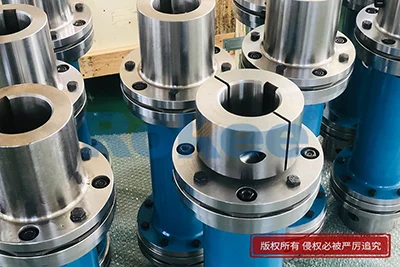
The structural design of flexible pump couplings follows the dual principles of efficient torque transmission and flexible deformation tolerance, and the internal component configuration is scientifically optimized for the operating characteristics of pump equipment. Most flexible pump couplings consist of two rigid hub structures and intermediate flexible elastic components. The hubs are stably fixed on the motor shaft and pump shaft respectively through fastening structures, undertaking the basic positioning and connecting functions. The intermediate elastic components are the core functional parts that realize flexibility, vibration damping and misalignment compensation. Different structural designs of elastic components endow couplings with differentiated performance characteristics to adapt to diverse working condition requirements. Some elastic components adopt integral elastic body structures with good overall toughness, which can achieve uniform stress deformation in all directions, suitable for conventional medium and low-speed pump operating environments with frequent start and stop. Some split elastic structures can bear higher torsional load, with stronger deformation recovery ability, adapting to high-speed and high-torque pump transmission scenarios. In addition, the optimized structural design avoids rigid friction and collision between metal parts inside the coupling during operation, effectively reducing mechanical wear and achieving low-noise and low-loss power transmission.
Material selection is the key factor determining the comprehensive performance and service life of flexible pump couplings, and the matching of hub and elastic component materials directly adapts to different industrial working conditions. The hub parts are usually made of high-strength metal materials with good rigidity and wear resistance, which can maintain stable structural size and positioning accuracy under long-term high-load operation, avoid deformation and loosening caused by torque impact, and ensure the reliability of shaft connection. The elastic components are mostly made of high-elasticity polymer materials or special elastic metal materials. Polymer elastic materials have excellent damping performance and deformation recovery ability, with good wear resistance and aging resistance, which can effectively absorb vibration and shock, and are suitable for conventional water pump, oil pump and general fluid conveying equipment. Elastic metal materials have higher torsional stiffness and temperature resistance, can maintain stable elastic performance in high-temperature, low-temperature or complex chemical environments, and are more suitable for special working conditions such as chemical anti-corrosion pumps and high-temperature industrial pumps. Reasonable material matching enables flexible pump couplings to maintain stable working performance in different temperature ranges, load intensities and environmental conditions, and enhances the adaptability of equipment systems to complex working conditions.
In actual industrial applications, flexible pump couplings bring significant economic and operational value to the entire fluid transmission system through multiple protective mechanisms. First of all, it effectively reduces the maintenance cost of pump equipment. Traditional rigid connection modes often lead to rapid wear of bearings and seals due to unavoidable shaft misalignment, requiring frequent replacement of vulnerable parts and regular calibration of shaft alignment. Flexible couplings eliminate additional mechanical stress caused by misalignment, slow down the aging and wear speed of core components, greatly extend the maintenance cycle of equipment, and reduce the downtime loss caused by equipment maintenance. Secondly, it improves the operating efficiency of the pump unit. The flexible connection structure reduces friction resistance and power loss in the torque transmission process, ensures that the power output by the motor is efficiently transmitted to the pump shaft, avoids energy waste caused by mechanical friction and vibration, and realizes energy-saving operation of the equipment. Moreover, the stable operating state optimized by the coupling effectively suppresses equipment resonance and abnormal noise, improves the on-site operating environment of industrial production, and reduces the hidden dangers of equipment safety accidents caused by long-term unstable operation.
The application scenarios of flexible pump couplings cover almost all fields involving fluid mechanical transmission, showing strong universal applicability. In municipal water supply and drainage engineering, various water pump units need to operate continuously for a long time, and flexible couplings adapt to the subtle shaft deviation and vibration generated by long-term operation, ensuring the stable and uninterrupted operation of water supply and drainage systems. In chemical and petrochemical industries, pump equipment needs to convey various corrosive and viscous fluids, with complex operating load changes. The shock absorption and anti-deformation performance of flexible couplings can cope with instantaneous load fluctuations, protecting the precision transmission structure of chemical pumps. In industrial production fields such as electric power, metallurgy and papermaking, high-power pump units operate with high load and high frequency, and flexible couplings bear the task of stable torque transmission and dynamic load buffering, ensuring the efficient operation of the entire production system. In addition, in some special working environments such as low-temperature refrigeration and high-temperature heat exchange, customized flexible coupling structures and materials can adapt to extreme temperature conditions, maintaining the stability of fluid transmission equipment.
Although flexible pump couplings have excellent comprehensive performance, their long-term stable operation still depends on scientific installation, daily inspection and standardized maintenance. In the installation process, it is necessary to ensure that the coaxiality of the motor shaft and the pump shaft is controlled within the allowable compensation range of the coupling, avoiding excessive misalignment that exceeds the deformation tolerance of the elastic components, which may cause accelerated fatigue damage of the flexible parts. At the same time, the fastening degree of the hub and the shaft should be standardized to prevent shaft slipping and torque transmission failure caused by loose installation. In daily equipment operation, regular inspection of the coupling operating state is required, focusing on observing whether there is abnormal vibration, noise and elastic component aging deformation. For elastic components that have been used for a long time, regular replacement and maintenance should be carried out according to the operating frequency and load intensity, to avoid performance degradation of flexible parts affecting the overall operating state of the pump unit. Scientific maintenance habits can maximize the service life of flexible pump couplings and give full play to their protective and optimized functions for the transmission system.
With the continuous progress of mechanical manufacturing technology and the upgrading of industrial equipment performance, the design and performance of flexible pump couplings are also constantly optimized and innovated. Modern industrial production puts forward higher requirements for equipment energy saving, stability and service life, which promotes the continuous improvement of flexible coupling structure design and material technology. The new generation of flexible pump couplings develops towards higher misalignment compensation accuracy, stronger vibration damping performance, wider environmental adaptability and longer service life. Through refined structural optimization, the torque transmission efficiency is further improved, the residual stress during deformation is reduced, and the fatigue resistance of flexible components is enhanced. Through the research and development of new elastic materials, the adaptability of couplings in extreme environments such as high temperature, low temperature, corrosion and high humidity is further expanded, meeting the diversified and high-standard operating needs of modern industrial pump equipment.
From the perspective of the entire mechanical transmission system, flexible pump couplings are small in structure but undertake crucial connecting and protecting functions. They solve many pain points in the operation of traditional pump equipment, such as easy wear of shaft system parts, poor operation stability and high maintenance cost caused by rigid connection. As a key flexible connecting component, it bridges the power transmission between the power device and the working device, realizes the organic coordination of rigid power transmission and flexible dynamic buffering, and provides a solid technical guarantee for the stable, efficient and long-term operation of fluid transmission systems. In the future, with the continuous development of intelligent manufacturing and high-efficiency industrial production, flexible pump couplings will continue to iterate in performance and structure, and their application value in industrial fluid machinery systems will be further highlighted, becoming an important basic component to support the stable operation of modern industrial equipment.
Rokee is a professional manufacturer of industrial couplings in china, designing and customizing a wide range of drive shaft coupling products for customers worldwide. Submit your coupling drawings or technical specifications, and we can customize coupling products for you.
Coupling Categories




Links:
- Calibration Weight
- Digital Viscometer
- Carpas Industriales
- Exhibition Tent
- Industrial Cardan Shaft
- PU Sandwich Panel Machine
- PIR Sandwich Panel Line
- Sandwich Panel Machine
- Sandwich Panel Production Line
- PU Sandwich Panel Line
- Sandwich Panel Line
- Flexible Couplings Manufacturer In China
- Elastic Couplings Manufacturer In China