Flexible Coupling For Sale

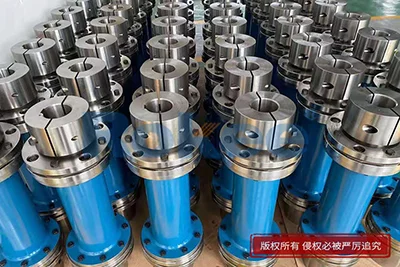
In modern industrial power transmission systems, stable torque transmission between rotating shafts lays the foundation for the normal operation of all mechanical equipment. Every mechanical drive system faces unavoidable operational challenges in actual working conditions, including mounting deviations during equipment installation, axial displacement caused by thermal expansion during long-term high-speed operation, angular offset generated by equipment vibration, and instantaneous shock loads during frequent startup and shutdown cycles. These subtle but persistent misalignments and impact forces will produce additional radial and axial stress on motor bearings, reducer shafts, pump spindles and other core components if transmitted directly through rigid connecting parts. Over time, continuous accumulated stress will accelerate component wear, shorten the overall service life of mechanical equipment, increase unexpected downtime, and raise routine maintenance costs for production lines. As a core adaptive transmission component designed to solve such universal industrial pain points, flexible couplings have become indispensable standard accessories for medium and heavy-duty mechanical transmission equipment across global manufacturing industries, and high-performance, durable flexible couplings with comprehensive adaptive capabilities are now available for direct supply to meet diversified drive demands of different industrial scenarios.
Essentially, a flexible coupling is a precision mechanical connecting component used to connect driving shafts and driven shafts to realize continuous and stable transmission of rotational torque and operating speed. Different from rigid couplings that require ultra-precise shaft alignment and cannot buffer any external vibration or displacement, flexible couplings rely on the elastic deformation of internal flexible structural components or reserved mechanical clearance inside the overall structure to build a buffered transmission bridge between two misaligned shafts. During the whole power transmission process, the core transmission efficiency will not be reduced visibly, while all kinds of unavoidable shaft misalignment can be compensated automatically without manual repeated alignment adjustment. The flexible structure can convert instantaneous mechanical impact energy and high-frequency torsional vibration generated by sudden load changes, equipment startup and emergency stop into elastic potential energy, and release the potential energy slowly and evenly during stable operation. This working mechanism completely isolates harmful impact force and vibration between front-end power equipment and rear-end working equipment, realizing dual protection of both driving devices such as motors and engines and driven devices such as pumps, fans and conveyor systems.
All flexible couplings available for sale can be divided into two mainstream categories according to their flexible force-bearing structures, namely elastomeric flexible couplings and all-metal flexible couplings, and each category has unique structural advantages and applicable working condition boundaries to match different load characteristics and operating environments. Elastomeric flexible couplings adopt high-toughness polymer elastic materials as the core force-bearing flexible medium, featuring excellent vibration damping performance and low noise operation effect. The elastic intermediate components inside this type of coupling can produce large reversible elastic deformation, which enables outstanding compensation capability for angular misalignment, parallel offset and axial displacement. Besides, the polymer elastic structure can completely cut off the transmission of torsional vibration between two shafts, avoiding resonance phenomenon that severely damages mechanical transmission systems during high-speed circulation. This type of coupling has a relatively simple overall structure, convenient assembly and disassembly processes without requiring professional installation tools, and no need for regular lubrication or daily oil maintenance throughout the service cycle. It is perfectly suitable for general-load operating scenarios with frequent startup and shutdown, variable cyclic loads, and strict requirements for operating noise and vibration, including conventional water pump transmission systems, small and medium-sized fan drive units, light-duty conveyor belts and general processing machine tools. Meanwhile, optimized raw material formulas enhance the temperature resistance and aging resistance of elastomeric components, making this coupling adaptable to conventional indoor and outdoor industrial working environments without performance attenuation under normal ambient temperature changes.
All-metal flexible couplings take high-strength alloy metal sheets, metal discs or integral beam structures as flexible deformation units, abandoning polymer elastic materials completely. Compared with elastomeric products, all-metal flexible couplings own higher overall structural rigidity, more stable torque transmission accuracy and better high-temperature resistance. Since metal flexible components will not produce permanent deformation under long-term continuous high-load operation, this kind of coupling can maintain consistent transmission precision for a long time without displacement deviation, which is critical for high-precision automated transmission equipment that requires synchronous rotation speed and accurate torque output. All-metal flexible couplings can operate stably under extreme high-temperature working environments where polymer materials are prone to aging, softening or failure, and they also show excellent durability under continuous constant-load operation without frequent startup impact. Although their vibration damping capacity is slightly weaker than elastomeric flexible couplings, they support higher rotating speed ranges and can bear larger rated torque and peak instantaneous torque. They are widely adopted in heavy-duty industrial scenarios such as high-speed precision servo transmission systems, metallurgical rolling equipment, large-scale industrial compressor units and heavy-duty reducer matching transmission structures. Both types of flexible couplings in our supply range are manufactured with optimized integral processing technology, eliminating structural defects such as loose assembly gaps and uneven stress distribution that often appear in ordinary spliced couplings, ensuring overall structural uniformity and long-term operational stability.
The application coverage of flexible couplings runs through the entire industrial manufacturing chain, covering light industrial production, heavy industrial manufacturing, municipal supporting equipment and automated mechanical systems. In municipal water supply and sewage treatment industries, flexible couplings connect motors and water pump spindles to offset axial displacement caused by pipeline pressure fluctuation and thermal expansion of pump bodies, protecting pump bearings and mechanical seals from impact damage and reducing pipeline vibration and water hammer effects during pump operation. In bulk material transportation industries including mines, docks and cement plants, couplings buffer strong instantaneous impact generated by sudden startup of belt conveyors and screw conveyors, avoiding shaft fracture and gear tooth damage of reducers caused by rigid impact. In pharmaceutical, food and packaging automated production lines, vibration-damping flexible couplings ensure ultra-stable synchronous operation of precision transmission modules, preventing product positioning deviation and equipment running error caused by transmission vibration, and meeting the high-precision operation demands of automated assembly and sorting equipment. In addition, flexible couplings also play a key role in cooling tower drive systems, generator set auxiliary transmission systems, agricultural engineering machinery and marine deck mechanical auxiliary equipment. Regardless of low-speed heavy-load, high-speed light-load, variable impact load or stable constant-load working conditions, matched flexible coupling products can provide targeted transmission protection solutions.
Many equipment operators underestimate the importance of reasonable flexible coupling selection in actual project deployment, and blindly choose couplings only based on shaft diameter and nominal torque parameters, which easily leads to premature failure of coupling components, abnormal equipment vibration and even forced shutdown of production lines. When selecting suitable flexible couplings, multiple key working condition parameters need to be comprehensively evaluated in addition to basic shaft size and rated torque requirements. First, the operating rotating speed should be matched reasonably: high-speed rotating transmission systems need couplings with good dynamic balance performance to avoid additional vibration caused by unbalanced coupling operation, while low-speed heavy-load equipment prioritizes products with stronger impact resistance and higher load-bearing limits. Second, the magnitude and type of shaft misalignment in actual installation scenarios must be considered: general installation errors only require basic parallel and angular misalignment compensation capacity, while equipment with obvious thermal expansion needs couplings with superior axial displacement compensation performance. Third, ambient working conditions cannot be ignored: high-temperature, dusty and oily harsh working environments are more suitable for all-metal flexible couplings that resist aging and corrosion, while indoor low-noise production workshops prefer elastomeric flexible couplings with excellent vibration reduction effects. Fourth, the frequency of equipment startup and load mutation matters: equipment with frequent forward and reverse rotation and cyclic variable loads needs flexible couplings with stronger fatigue resistance to avoid fatigue fracture of flexible components after long-term alternating stress.
Another core advantage of the flexible couplings on sale lies in friendly later-stage maintenance performance and long service life under standardized operation. Compared with easily worn transmission accessories that require monthly replacement and regular lubrication maintenance, most flexible couplings in our product portfolio adopt maintenance-free structural design. Elastomeric models need no grease filling or oil replenishment during the whole service life, and metal models adopt sealed integral structures to prevent internal dust accumulation and corrosive medium erosion. Under standard installation and normal operating load, the flexible components can maintain stable elastic deformation performance for a long time without cracking, aging or permanent deformation. Meanwhile, the overall structural design realizes convenient split installation and quick disassembly. When routine equipment inspection is carried out, operators can complete coupling inspection, replacement and resetting without disassembling adjacent motors, reducers and other large equipment, greatly shortening equipment maintenance time and reducing labor and time costs for production line daily maintenance. Every finished flexible coupling undergoes strict dynamic balance testing, torque load detection and misalignment adaptation testing before leaving the production workshop, eliminating unqualified products with structural imbalance, insufficient load capacity and poor deformation compensation performance, so each supplied coupling can adapt to real complex industrial working conditions stably.
For industrial equipment system integrators, production plant maintenance departments and mechanical equipment manufacturers, choosing high-quality flexible couplings means reducing overall equipment operation risks and cutting long-term operating costs effectively. A qualified flexible coupling does not merely complete the basic work of torque transmission; it acts as a safety buffer valve for the entire transmission system, absorbing invisible harmful stress and vibration that cannot be eliminated by manual alignment, protecting expensive core mechanical parts from premature wear and unexpected damage. In the long run, reasonable investment in high-performance flexible couplings can effectively extend the service cycle of motors, reducers and pumps, reduce the frequency of equipment maintenance and replacement of vulnerable parts, and improve the overall operating efficiency and continuous operation capacity of the entire production line.
We provide flexible couplings with complete specifications covering mainstream shaft aperture sizes, torque levels and rotating speed grades to adapt to customized matching demands of different transmission equipment. Meanwhile, customized processing services are supported for special non-standard shaft diameters, special installation lengths and unique working condition adaptation requirements, solving the matching difficulties of special mechanical transmission structures that cannot use standard couplings. Along with finished products, we also provide professional technical guidance including on-site installation suggestions, shaft alignment reference standards and working condition selection guidance, helping every user complete accurate model selection and standardized installation at one time, maximize the working performance of flexible couplings, and optimize the stability and service life of the whole mechanical drive system. Whether you need bulk batch procurement for long-term production line supporting or small-batch replacement procurement for equipment maintenance, our flexible coupling products can meet stable supply demands with reliable structural quality, comprehensive working condition adaptability and thoughtful technical supporting services.
Rokee is a professional manufacturer of industrial couplings in china, designing and customizing a wide range of drive shaft coupling products for customers worldwide. Submit your coupling drawings or technical specifications, and we can customize coupling products for you.
Coupling Categories


Links:
- Calibration Weight
- Digital Viscometer
- Carpas Industriales
- Exhibition Tent
- Industrial Cardan Shaft
- PU Sandwich Panel Machine
- PIR Sandwich Panel Line
- Sandwich Panel Machine
- Sandwich Panel Production Line
- PU Sandwich Panel Line
- Sandwich Panel Line
- Flexible Couplings Manufacturer In China
- Elastic Couplings Manufacturer In China