Stable Operation Of Polyurethane Sandwich Panel Line Escorted By Flexible Coupling

The polyurethane sandwich panel production line stands as a core continuous processing mechanical system in the modern building thermal insulation and composite material manufacturing industry, undertaking the integrated production processes of raw material feeding, continuous panel forming, high-pressure polyurethane foaming, composite bonding, constant-temperature curing, fixed-length cutting and finished product conveying. This production line operates in a long-term continuous cyclic working state, and every link from the initial raw material conveying drive to the final finished product output transmission relies on stable and consistent power transmission and coordinated operation between various mechanical shafts and drive components. Once the power transmission link fluctuates abnormally or the shaft connection operation is unbalanced, it will directly cause deviations in panel forming thickness, uneven foaming density of polyurethane core materials, misalignment of upper and lower surface plate bonding, and even intermittent shutdowns and mechanical component wear and damage, seriously affecting the continuous production efficiency and finished product quality stability of the entire line. In the actual industrial production operation scenario, the polyurethane sandwich panel production line will inevitably face various unfavorable mechanical interference factors during long-term high-load operation, including inevitable shaft misalignment caused by equipment installation errors, structural deformation of the frame under long-term load bearing, thermal expansion and contraction of mechanical components caused by continuous operation temperature rise, and periodic vibration and instantaneous impact loads generated by the reciprocating action of forming and cutting mechanisms. These hidden mechanical problems that are difficult to completely eliminate in actual operation will continuously impact the stability of the power transmission system. Without effective buffer compensation and stable connection components, these minor mechanical deviations and vibration impacts will be continuously amplified in the continuous production process, gradually evolving into major mechanical failures and product quality defects. As a key core connecting and transmission component in the mechanical transmission system, the flexible coupling plays an irreplaceable and crucial role in connecting the driving shaft and driven shaft of each drive unit of the polyurethane sandwich panel production line, realizing efficient and stable torque transmission, and fundamentally escorting the long-term stable, low-fault and high-consistency operation of the entire production line with its unique structural flexibility and mechanical compensation performance.
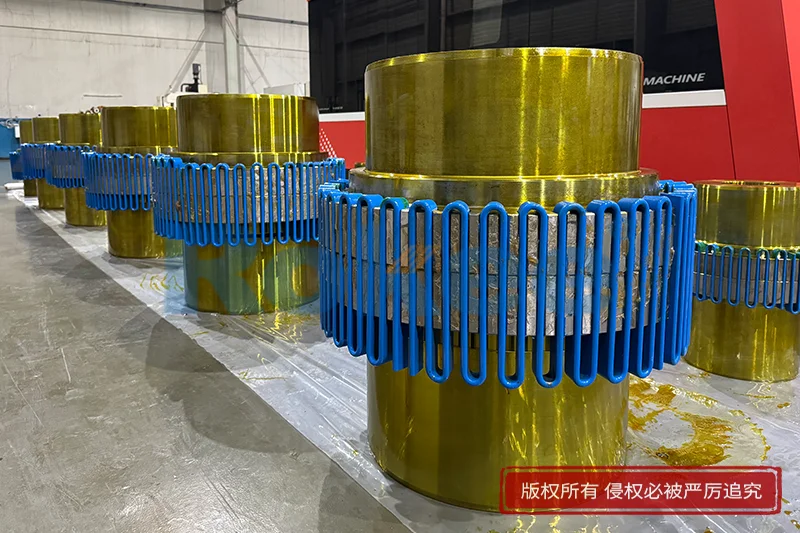
The basic working principle and core mechanical characteristics of flexible couplings determine their inherent adaptability to the complex operating working conditions of polyurethane sandwich panel production lines. Different from rigid connecting parts that require extremely high installation alignment accuracy and have no deformation buffer space at all, flexible couplings are professionally designed with flexible deformation structures and elastic stress buffer parts inside, which can efficiently complete stable torque transmission between connected rotating shafts while automatically and effectively compensating for various inevitable misalignment deviations in the actual operation of mechanical equipment. In the daily operation of polyurethane sandwich panel production lines, shaft misalignment problems mainly include three typical forms: angular misalignment where the two connected shafts have a certain deflection angle in the radial direction, parallel misalignment where the shaft centers are offset horizontally, and axial misalignment caused by thermal expansion and cold contraction of equipment parts and mechanical assembly gaps. These three types of misalignment cannot be completely avoided even with precise installation and debugging in the early stage of equipment commissioning. With the extension of production operation time, mechanical parts will gradually produce slight wear and frame structural fatigue deformation, which will further increase the degree of shaft misalignment. If rigid connection methods are adopted, these misalignment deviations will generate huge additional mechanical stress and radial tension on the drive shafts, bearings and gear transmission parts of the production line. The long-term accumulation of such stress will accelerate the aging and wear of key mechanical parts, cause bearing heating and abnormal noise, shaft body deformation and even fracture, and directly lead to the disconnection of power transmission of the production line. Flexible couplings rely on the elastic deformation of their internal flexible materials and the reserved movable gap of mechanical structures to flexibly adapt to the relative displacement and angle deviation between the driving shaft and the driven shaft. They do not transmit the additional stress generated by misalignment to the shaft body and bearing components, but absorb and release the stress through their own flexible structures, ensuring that the torque transmission process always maintains a stable and balanced state, and the power output of each drive motor of the polyurethane sandwich panel production line can be accurately and synchronously transmitted to each production processing mechanism without loss and deviation.
Vibration damping and impact absorption are another core functional advantage of flexible couplings, which is vital to maintaining the stable forming quality of polyurethane sandwich panels and reducing mechanical operation fatigue of the production line. The polyurethane sandwich panel production line involves multiple intermittent action links and high-pressure dynamic processing links in the production process. The high-pressure foaming injection mechanism will generate instantaneous pressure impact during the rapid injection and mixing of polyurethane raw materials, the fixed-length cutting mechanism will produce obvious mechanical vibration and instantaneous load impact when the cutting tool contacts and cuts the composite sandwich panel, and the continuous conveying and rolling forming mechanism will generate periodic mechanical vibration due to the rotation of multiple rollers and the friction and extrusion of panel materials during operation. These continuous vibrations and intermittent impact loads will be transmitted along the mechanical transmission shaft system. Without effective vibration damping measures, the vibration will spread to the entire production line equipment, causing the production equipment to shake during operation, the position of raw material feeding to deviate, the foaming mixing ratio to be unstable, and the bonding pressure between the upper and lower surface plates and the polyurethane core layer to be uneven. The final result is that the produced polyurethane sandwich panels have problems such as inconsistent thickness, unbalanced internal density, easy delamination and debonding, and unqualified overall flatness, which greatly reduces the yield of finished products and increases the production cost of enterprises. The flexible coupling can effectively absorb and weaken the mechanical vibration and instantaneous impact force generated during the operation of the production line through the good elastic buffering performance of its internal flexible components. It can isolate the vibration generated by the working mechanism from the drive motor and power transmission components, avoid the resonance phenomenon of the entire mechanical transmission system, keep the operation of each transmission shaft and processing mechanism of the production line in a smooth and low-vibration state all the time, ensure that each production process link is carried out under stable mechanical conditions, and thus guarantee the consistent processing accuracy and stable finished product quality of polyurethane sandwich panels in mass continuous production.
The long-term continuous operation stability of the polyurethane sandwich panel line is closely related to the service life of key mechanical components, and the application of flexible couplings effectively reduces the frequency of equipment failure and later maintenance workload, realizing long-term uninterrupted stable production. Industrial continuous production equipment represented by polyurethane sandwich panel production lines pursues long-cycle non-stop operation to meet large-scale market demand. Frequent equipment shutdown maintenance and parts replacement will not only interrupt the production rhythm and reduce production capacity, but also cause a lot of raw material waste and additional labor costs. In the traditional production line transmission system without flexible coupling protection, the additional stress caused by shaft misalignment and the fatigue damage caused by long-term vibration impact will lead to frequent failure of vulnerable parts such as bearings, shafts and transmission gears. Maintenance personnel need to regularly shut down the equipment for inspection, maintenance and replacement of damaged parts, which seriously affects the continuity of production work. After adopting flexible couplings for shaft connection and power transmission protection, most of the mechanical stress and impact vibration that cause wear and damage to key components are borne and buffered by the flexible couplings themselves. The flexible coupling, as a replaceable low-cost vulnerable component, concentrates the mechanical fatigue loss on itself, effectively protecting high-value core mechanical parts such as drive motors, reduction boxes, transmission shafts and forming rollers from premature wear and fatigue damage. This protective mechanical isolation effect greatly prolongs the overall service life of the core equipment of the polyurethane sandwich panel production line, reduces the number of unexpected equipment shutdowns caused by mechanical failures, and extends the maintenance cycle of the entire production line. Enterprises can arrange production plans in a more orderly manner, avoid production delays caused by sudden equipment failures, and realize long-term stable and efficient continuous production operations.
The synchronous coordination operation of each functional unit of the polyurethane sandwich panel production line is the key to ensuring the continuity and rationality of the production process, and flexible couplings provide reliable synchronous transmission guarantee for the coordinated operation of each link of the production line. The polyurethane sandwich panel production line is composed of multiple independent drive units and functional processing sections, including raw material unwinding feeding section, polyurethane high-pressure foaming mixing section, panel composite pressing section, constant-temperature curing shaping section, fixed-length cutting section and finished product discharging and stacking section. Each section has its own independent drive motor and transmission mechanism, and the operating speed and running rhythm of each section need to maintain precise synchronous coordination. Once the speed transmission between the front and rear sections is out of sync, it will cause material accumulation and extrusion between production sections, or material tension and pulling deformation, resulting in production stagnation and panel product deformation and damage. In the power transmission process of each drive unit, flexible couplings can ensure that the rotational speed and torque transmission between the driving end and the driven end are always synchronized and consistent without obvious transmission delay and speed difference. Even if the production line is in the working state of instantaneous start-up, load adjustment and variable-speed operation, the flexible coupling can rely on its structural flexibility to adapt to the instantaneous dynamic load change, avoid speed fluctuation and transmission jitter in the process of power transmission, ensure that the running speed of each processing section of the production line is matched accurately, the material conveying progress is coordinated uniformly, and the entire production process from raw material input to finished product output is connected smoothly without material blockage, tension deformation and production interruption caused by asynchronous transmission.
In the actual operation and daily maintenance management of polyurethane sandwich panel production lines, the reasonable matching selection and standardized installation and use of flexible couplings are also important prerequisites for giving full play to their stable operation protection effect. Different production line specifications and different load working conditions correspond to different types of flexible couplings with different elastic properties and torque transmission capacities. According to the actual load size, operating speed, vibration intensity and operating temperature environment of each transmission position of the polyurethane sandwich panel production line, selecting a suitable flexible coupling can maximize its misalignment compensation, vibration damping and impact absorption effects. At the same time, standardized installation and regular daily inspection and maintenance work can keep the flexible coupling in a good working state for a long time. Checking the tightness of the connecting parts of the flexible coupling regularly, observing the wear degree of the internal flexible elastic components, and replacing the aging and deformed flexible parts in a timely manner can avoid the reduction of the protection performance of the flexible coupling due to aging and wear, and ensure that it can continuously provide stable transmission protection for the production line. In the long-term production practice of polyurethane sandwich panel manufacturing enterprises, it has been fully verified that production lines equipped with high-quality and properly used flexible couplings have far lower mechanical failure rate and product defective rate than those without flexible coupling protection or with unreasonable coupling matching. The stable operation escort effect brought by flexible couplings to polyurethane sandwich panel production lines is reflected in every link of production operation, from the stability of power transmission and the coordination of mechanical operation to the guarantee of product quality and the improvement of production efficiency.
To sum up, the polyurethane sandwich panel production line, as a continuous and high-load composite material production and processing equipment, has extremely high requirements on the stability, synchronization and shock resistance of the mechanical power transmission system. Various unavoidable adverse factors in the actual production process, such as shaft misalignment, mechanical vibration, impact load and thermal deformation, all pose potential threats to the stable operation of the production line and the stability of finished product quality. As a key mechanical connecting and transmission component, the flexible coupling effectively solves many mechanical pain points in the operation of polyurethane sandwich panel production lines by virtue of its core functions of misalignment compensation, vibration damping and shock absorption, mechanical component protection and synchronous power transmission. It eliminates the hidden dangers of equipment failure and product quality problems caused by mechanical transmission deviation and vibration impact, ensures that the polyurethane sandwich panel production line can maintain long-term continuous, stable and efficient operating state, reduces enterprise production maintenance costs, improves production efficiency and finished product yield, and provides solid and reliable mechanical basic support for the standardized and large-scale production of high-quality polyurethane sandwich panels. In the future, with the continuous upgrading and optimization of polyurethane sandwich panel production technology and production line automation level, flexible couplings will still occupy an important irreplaceable position in the mechanical transmission system of the production line, always acting as an important invisible guarantee for the stable and reliable operation of the entire polyurethane sandwich panel production and manufacturing system.




Links:
- Calibration Weight
- Digital Viscometer
- Carpas Industriales
- Exhibition Tent
- Industrial Cardan Shaft
- PU Sandwich Panel Machine
- PIR Sandwich Panel Line
- Sandwich Panel Machine
- Sandwich Panel Production Line
- PU Sandwich Panel Line
- Sandwich Panel Line
- Flexible Couplings Manufacturer In China
- Elastic Couplings Manufacturer In China