Flexible Coupling Exerts Force to Transmission System Upgrade Of PU Sandwich Panel Line
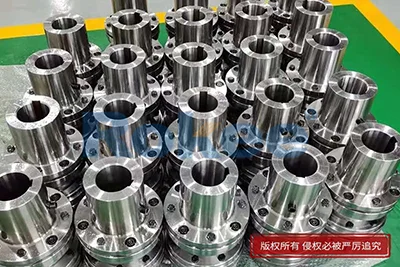
In the modern industrial production landscape, the PU sandwich panel line plays an irreplaceable role in the construction, refrigeration, and packaging industries due to its efficient production capacity and the excellent performance of the products it manufactures. PU sandwich panels, composed of surface materials and a rigid polyurethane foam core, are favored for their lightweight, thermal insulation, sound insulation, and corrosion resistance properties, making them widely used in various fields such as building exterior walls, cold storage facilities, and mobile homes. As the demand for PU sandwich panels continues to grow, the requirements for the production line’s efficiency, stability, and product quality are also constantly increasing. The transmission system, as the core component of the PU sandwich panel line, is responsible for transmitting power between various subsystems, including uncoiling, roll forming, preheating, PU foaming, lamination, curing, and cutting. Its performance directly determines the overall operational efficiency of the production line and the consistency of product quality. In recent years, with the continuous advancement of mechanical transmission technology, flexible couplings have gradually replaced traditional rigid couplings in the transmission system of PU sandwich panel lines, exerting a crucial driving force for the upgrade and transformation of the transmission system, and promoting the high-quality development of the entire production line.
To understand the role of flexible couplings in upgrading the transmission system of PU sandwich panel lines, it is first necessary to clarify the working characteristics of the PU sandwich panel production line and the core challenges faced by its traditional transmission system. A modern PU sandwich panel line is a complex integrated system that integrates mechanical, electrical, hydraulic, and chemical reaction technologies, requiring the coordinated operation of multiple subsystems. Each subsystem is driven by an independent power source, and the power needs to be accurately and stably transmitted to various executive components to ensure the synchronous operation of the entire production line. In the traditional transmission system, rigid couplings are often used to connect the driving shaft and the driven shaft. Although rigid couplings can achieve synchronous rotation and torque transmission, they have significant limitations in practical applications. Due to the limitations of the production process and the overall structure of the equipment, the installation and layout of each subsystem in the PU sandwich panel line are often not on the same axis, resulting in angular, radial, or axial misalignment between the driving shaft and the driven shaft. Rigid couplings have no ability to compensate for such misalignments, which will lead to increased stress on the shaft system, accelerated wear of bearings and other components, and even cause vibration and noise during the operation of the equipment. In addition, during the long-term continuous operation of the production line, the equipment will generate vibration and thermal expansion, which will further change the relative position of the shafts, exacerbating the above problems. Moreover, the production process of PU sandwich panels has strict requirements for stable and uniform power transmission. Especially in the foaming and lamination links, even slight fluctuations in transmission speed or torque will affect the density of the PU foam core and the bonding effect between the core and the surface materials, thereby reducing product quality. The traditional rigid transmission system is difficult to adapt to these high-precision and high-stability requirements, which has become a bottleneck restricting the upgrade of the PU sandwich panel line.
Flexible couplings, with their unique structural design and excellent performance, effectively solve the pain points of the traditional transmission system and become a key component promoting the upgrade of the transmission system of PU sandwich panel lines. Different from rigid couplings that achieve forced synchronous connection, flexible couplings realize flexible transmission through built-in elastic elements or special structural designs, which can not only transmit torque stably but also compensate for shaft misalignment, absorb vibration, and protect equipment, providing a reliable guarantee for the stable operation of the transmission system. The core working principle of flexible couplings is to connect the driving shaft and the driven shaft through flexible components, transmit torque and rotational motion between the two shafts, and at the same time, through the deformation of the flexible components, compensate for the axial, radial, and angular misalignments caused by installation errors, equipment deformation, or thermal expansion. This flexible transmission method avoids the rigid constraint between the shafts, reduces the stress transmission of the shaft system, and effectively extends the service life of the shaft system, bearings, and other components.
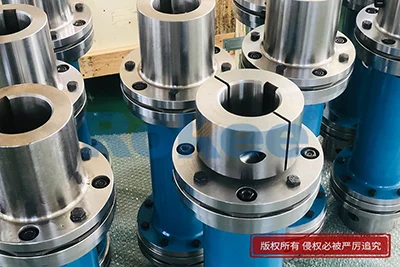
One of the key roles of flexible couplings in upgrading the transmission system of PU sandwich panel lines is their excellent misalignment compensation capability. As mentioned earlier, due to the structural characteristics of the PU sandwich panel line, the misalignment between the driving shaft and the driven shaft is inevitable. Flexible couplings can effectively compensate for these misalignments through their own structural design. For example, diaphragm couplings use the elastic deformation of multi-layer metal diaphragm groups to compensate for axial and angular displacements while transmitting torque, with high torsional stiffness and precise transmission performance. Gear couplings achieve the compensation of angular and radial misalignments through the meshing of internal and external gear rings, and have strong load-bearing capacity, suitable for heavy-duty transmission scenarios in PU sandwich panel lines. Jaw couplings, on the other hand, use elastic elements such as polyurethane or rubber to absorb misalignment and vibration, with simple structure and convenient installation. The misalignment compensation capability of flexible couplings reduces the requirements for the installation accuracy of the production line, simplifies the installation process, and at the same time reduces the additional wear caused by misalignment during the operation of the equipment, reducing the failure rate of the transmission system. In practical applications, after installing flexible couplings, the vibration amplitude of the transmission system of the PU sandwich panel line is significantly reduced, the noise is effectively controlled, and the operation stability of the entire production line is greatly improved.
In addition to misalignment compensation, the vibration absorption and shock buffering capabilities of flexible couplings also play an important role in upgrading the transmission system. The operation of the PU sandwich panel line involves multiple processes such as motor start-up, load mutation, and equipment braking, which will generate impact loads. At the same time, the operation of each subsystem itself will also generate vibration. These impacts and vibrations, if directly transmitted to the shaft system and executive components, will damage precision parts, affect the stability of equipment operation, and even lead to safety hazards. Flexible couplings can absorb impact energy and buffer shock loads through their elastic components, reducing the impact of vibration on the transmission system and equipment. For example, elastic couplings with rubber or polyurethane elastic elements can effectively absorb vibration energy, make power transmission smoother and quieter, and protect the motor, reducer, and other core equipment from damage. In the foaming link of the PU sandwich panel line, the stability of the transmission system is particularly important. The vibration generated by the transmission system will affect the uniformity of the PU foam injection, leading to uneven density of the foam core and affecting the thermal insulation performance of the product. After using flexible couplings, the vibration of the transmission system is effectively suppressed, ensuring the stability of the foaming process, improving the quality of the foam core, and thus enhancing the overall performance of the PU sandwich panel.
The torque transmission efficiency and stability of flexible couplings also provide strong support for the upgrade of the transmission system of PU sandwich panel lines. The transmission system of the PU sandwich panel line needs to transmit different torques and speeds according to different production processes and product specifications, which requires the coupling to have high torque transmission efficiency and stable transmission performance. Flexible couplings have high torque transmission efficiency, generally reaching more than 99%, especially diaphragm couplings and bellows couplings, which have zero backlash design, can achieve precise torque transmission, and avoid the lag or deviation of power transmission. This precise transmission performance is crucial for the cutting link of the PU sandwich panel line. The cutting accuracy of the panel directly affects the installation efficiency and appearance quality of the product. The stable torque transmission of flexible couplings ensures that the cutting equipment operates at a constant speed, improving the cutting accuracy and reducing the waste of materials. At the same time, flexible couplings can adapt to the changes of different torques and speeds, making the transmission system more flexible and adaptable. When the production line needs to produce PU sandwich panels of different specifications, the transmission system can adjust the torque and speed in a timely manner under the action of flexible couplings, without the need for frequent replacement of coupling components, improving the production flexibility and efficiency of the production line.
The application of flexible couplings also helps to reduce the maintenance cost of the transmission system and improve the operational efficiency of the production line. Traditional rigid couplings require strict alignment during installation and maintenance, which is time-consuming and labor-intensive. Once misalignment occurs, it is easy to cause equipment failure, resulting in production shutdowns and increased maintenance costs. Flexible couplings have low requirements for installation alignment, simplifying the installation and maintenance process. At the same time, flexible couplings have good wear resistance and long service life, and their elastic components can be easily replaced when worn, without the need to replace the entire coupling, reducing maintenance costs. In addition, the use of flexible couplings reduces the failure rate of the transmission system, reduces the number of production shutdowns caused by transmission system failures, and improves the continuous operation capacity of the PU sandwich panel line. For example, in a PU sandwich panel production enterprise, after replacing the traditional rigid couplings with flexible couplings, the maintenance frequency of the transmission system is reduced by more than 30%, the maintenance time is shortened by nearly half, and the annual maintenance cost is reduced significantly, while the production efficiency is increased by about 15%, bringing significant economic benefits to the enterprise.
With the continuous development of industrial automation and intelligent manufacturing, the PU sandwich panel line is also moving towards intelligence and high efficiency, which puts forward higher requirements for the performance of the transmission system. Flexible couplings, as a key component of the transmission system, are also constantly optimizing and upgrading to adapt to the new development needs. In recent years, new types of flexible couplings have emerged, such as magnetic flexible couplings and composite material flexible couplings. Magnetic flexible couplings realize non-contact torque transmission through magnetic field coupling, which has the advantages of no wear, no leakage, and high reliability, suitable for the transmission scenarios with high sealing requirements in the PU sandwich panel line, such as the foaming system. Composite material flexible couplings use high-strength, lightweight composite materials, which not only have excellent mechanical properties but also have good corrosion resistance and fatigue resistance, adapting to the harsh working environment of the production line. These new types of flexible couplings further enhance the performance of the transmission system, promote the intelligent upgrade of the PU sandwich panel line, and lay a solid foundation for the high-quality development of the industry.
It should be noted that the selection and application of flexible couplings in the transmission system of PU sandwich panel lines also need to be combined with the actual working conditions. Different types of flexible couplings have different performance characteristics and application scenarios. For example, diaphragm couplings are suitable for high-speed, high-precision transmission scenarios, such as the roll forming and cutting links; gear couplings are suitable for heavy-duty transmission scenarios, such as the uncoiling and conveying links; jaw couplings are suitable for general transmission scenarios with low precision requirements, such as the auxiliary conveying system. Therefore, enterprises need to comprehensively consider factors such as the torque, speed, misalignment, and working environment of the transmission system when selecting flexible couplings, so as to select the most suitable coupling type, give full play to the role of flexible couplings, and maximize the performance of the transmission system. At the same time, enterprises also need to strengthen the daily inspection and maintenance of flexible couplings, regularly check the wear of elastic components, and replace them in a timely manner to ensure the stable operation of the coupling and the transmission system.
In conclusion, flexible couplings, with their unique misalignment compensation, vibration absorption, shock buffering, and high-efficiency torque transmission capabilities, have effectively solved the problems existing in the traditional transmission system of PU sandwich panel lines, and have become a key driving force for the upgrade of the transmission system. The application of flexible couplings not only improves the stability, efficiency, and precision of the transmission system but also reduces the maintenance cost of the equipment, enhances the production flexibility of the production line, and promotes the continuous improvement of product quality. With the continuous advancement of technology, the performance of flexible couplings will be further optimized, and their application in the PU sandwich panel line will be more extensive and in-depth, providing strong support for the sustainable development of the PU sandwich panel industry. In the future, with the integration of intelligent technology, flexible couplings will be combined with intelligent monitoring systems to realize real-time monitoring of their operating status, predict potential failures in advance, and further improve the reliability and intelligence level of the transmission system, helping the PU sandwich panel line to achieve a higher level of upgrade and development.
Rokee is a professional manufacturer of industrial couplings in china, designing and customizing a wide range of drive shaft coupling products for customers worldwide. Submit your coupling drawings or technical specifications, and we can customize coupling products for you.
Coupling Categories


Links:
- Calibration Weight
- Digital Viscometer
- Carpas Industriales
- Exhibition Tent
- Industrial Cardan Shaft
- PU Sandwich Panel Machine
- PIR Sandwich Panel Line
- Sandwich Panel Machine
- Sandwich Panel Production Line
- PU Sandwich Panel Line
- Sandwich Panel Line
- Flexible Couplings Manufacturer In China
- Elastic Couplings Manufacturer In China