Flexible Diaphragm Coupling Diaphragm Pack

The flexible diaphragm coupling diaphragm pack serves as the core functional component of modern precision mechanical transmission systems, acting as a critical elastic medium for torque transmission and shaft misalignment compensation. As a high-performance all-metal flexible transmission unit, it differs fundamentally from traditional elastic coupling components that rely on rubber or polymer materials, delivering superior stability and durability in high-speed and high-load operating environments. Composed of stacked thin metal diaphragms with optimized structural design, this component realizes power transmission through controllable and reversible elastic deformation, effectively absorbing and offsetting axial, radial, and angular deviations between driving and driven shafts caused by assembly errors, equipment thermal expansion, and long-term operational wear. It eliminates the need for lubrication and regular friction maintenance, avoiding common defects such as aging, deformation, and fatigue damage of non-metal elastic parts. Widely adaptable to various precision industrial transmission scenarios, the diaphragm pack ensures continuous, efficient, and low-noise operation of mechanical equipment while reducing operational failures and extending the overall service life of transmission systems.
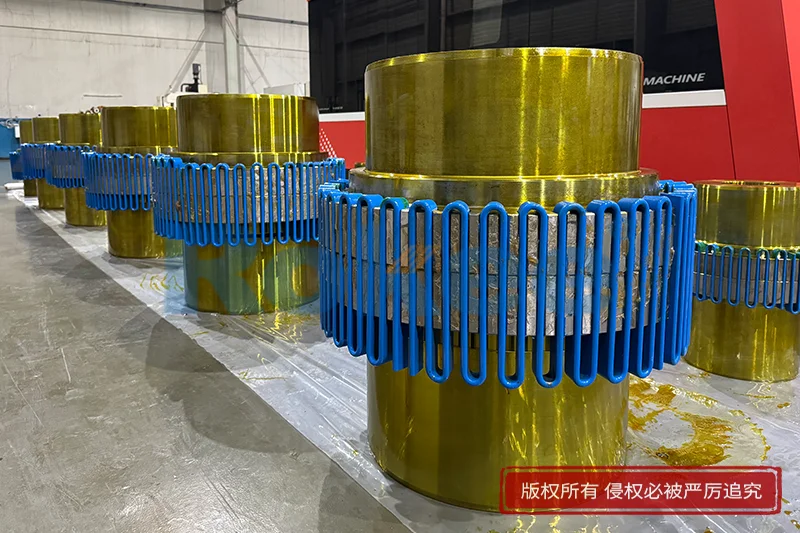
The structural composition of the flexible diaphragm coupling diaphragm pack is meticulously optimized to balance flexible deformation capacity and overall structural rigidity, forming a compact and highly reliable assembly structure. The main body of the diaphragm pack consists of multiple ultra-thin metal diaphragm sheets stacked in layers, with each diaphragm processed with precise symmetrical structural grooves and arc transition areas to regulate stress distribution and deformation range during operation. These diaphragm sheets are fixed in a staggered arrangement with high-strength fasteners, forming an integrated elastic whole that can bear cyclic torque loads. Matching with the diaphragm sheets are isolation gaskets and positioning components, which maintain uniform gaps between adjacent diaphragms to prevent friction and abrasion during deformation and ensure independent and coordinated elastic movement of each sheet. The overall structure abandons redundant auxiliary parts, achieving high integration and lightweight design. This refined structural layout not only guarantees the flexible compensation function required for shaft system operation but also effectively enhances the overall structural stability, preventing loose displacement and local stress concentration under long-term high-speed rotation, and laying a solid structural foundation for stable torque transmission.
The working mechanism of the flexible diaphragm coupling diaphragm pack is based on the excellent elastic deformation characteristics of high-strength metal materials, realizing efficient and lossless power transmission and multi-dimensional misalignment compensation. In the actual operation of mechanical transmission systems, absolute coaxial alignment between the driving shaft and driven shaft is unattainable due to inherent factors including machining tolerances, assembly deviations, equipment operating vibration, and thermal deformation of metal components. When the equipment starts and runs stably, the torque output by the driving shaft is transmitted to the diaphragm pack through the connecting hub, driving the metal diaphragms to produce tiny, controllable elastic torsion and bending deformation. This reversible elastic deformation enables the diaphragm pack to flexibly adapt to minor axial stretching, radial offset, and angular deflection between the two shafts, converting irregular shaft position deviations into uniform elastic deformation energy. After completing torque transmission, the diaphragms can quickly return to their original state without residual deformation. This working mode completely avoids rigid friction and collision between shaft systems, eliminates transmission jitter and power loss caused by misalignment, and maintains synchronous and stable rotation of the entire transmission system under complex operating conditions.
Material selection determines the core performance and service life of the flexible diaphragm coupling diaphragm pack, with high-quality alloy metal materials becoming the mainstream choice for industrial-grade products. Professional diaphragm packs are mostly made of high-purity stainless steel and high-strength alloy steel with excellent comprehensive mechanical properties, featuring outstanding elastic fatigue resistance, tensile strength, and high-temperature stability. These materials can withstand millions of cyclic elastic deformations under continuous load without plastic deformation, fatigue cracking, or structural failure, adapting to long-term uninterrupted industrial operation requirements. Compared with ordinary carbon steel materials, high-grade alloy materials have stronger corrosion resistance, effectively resisting oxidation, moisture erosion, and minor chemical corrosion in complex industrial environments, avoiding performance degradation caused by material rust and aging. In addition, the selected metal materials have uniform internal texture and stable mechanical properties, ensuring consistent deformation performance of each diaphragm sheet in the pack. Strict material screening and processing standards enable the diaphragm pack to maintain stable elastic performance and structural integrity under variable load, high temperature, and high-speed operating conditions, greatly improving the reliability of mechanical transmission systems.
The flexible diaphragm coupling diaphragm pack boasts remarkable comprehensive performance advantages that make it superior to traditional flexible coupling components in multiple dimensions. First of all, it achieves zero-backlash torque transmission, with no clearance or hysteresis in the power transmission process, which can accurately transmit torque and rotational speed, fully meeting the precision transmission requirements of high-end mechanical equipment. Secondly, the all-metal elastic structure realizes maintenance-free operation throughout the whole life cycle, eliminating the need for regular lubrication, grease replacement, and wearing part replacement required by gear couplings and rubber couplings, greatly reducing equipment daily maintenance costs and downtime losses. In terms of vibration and noise reduction, the layered diaphragm structure can effectively absorb mechanical vibration and impact energy generated during equipment start-stop and load switching, suppressing transmission system resonance and reducing operating noise. Moreover, it has strong environmental adaptability, capable of normal operation in high-temperature, low-temperature, dust-rich and dry working environments without performance attenuation. Its balanced rigidity and flexibility enable it to adapt to both high-torque heavy-load transmission and high-speed precision transmission scenarios, with extremely wide performance compatibility.
The application scope of the flexible diaphragm coupling diaphragm pack covers nearly all fields of precision mechanical transmission and industrial automated production equipment. In industrial manufacturing, it is widely used in automated production lines, precision machine tools, and transmission equipment for processing machinery, ensuring stable power output and high-precision operation of processing equipment. In the field of power transmission, it serves fan equipment, water pump units, and compressor systems, solving the problem of shaft misalignment vibration caused by long-term high-speed operation of rotating machinery and improving the operational stability of fluid power equipment. In high-end precision equipment fields such as aerospace auxiliary machinery, medical precision instruments, and robotic transmission systems, its zero-backlash and high-stability performance can meet the ultra-precise transmission requirements of sophisticated equipment. In addition, it also plays an important role in petrochemical, metallurgical, and new energy equipment, adapting to harsh industrial operating conditions and long-term continuous operation requirements. With the continuous upgrading of industrial equipment towards high precision, high speed, and high stability, the application demand for high-performance diaphragm packs continues to grow, becoming an indispensable core component of modern industrial transmission systems.
The installation and matching characteristics of the flexible diaphragm coupling diaphragm pack are designed to pursue high efficiency and high adaptability, bringing great convenience to equipment assembly and debugging. The standardized structural design enables the diaphragm pack to match various types of coupling hubs and connecting components, with strong universality and compatibility, and can be quickly adapted to different shaft diameter specifications and transmission structure forms. The layered diaphragm assembly structure is convenient for integral installation and replacement, without complex debugging and professional auxiliary equipment during operation, effectively shortening equipment assembly and maintenance cycles. In the installation process, the elastic tolerance of the diaphragm pack can compensate for minor installation errors, reducing the precision requirements of shaft alignment and lowering the technical threshold of equipment assembly. After installation, the integrated fixed structure will not produce loose displacement or component separation due to equipment vibration, maintaining long-term assembly stability. Meanwhile, the lightweight structural design reduces the overall rotational inertia of the coupling, avoiding excessive load on the equipment power end and helping equipment achieve faster response speed and more flexible operation state.
The long-term operational stability and economic benefits of the flexible diaphragm coupling diaphragm pack are fully reflected in the whole life cycle of mechanical equipment operation. Different from traditional coupling components that are prone to aging, wear and failure, the all-metal diaphragm pack has extremely long service life and stable performance attenuation characteristics, which can maintain consistent transmission efficiency and compensation capacity for a long time under normal operating conditions. Its maintenance-free design effectively reduces manual maintenance investment and spare part replacement costs, avoiding production shutdown losses caused by frequent component failure and maintenance. In addition, the excellent misalignment compensation and vibration reduction performance of the diaphragm pack can reduce the additional load and abrasion of equipment bearings, shafts and other core components, indirectly protect the main mechanical structure, and extend the overall service life of the equipment. In the long-term industrial production process, it can effectively reduce equipment failure rate, improve production continuity and operational efficiency, and create stable economic benefits for industrial production. With its reliable performance, low comprehensive operating cost and strong environmental adaptability, the diaphragm pack has become a cost-effective and high-quality choice for modern mechanical transmission system configuration optimization.


Links:
- Calibration Weight
- Digital Viscometer
- Carpas Industriales
- Exhibition Tent
- Industrial Cardan Shaft
- PU Sandwich Panel Machine
- PIR Sandwich Panel Line
- Sandwich Panel Machine
- Sandwich Panel Production Line
- PU Sandwich Panel Line
- Sandwich Panel Line
- Flexible Couplings Manufacturer In China
- Elastic Couplings Manufacturer In China