Flexible Diaphragm Coupling is Core Choice For Transmission System Of Sandwich Panel Production Line

In the modern construction and industrial manufacturing fields, sandwich panels have become indispensable core materials due to their excellent comprehensive performance, including light weight, high structural strength, thermal insulation, sound insulation, and corrosion resistance. These panels are widely used in external walls, roofs, cold storage facilities, prefabricated buildings, and various industrial workshops, driving the continuous development and upgrading of the sandwich panel production industry. The sandwich panel production line is a complex integrated system that integrates multiple processes such as uncoiling of surface materials, roll forming, preheating, core material foaming, lamination, curing, and cutting. Each link requires precise, stable, and efficient power transmission to ensure the consistency of product quality and the continuity of the production process. Among the numerous components that make up the transmission system of the production line, the flexible diaphragm coupling stands out as a core choice, whose unique structural design, excellent transmission performance, and strong adaptability have effectively promoted the stable operation and efficiency improvement of the sandwich panel production line, becoming an indispensable key component in the modern sandwich panel production transmission system.
To understand why the flexible diaphragm coupling has become the core choice of the sandwich panel production line transmission system, it is first necessary to clarify the working characteristics of the sandwich panel production line and the core requirements for its transmission system. A modern sandwich panel production line is a continuous and automated production system that integrates mechanical, electrical, hydraulic, and chemical reaction technologies. It requires the coordinated operation of multiple subsystems, such as the uncoiling system, roll forming system, foaming system, double-belt lamination system, cutting system, and conveying system. Each subsystem is driven by a separate power source, and the power needs to be transmitted to various executive components accurately and stably to ensure that the entire production line operates in a synchronized manner. The transmission system of the production line is faced with several key challenges: first, due to the limitations of the production process and the overall structure of the equipment, the installation and layout of each subsystem are often not on the same axis, resulting in angular, radial, and axial deviations between the driving shaft and the driven shaft; second, during the long-term continuous operation of the production line, the equipment will generate vibration and thermal expansion, leading to changes in the relative position of the shafts, which requires the transmission components to have a certain compensation capacity; third, the production process of sandwich panels requires stable and uniform power transmission, especially in the foaming and lamination links, where even slight fluctuations in transmission speed or torque will lead to uneven thickness of the panel, poor bonding between the surface material and the core material, and other quality problems; fourth, the production environment of the sandwich panel production line may involve certain corrosive media (such as foaming agents and adhesives) and high-temperature working conditions (such as preheating and curing links), which puts forward higher requirements for the corrosion resistance and high-temperature resistance of the transmission components. In the face of these challenges, the flexible diaphragm coupling has become the most suitable choice for the transmission system of the sandwich panel production line due to its unique performance advantages, which can effectively solve the pain points of the transmission system and ensure the stable and efficient operation of the production line.
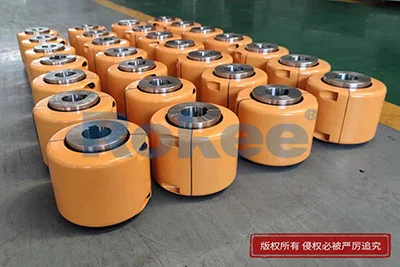
The flexible diaphragm coupling is a high-performance metal elastic flexible coupling, which is mainly composed of a diaphragm group composed of multiple layers of stainless steel thin plates stacked together, and connected by bolts in a staggered manner to form two halves of the coupling. Its core working principle is to compensate for the axial, radial, and angular displacements between the two shafts through the elastic deformation of the diaphragm, so as to achieve efficient and stable torque transmission without the need for lubrication. Unlike other types of couplings that rely on rubber or plastic elastic elements or require continuous lubrication, the flexible diaphragm coupling uses metal elastic elements, which not only ensures high transmission precision but also has excellent environmental adaptability. In the sandwich panel production line, this working principle enables the flexible diaphragm coupling to effectively adapt to the installation deviations between different subsystems and the position changes caused by equipment vibration and thermal expansion during operation, avoiding the occurrence of transmission jamming, wear, and other problems, and ensuring the synchronous operation of each subsystem.
High-precision transmission is one of the core advantages of the flexible diaphragm coupling, which is particularly important for the sandwich panel production line. The production of sandwich panels has extremely strict requirements on the synchronization and stability of each process. For example, in the roll forming link of the surface material, the speed of the roll forming machine must be kept consistent with the conveying speed of the surface material, otherwise, it will lead to deformation, wrinkling, or uneven thickness of the surface material; in the foaming and lamination link, the conveying speed of the core material and the surface material must be completely synchronized, and the pressure and speed of the lamination roller must be stable, otherwise, it will cause uneven distribution of the core material, poor bonding between the surface material and the core material, and even delamination of the finished panel. The flexible diaphragm coupling has the characteristics of zero rotational clearance and high transmission efficiency, with a transmission efficiency of up to 99.86%, which can ensure that the torque and speed are transmitted accurately without elastic sliding, so as to realize the precise synchronization of each subsystem of the production line. Compared with other types of couplings, such as elastic couplings with rubber elements, the flexible diaphragm coupling has higher rigidity and no elastic deformation caused by aging, which can maintain long-term transmission precision and avoid quality problems caused by transmission deviation.
The strong deviation compensation capacity of the flexible diaphragm coupling is another key factor that makes it suitable for the sandwich panel production line. As mentioned earlier, due to the structural limitations of the sandwich panel production line, there are often deviations between the driving shaft and the driven shaft of each subsystem, including axial deviation (up to ±0.5mm), radial deviation (less than 1mm), and angular deviation (up to ±0.5°). If the transmission component cannot effectively compensate for these deviations, it will lead to uneven force on the shaft, increased vibration, accelerated wear of bearings and other components, and even damage to the equipment in severe cases. The flexible diaphragm coupling can compensate for multi-directional deviations through the elastic deformation of the diaphragm. For double diaphragm couplings, the angular displacement compensation capacity can even reach twice that of traditional gear couplings, which can effectively absorb the installation errors and position changes caused by equipment operation, reduce the stress on the shaft and bearing, and extend the service life of the equipment. In the actual operation of the sandwich panel production line, the flexible diaphragm coupling can adapt to the position changes of the shaft caused by the thermal expansion of the equipment during the preheating and curing links, ensuring that the transmission system remains stable and reliable even under high-temperature working conditions.
The maintenance-free and long-life characteristics of the flexible diaphragm coupling also bring significant advantages to the operation and management of the sandwich panel production line. The sandwich panel production line usually needs to operate continuously for a long time to improve production efficiency and reduce costs. If the transmission components require frequent maintenance, it will not only increase the labor intensity of the staff but also affect the continuity of production, resulting in economic losses. The flexible diaphragm coupling has no wear parts such as rubber or gears, and does not require lubrication during operation, which avoids the problems of oil pollution and lubrication failure caused by lubrication. At the same time, the diaphragm is made of high-strength stainless steel, which has strong fatigue resistance and corrosion resistance, and can operate stably in harsh environments such as high temperature and corrosive media. The service life of the flexible diaphragm coupling can reach tens of thousands of hours, which is much longer than that of other types of couplings. In addition, the condition of the diaphragm can be judged through visual inspection, which is convenient for staff to carry out regular inspections and timely replacement, reducing the maintenance cost and downtime of the production line. Compared with gear couplings that require regular lubrication and maintenance, the flexible diaphragm coupling can greatly reduce the maintenance workload of the production line and improve the overall operation efficiency.
The excellent environmental adaptability of the flexible diaphragm coupling also makes it suitable for various types of sandwich panel production lines. Sandwich panels have different types according to the core material, including polyurethane (PU) sandwich panels, rock wool sandwich panels, glass wool sandwich panels, etc. The production processes of different types of sandwich panels have certain differences in working conditions. For example, the production of PU sandwich panels involves the use of foaming agents, which may produce certain corrosive gases; the production of rock wool sandwich panels involves high-temperature melting of rock wool, which requires the transmission components to have good high-temperature resistance. The flexible diaphragm coupling has a wide temperature resistance range, usually between -80℃ and +300℃, and can be extended to -196℃ to +350℃ by using special materials, which can adapt to the high-temperature working conditions in the production of rock wool sandwich panels. At the same time, the stainless steel diaphragm has good corrosion resistance, which can resist the corrosion of acid, alkali, and other corrosive media, and is suitable for the production environment of PU sandwich panels. In addition, the flexible diaphragm coupling has good vibration and noise reduction effects, which can absorb the vibration generated during the operation of the equipment, reduce the noise below 65dB(A), and improve the working environment of the production workshop.
To further illustrate the irreplaceable role of the flexible diaphragm coupling in the sandwich panel production line, it is necessary to compare it with other common coupling types. In the traditional sandwich panel production line, elastic couplings and gear couplings are often used as transmission components. However, these couplings have obvious limitations in practical application. Elastic couplings rely on rubber elastic elements to achieve deviation compensation, but their high-temperature resistance and aging resistance are poor. In the high-temperature environment of the production line, the rubber elements are easy to harden, crack, and lose elasticity, leading to reduced transmission precision and even coupling failure. At the same time, the rubber elements need to be replaced regularly, which increases the maintenance cost and downtime. Gear couplings have high torque transmission capacity, but they require continuous lubrication, which is easy to cause oil pollution and affect the cleanliness of the production environment. In addition, gear couplings have poor deviation compensation capacity, and it is easy to cause wear of gear teeth when there is a shaft deviation, leading to shortened service life. Compared with these two types of couplings, the flexible diaphragm coupling combines the advantages of high transmission precision, strong deviation compensation capacity, maintenance-free, and good environmental adaptability, which can effectively avoid the defects of traditional couplings and better meet the transmission needs of the sandwich panel production line.
In the actual application of the sandwich panel production line, the flexible diaphragm coupling is widely used in various key transmission links, playing an important role in ensuring the stable operation of the production line. In the uncoiling system, the flexible diaphragm coupling connects the motor and the uncoiling roller, which can compensate for the installation deviation between the motor and the uncoiling roller, ensure that the uncoiling speed is stable and consistent with the conveying speed of the surface material, and avoid the problems of material jamming and surface material damage caused by uneven uncoiling. In the roll forming system, the flexible diaphragm coupling is used to connect the motor and the roll forming roller, which can transmit torque accurately, ensure that the roll forming speed is stable, and ensure the flatness and dimensional accuracy of the surface material. In the foaming and lamination system, the flexible diaphragm coupling connects the motor and the conveying roller, which can realize the synchronous transmission of the upper and lower conveying belts, ensure that the core material and the surface material are bonded evenly, and avoid the problems of uneven thickness and delamination of the panel. In the cutting system, the flexible diaphragm coupling connects the motor and the cutting tool, which can ensure the stability of the cutting speed, improve the cutting accuracy of the panel, and avoid the problems of burrs and uneven cutting edges.
In addition to the above application links, the flexible diaphragm coupling also plays an important role in improving the energy efficiency of the sandwich panel production line. The flexible diaphragm coupling has high transmission efficiency, which can reduce the energy loss during the power transmission process. Compared with gear couplings with transmission efficiency of about 98%, the flexible diaphragm coupling can save a certain amount of energy for the production line in long-term continuous operation. At the same time, the lightweight design of the flexible diaphragm coupling (compared with gear couplings, the weight is reduced by 30%~50%) can reduce the inertial load of the transmission system, reduce the energy consumption of the motor, and further improve the energy efficiency of the production line. In the context of increasing emphasis on energy conservation and environmental protection, the energy-saving advantage of the flexible diaphragm coupling has become more prominent, which is of great significance for reducing the production cost of enterprises and achieving green production.
Although the flexible diaphragm coupling has many advantages, it is still necessary to pay attention to reasonable selection and correct installation in the application process of the sandwich panel production line to ensure its optimal performance. In terms of selection, it is necessary to determine the model and specification of the coupling according to the torque, speed, shaft diameter, and deviation requirements of the transmission system of each subsystem of the production line. For example, for the transmission link with large torque and small deviation, a single diaphragm coupling can be selected; for the transmission link with large multi-directional deviation, a double diaphragm coupling with stronger compensation capacity should be selected. In terms of installation, it is necessary to ensure the alignment accuracy of the two shafts connected by the coupling. Although the flexible diaphragm coupling has strong deviation compensation capacity, excessive deviation will still increase the stress on the diaphragm, leading to premature damage of the diaphragm. It is recommended to use dial indicators or laser alignment tools to calibrate the two shafts during installation, ensuring that the radial deviation is ≤0.1mm and the angular deviation is ≤0.1mm/m. At the same time, it is necessary to apply molybdenum disulfide coating on the bolt threads to prevent micro-motion wear and ensure the firmness of the connection. In the daily operation process, it is necessary to regularly inspect the diaphragm for cracks, deformation, and other damage, and replace the damaged diaphragm in a timely manner to avoid coupling failure affecting the operation of the production line.
With the continuous development of the sandwich panel production industry, the requirements for the automation, precision, and efficiency of the production line are getting higher and higher, which also puts forward higher requirements for the transmission system. The flexible diaphragm coupling, with its high transmission precision, strong deviation compensation capacity, maintenance-free, long service life, and excellent environmental adaptability, has become the core choice of the transmission system of the modern sandwich panel production line. It not only ensures the stable operation of each link of the production line and improves the quality of sandwich panels but also reduces the maintenance cost and energy consumption of the production line, bringing significant economic benefits to enterprises. In the future, with the continuous progress of material science and manufacturing technology, the performance of the flexible diaphragm coupling will be further optimized, such as improving the torque transmission capacity, expanding the temperature resistance range, and reducing the weight, which will better meet the development needs of the sandwich panel production industry and make greater contributions to the development of the modern construction and industrial manufacturing fields.
In conclusion, the flexible diaphragm coupling has become an indispensable core component in the transmission system of the sandwich panel production line due to its unique structural advantages and excellent performance. It solves the key problems of the transmission system in the sandwich panel production line, such as deviation compensation, transmission precision, and environmental adaptability, and provides a reliable guarantee for the stable, efficient, and high-quality operation of the production line. For enterprises engaged in the production of sandwich panels, choosing the flexible diaphragm coupling as the transmission component of the production line is an important measure to improve production efficiency, ensure product quality, and reduce production costs. With the continuous popularization and application of the flexible diaphragm coupling, it will play a more important role in the development of the sandwich panel production industry and promote the sustainable development of the industry towards a more efficient, energy-saving, and high-quality direction.
Rokee is a professional manufacturer of industrial couplings in china, designing and customizing a wide range of drive shaft coupling products for customers worldwide. Submit your coupling drawings or technical specifications, and we can customize coupling products for you.
Coupling Categories



Links:
- Calibration Weight
- Digital Viscometer
- Carpas Industriales
- Exhibition Tent
- Industrial Cardan Shaft
- PU Sandwich Panel Machine
- PIR Sandwich Panel Line
- Sandwich Panel Machine
- Sandwich Panel Production Line
- PU Sandwich Panel Line
- Sandwich Panel Line
- Flexible Couplings Manufacturer In China
- Elastic Couplings Manufacturer In China