Flexible Diaphragm Coupling Optimizes Transmission Of PUR Sandwich Panel Production Line To Reduce Loss
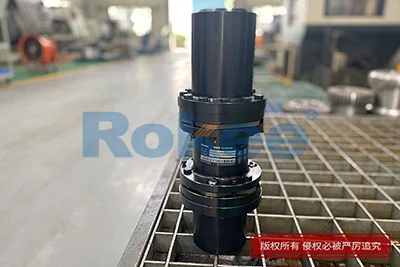
In the modern manufacturing industry, the PUR sandwich panel production line plays a crucial role in the construction, automotive, and packaging sectors, with its core advantage lying in the excellent thermal insulation, sound insulation, and structural stability of the products. However, the efficient and stable operation of the production line is highly dependent on the performance of the transmission system, which acts as the "nerve center" connecting various equipment such as uncoilers, laminators, extruders, and cutting machines. Any instability or inefficiency in the transmission process will directly lead to increased energy consumption, reduced product quality, extended production cycles, and ultimately increased production losses. In recent years, with the continuous pursuit of energy conservation, emission reduction, and cost optimization in the manufacturing industry, the flexible diaphragm coupling has gradually replaced traditional coupling types such as gear couplings and elastic sleeve pin couplings, becoming a key component to optimize the transmission efficiency of PUR sandwich panel production lines and reduce comprehensive losses.
The PUR sandwich panel production process involves multiple continuous and coordinated links, starting from the uncoiling of the surface and bottom base materials, the melting and spraying of PUR adhesive, the compounding of the core material, the hot pressing and shaping, and finally the precision cutting. Each link has strict requirements for the stability and synchronization of power transmission. The uncoiler needs to maintain a constant tension to avoid wrinkles or breaks in the base material; the extruder requires stable torque output to ensure uniform melting and flow of the PUR adhesive; the laminator and hot press need precise speed matching to ensure the bonding firmness and flatness of the sandwich panel; the cutting machine relies on accurate power transmission to achieve precise cutting of the panel size. Any deviation in the transmission process, such as torque fluctuation, speed inconsistency, or shaft misalignment, will cause problems such as uneven adhesive coating, poor bonding of the sandwich panel, irregular cutting size, and even equipment shutdown, resulting in material waste, increased energy consumption, and reduced production efficiency. Traditional couplings often have inherent defects that are difficult to adapt to the high requirements of PUR sandwich panel production lines. For example, gear couplings require regular lubrication, and the lubricating oil is prone to leakage, which not only pollutes the production environment and affects the quality of PUR sandwich panels but also increases maintenance costs and downtime; elastic sleeve pin couplings have poor torque transmission accuracy, easy wear of elastic components, short service life, and difficulty in compensating for multi-directional shaft misalignment, leading to frequent replacement of parts and increased production losses.
The flexible diaphragm coupling, as a high-performance metal elastic element flexible coupling, has fundamentally solved the defects of traditional couplings through its unique structural design and working principle, providing a reliable guarantee for the stable and efficient operation of the PUR sandwich panel production line. Its core structure is composed of a diaphragm group formed by stacking multiple layers of thin stainless steel plates, which are connected to the two halves of the coupling through bolts in a staggered manner. The key working principle is to compensate for the axial, radial, and angular displacement between the driving shaft and the driven shaft through the elastic deformation of the diaphragm group, thereby achieving efficient and stable power transmission without the need for lubrication. Unlike traditional couplings that rely on mechanical contact or elastic deformation of non-metallic materials for torque transmission, the flexible diaphragm coupling uses the elastic deformation of the metal diaphragm to transmit torque, which not only ensures high transmission accuracy but also avoids the problems of lubrication pollution and component wear caused by mechanical contact. In addition, the diaphragm group is usually made of high-strength stainless steel materials such as 304 or 316L, which are processed by laser cutting or stamping, ensuring excellent fatigue resistance, corrosion resistance, and high-temperature resistance, and can adapt to the complex working environment of the PUR sandwich panel production line.
The unique structural and performance advantages of flexible diaphragm couplings make them highly compatible with the working characteristics of PUR sandwich panel production lines, and their role in optimizing transmission and reducing losses is mainly reflected in multiple aspects. First of all, the high-precision transmission performance of flexible diaphragm couplings ensures the synchronization and stability of each link of the production line. The transmission efficiency of this type of coupling can reach up to 99.86%, with no rotational clearance, which can accurately transmit speed and torque, avoiding the problems of speed fluctuation and torque loss caused by clearance in traditional couplings. In the PUR adhesive extrusion link, stable torque transmission ensures that the extruder outputs a uniform amount of adhesive, avoiding uneven coating thickness caused by torque fluctuation, which not only improves the bonding quality of the sandwich panel but also reduces the waste of PUR adhesive. In the cutting link, precise speed transmission ensures that the cutting machine maintains a stable cutting speed, avoiding irregular cutting sizes caused by speed deviation, reducing the scrap rate of finished products. At the same time, the zero-rotation clearance design of the flexible diaphragm coupling also improves the response speed and positioning accuracy of the production line's motion control system, making the coordination between various equipment more accurate, reducing the probability of equipment jamming and shutdown, and improving the overall operation efficiency of the production line.
Secondly, the strong displacement compensation capability of flexible diaphragm couplings effectively solves the problem of shaft misalignment in the transmission system of the PUR sandwich panel production line, thereby reducing mechanical wear and energy loss. In the long-term operation of the production line, due to factors such as manufacturing errors, installation deviations, bearing deformation, and temperature rise, the driving shaft and the driven shaft are prone to axial, radial, and angular misalignment. Traditional couplings have limited compensation capabilities for these misalignments, which will lead to increased mechanical friction, increased energy consumption, and accelerated wear of bearings, shafts, and other components, shortening the service life of equipment and increasing maintenance costs. The flexible diaphragm coupling can compensate for multi-directional displacements through the elastic deformation of the diaphragm group. Among them, the double diaphragm type coupling can achieve an angular displacement compensation capability twice that of traditional gear couplings, up to about 1.5°, which can effectively absorb the displacement deviation between the shafts, reduce the additional force generated by misalignment on the transmission components, and avoid excessive wear and energy loss caused by forced operation of the equipment under misalignment conditions. For example, in the hot pressing link of the PUR sandwich panel production line, the hot press will generate a certain amount of thermal expansion during operation, leading to axial displacement of the transmission shaft. The flexible diaphragm coupling can quickly compensate for this displacement through the elastic deformation of the diaphragm, ensuring the stable operation of the hot press, reducing energy consumption caused by friction, and extending the service life of the hot press and transmission components.
Thirdly, the maintenance-free and environmentally friendly characteristics of flexible diaphragm couplings reduce the maintenance cost and environmental pollution of the production line, further reducing comprehensive production losses. Unlike gear couplings that require regular lubrication and maintenance, the flexible diaphragm coupling has a maintenance-free design, which does not require the addition of lubricating oil during operation, avoiding the problems of lubricating oil leakage, environmental pollution, and equipment damage caused by lubrication. In the production process of PUR sandwich panels, the purity of the production environment has a direct impact on the quality of the products. The leakage of lubricating oil from traditional couplings may contaminate the base material, core material, and PUR adhesive, leading to the scrapping of products and increasing production losses. The flexible diaphragm coupling avoids this problem, ensuring the cleanliness of the production environment and the quality of the products. At the same time, the maintenance-free design also reduces the labor cost and maintenance time required for the production line. There is no need to stop the machine for lubrication and maintenance, reducing the downtime of the production line and improving the effective operation time. In addition, the diaphragm group of the flexible diaphragm coupling has a long service life, and only needs to be inspected and replaced regularly after long-term operation (it is recommended to stop the machine for inspection every 5000 hours), which is much longer than the service life of the elastic components of traditional couplings, reducing the frequency of part replacement and the cost of spare parts.
The excellent vibration absorption performance of flexible diaphragm couplings also plays an important role in reducing transmission losses and protecting equipment. The PUR sandwich panel production line involves multiple high-power equipment such as motors, extruders, and hot presses, which will generate a lot of vibration during operation. These vibrations will not only affect the stability of the transmission system but also accelerate the wear of equipment components, increase energy consumption, and even cause resonance, leading to equipment failure. The metal diaphragm group of the flexible diaphragm coupling has a good elastic damping effect, which can absorb and buffer the vibration generated during the operation of the equipment, reduce the vibration transmission between the driving shaft and the driven shaft, and reduce the noise generated by the transmission system to below 65dB(A). This not only improves the stability of the transmission system and the service life of the equipment but also reduces the energy loss caused by vibration. For example, in the operation of the extruder, the vibration generated by the motor will be absorbed by the diaphragm group of the flexible diaphragm coupling, avoiding the vibration being transmitted to the extruder barrel, ensuring the stable flow of the PUR adhesive, reducing the energy consumption caused by the vibration of the extruder, and improving the quality of the adhesive coating.
In practical application scenarios, the flexible diaphragm coupling has been widely used in various links of the PUR sandwich panel production line, and has achieved remarkable results in optimizing transmission and reducing losses. Taking a medium-sized PUR sandwich panel production enterprise as an example, before the application of flexible diaphragm couplings, the enterprise used gear couplings in the transmission system of the production line. Due to frequent lubrication and maintenance, the annual maintenance cost reached a considerable amount, and the lubricating oil leakage often caused product pollution, with a product scrap rate of about 5%. At the same time, due to the poor displacement compensation capability of the gear couplings, the transmission system often had problems such as shaft misalignment, leading to frequent equipment shutdowns, and the effective operation rate of the production line was only about 80%. After replacing the gear couplings with flexible diaphragm couplings, the enterprise eliminated the need for regular lubrication and maintenance, reducing the annual maintenance cost by more than 40%. The problem of lubricating oil leakage was completely solved, and the product scrap rate was reduced to less than 1.5%. In addition, the displacement compensation capability of the flexible diaphragm coupling effectively solved the problem of shaft misalignment, reducing the number of equipment shutdowns by more than 60%, and the effective operation rate of the production line was increased to more than 95%. At the same time, due to the high transmission efficiency and vibration absorption performance of the flexible diaphragm coupling, the energy consumption of the production line per unit product was reduced by about 8%, achieving significant economic benefits and environmental benefits.
It should be noted that to give full play to the role of flexible diaphragm couplings in optimizing the transmission of PUR sandwich panel production lines and reducing losses, reasonable selection, correct installation, and scientific maintenance are also required. In the selection process, it is necessary to comprehensively consider the torque, speed, displacement compensation requirements, and working environment of the transmission system of each link of the production line, and select the appropriate type and specification of the flexible diaphragm coupling. For example, in the links with small eccentricity and low torque requirements such as the uncoiler, a single diaphragm coupling can be selected; in the links with complex displacement deviations and high torque requirements such as the extruder and hot press, a double diaphragm coupling should be selected to ensure sufficient displacement compensation capability and torque transmission capacity. In the installation process, a torque wrench should be used to tighten the bolts in stages (first 50% of the rated torque, then 100%), and the flange clearance should be controlled at 0.2-0.3mm to avoid the diaphragm being subjected to excessive preload and affecting its elastic deformation and service life. When multiple displacements coexist, the compensation amount should be controlled at 50% of the allowable value to ensure the stable operation of the coupling. In the daily operation process, it is necessary to regularly check the fatigue cracks of the diaphragm group, and apply molybdenum disulfide coating on the bolt threads to prevent micro-motion wear, ensuring the long-term stable operation of the flexible diaphragm coupling.
With the continuous development of the PUR sandwich panel manufacturing industry, the requirements for the efficiency, stability, and energy conservation of the production line are getting higher and higher. The flexible diaphragm coupling, with its high precision, strong displacement compensation capability, maintenance-free, environmental protection, and good vibration absorption performance, has become an indispensable key component in the transmission system of the PUR sandwich panel production line. It not only optimizes the transmission efficiency of the production line, reduces energy consumption and product scrap rate, but also reduces maintenance costs and equipment failure rate, effectively reducing the comprehensive production losses of enterprises. In the future, with the continuous progress of material science and manufacturing technology, the performance of flexible diaphragm couplings will be further improved, and their application in the PUR sandwich panel production line will be more extensive and in-depth. For example, the development of new high-strength and high-fatigue diaphragm materials will further extend the service life of the coupling; the combination of intelligent monitoring technology will realize real-time monitoring of the operation status of the coupling, predict potential failures in advance, and further reduce the downtime of the production line. It is believed that with the wide application of flexible diaphragm couplings, the PUR sandwich panel manufacturing industry will move towards a more efficient, energy-saving, and high-quality development direction, creating greater economic and social benefits.
In summary, the flexible diaphragm coupling has significant advantages in optimizing the transmission of the PUR sandwich panel production line and reducing losses compared with traditional couplings. Its high-precision transmission ensures the synchronization and stability of each link of the production line, reducing product scrap rate; its strong displacement compensation capability solves the problem of shaft misalignment, reducing mechanical wear and energy consumption; its maintenance-free and environmental protection characteristics reduce maintenance costs and environmental pollution; its excellent vibration absorption performance protects equipment and reduces energy loss caused by vibration. Through reasonable selection, correct installation, and scientific maintenance, the flexible diaphragm coupling can give full play to its role, effectively improve the operational efficiency of the PUR sandwich panel production line, reduce comprehensive production losses, and promote the sustainable development of the industry. In the context of increasing emphasis on energy conservation, emission reduction, and cost optimization, the flexible diaphragm coupling will surely become the first choice for the transmission system of the PUR sandwich panel production line, bringing new development opportunities for the manufacturing industry.
Rokee is a professional manufacturer of industrial couplings in china, designing and customizing a wide range of drive shaft coupling products for customers worldwide. Submit your coupling drawings or technical specifications, and we can customize coupling products for you.
Coupling Categories


Links:
- Calibration Weight
- Digital Viscometer
- Carpas Industriales
- Exhibition Tent
- Industrial Cardan Shaft
- PU Sandwich Panel Machine
- PIR Sandwich Panel Line
- Sandwich Panel Machine
- Sandwich Panel Production Line
- PU Sandwich Panel Line
- Sandwich Panel Line
- Flexible Couplings Manufacturer In China
- Elastic Couplings Manufacturer In China