High Torque Flexible Coupling

In modern industrial power transmission systems, the stable and efficient transfer of rotational force serves as the core foundation for the continuous operation of various mechanical equipment. High torque flexible coupling, as a key connecting component for shaft transmission systems, undertakes the critical task of transmitting large torque between driving and driven equipment while resolving various installation and operation deviations that are unavoidable in mechanical operation. Unlike ordinary coupling products that only adapt to low-load and stable working conditions, this type of coupling is specially optimized for heavy-duty industrial scenarios, balancing excellent torsional load-bearing capacity and flexible deformation compensation performance, making it an indispensable core part in heavy machinery, power transmission engineering, and industrial production lines. Its unique structural design and material characteristics enable it to break through the functional limitations of rigid couplings and ordinary flexible couplings, solving common pain points such as shaft misalignment, mechanical vibration, impact load damage, and component wear in high-power transmission processes.
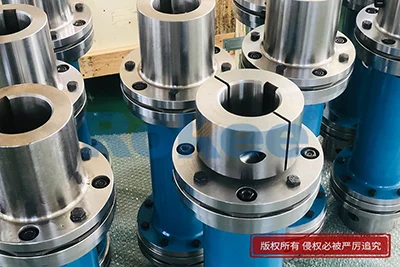
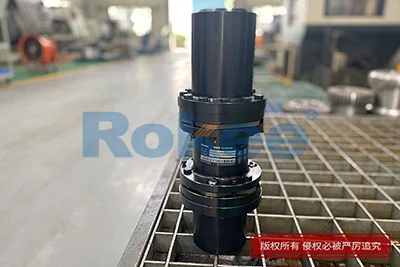
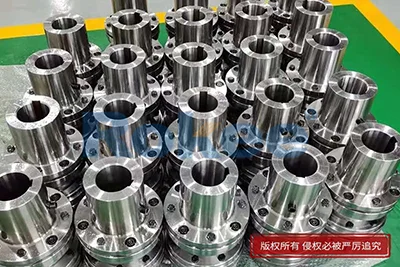
The core working logic of high torque flexible coupling lies in the organic combination of rigid force-bearing structure and flexible deformation elements. The overall structure is mainly composed of two symmetric hub components and intermediate flexible transmission parts. The hubs, processed with high-precision machining technology, are firmly fixed on the driving shaft and driven shaft respectively, forming a stable force transmission base. The intermediate flexible elements are the key to realizing torque transmission and deformation compensation, and they undertake the dual functions of bearing high torsional pressure and absorbing mechanical displacement. In the operating state, the driving shaft drives the active hub to rotate, and the torque is uniformly transmitted to the driven hub and the connected mechanical shaft through the elastic deformation and shear transmission of the intermediate flexible parts, thereby realizing the synchronous operation of the entire transmission system. When the transmission system generates displacement deviation due to installation errors, equipment aging, mechanical vibration or thermal expansion and contraction during operation, the flexible elements can produce controllable elastic deformation within the design range, effectively offsetting angular deviation, parallel offset and axial displacement between the two shafts, and ensuring the continuity and stability of torque transmission without generating additional mechanical stress.
What distinguishes high torque flexible coupling from conventional flexible couplings is its enhanced torsional rigidity and load-bearing performance under the premise of maintaining flexible compensation capability. Ordinary flexible couplings often sacrifice torque transmission capacity for higher flexibility, resulting in easy deformation and failure when facing high-load impact, which cannot meet the operation requirements of heavy-duty equipment. In contrast, high torque flexible coupling adopts optimized structural iteration and high-strength matching design. The internal force transmission path is more reasonable, which can evenly disperse the concentrated torsional force generated by high-power operation, avoid local stress overload of components, and thus achieve stable transmission of large torque. This performance characteristic determines that it is more suitable for extreme working conditions with high load, frequent start-stop and alternating load operation, and can maintain stable transmission efficiency for a long time under continuous high-torque working state.
Material selection is the core factor that determines the comprehensive performance of high torque flexible coupling, and the matching of different materials endows the product with diversified environmental adaptability and service performance. The hub components that bear the main mechanical force are mostly made of high-strength metal materials with excellent tensile strength and fatigue resistance. After precise forging and heat treatment processes, the structural rigidity and surface hardness of the hubs are significantly improved, which can effectively resist torsional shear force, mechanical friction and external impact, and avoid structural deformation or damage during long-term high-load operation. The intermediate flexible elements are mainly made of high-performance elastomer materials or special metal elastic components. Elastomer materials such as modified polyurethane and high-density rubber have excellent elastic recovery, shock absorption and buffering properties. They can convert the instantaneous impact energy generated by equipment start-stop, load mutation and mechanical vibration into elastic potential energy for absorption and dissipation, effectively reducing the vibration amplitude of the transmission system and isolating the vibration conduction between the driving and driven equipment. Metal flexible elements rely on high-precision thin-wall structural design, with higher torsional stiffness and temperature resistance, and can maintain stable working performance in high-temperature, low-temperature and dry harsh working environments where ordinary elastomer materials are difficult to adapt.
The excellent misalignment compensation capability is one of the most valuable functional advantages of high torque flexible coupling. In the actual installation and operation of industrial equipment, it is impossible to achieve absolute coaxial alignment of the two connecting shafts due to the limitation of machining accuracy, installation technology and on-site working conditions. Tiny coaxial errors will be continuously amplified with the operation of high-speed and high-load equipment, resulting in additional bending stress and friction loss of shaft parts, accelerating the wear of bearings, seals and other accessories, and even causing equipment vibration, noise and shutdown failure in severe cases. High torque flexible coupling can comprehensively compensate for three common forms of shaft misalignment through the flexible deformation of intermediate components. It can adapt to angular deviation caused by the inclination of the two shafts, parallel offset formed by the horizontal dislocation of the shaft centerline, and axial displacement generated by the thermal expansion and contraction of the shaft body during operation. This passive compensation function does not require manual intervention or auxiliary adjustment equipment, and can always maintain the optimal matching state of the transmission system in the full operation cycle of the equipment, greatly reducing the failure rate of the transmission system caused by shaft misalignment.
Vibration damping and impact resistance performance further highlights the application value of high torque flexible coupling in complex industrial working conditions. Most heavy-duty mechanical equipment will generate instantaneous impact load and periodic torsional vibration during start-up, shutdown, load switching and continuous operation. These unstable mechanical energies will directly act on the connecting shafts and core components of the equipment, leading to fatigue damage of mechanical parts, reduced operation accuracy and shortened overall service life of the equipment. The flexible elements of high torque flexible coupling have unique energy dissipation characteristics. When the transmission system produces torsional vibration and impact force, the elastic structure will produce mild shear deformation and torsional winding, absorb most of the abnormal mechanical energy, and slowly release it in the form of elastic potential energy, thereby smoothing the torque transmission curve and eliminating vibration and impact fluctuations in the transmission process. This vibration isolation and buffering effect can effectively protect the precision components inside the driving and driven equipment, reduce the operating noise of the unit, and improve the overall operation stability and safety of the mechanical system.
In terms of transmission efficiency and operational stability, high torque flexible coupling has obvious advantages over traditional connecting components. Rigid couplings completely limit the relative displacement of the two shafts, which will cause all misalignment stress and vibration impact to act on the equipment itself, resulting in large mechanical loss and high failure risk. Ordinary flexible couplings have insufficient torque bearing capacity, and are prone to excessive elastic deformation and torque loss under high load conditions, leading to reduced transmission efficiency and unstable equipment operation. High torque flexible coupling achieves a precise balance between rigidity and flexibility. Under rated working conditions, the overall structural deformation is extremely small, the torque transmission is accurate and efficient, and the power loss in the transmission process is controlled at a very low level. Even in the state of fluctuating load and intermittent operation, it can maintain stable torque output, ensure the synchronous operation speed of the front and rear equipment, and provide reliable power transmission guarantee for high-precision and high-efficiency industrial production.
The application scenarios of high torque flexible coupling cover almost all heavy-duty industrial fields that require high-power torque transmission. In the field of metallurgy and steel, it is applied to the transmission system of rolling mills, smelting equipment and heavy conveying machinery, adapting to the long-term high-load and high-strength operation requirements of metallurgical equipment. In the field of energy and power, it serves large fans, water pumps, generators and compressor units, stabilizing the torque transmission of high-power power equipment and reducing the vibration damage of unit operation. In engineering machinery and mining industry, it is matched with heavy excavators, crushers, conveyor belts and mobile mining equipment, coping with complex working conditions such as uneven load, frequent impact and variable speed operation. In addition, it also plays an important role in chemical equipment, building materials machinery, port handling equipment and other fields, providing stable and reliable connection solutions for various high-torque transmission systems.
In terms of installation and daily operation, high torque flexible coupling has good practicability and maintainability. The overall structural design is compact and reasonable, with high integration degree, which can adapt to narrow installation space of mechanical equipment. The assembly process is simple and convenient, without complex debugging steps, and the installation accuracy is easy to control, which can effectively shorten the equipment assembly cycle and reduce the difficulty of on-site construction. During the long-term operation of the equipment, the coupling has strong anti-fatigue ability and stable structural performance, and will not easily fail or age under continuous high-load operation. The wearing parts are mainly intermediate flexible elements, which have simple replacement steps and low maintenance difficulty. Daily maintenance only requires regular inspection of the deformation state of flexible parts and the fastening degree of hub connection, which can effectively avoid equipment failure caused by coupling aging and damage, reduce equipment downtime and maintenance cost, and improve the continuous operation efficiency of industrial production lines.
With the continuous upgrading of industrial manufacturing technology and the gradual improvement of equipment operation requirements, the performance requirements for power transmission components in various industries are becoming increasingly stringent. High torque flexible coupling, as a mature and efficient transmission connecting component, is also constantly optimized and upgraded in structural design, material technology and performance indicators. Modern optimized products adopt more streamlined force transmission structures, which further improve torque density and load-bearing capacity under the same volume. New composite flexible materials are gradually applied to product manufacturing, which have better temperature resistance, wear resistance and aging resistance, and can adapt to more extreme working environments such as high temperature, low temperature, humidity and dust. At the same time, the optimized structural design further reduces the vibration and noise during operation, and improves the environmental protection and comfort of equipment operation.
In the entire industrial power transmission system, high torque flexible coupling undertakes the important role of connecting equipment, transmitting power and protecting mechanical components. Its unique high-torque bearing capacity, flexible misalignment compensation, vibration damping and impact resistance make it an irreplaceable key component in heavy-duty transmission systems. It not only solves many practical problems in the operation of industrial mechanical equipment, such as shaft misalignment damage, vibration and noise, and load impact wear, but also effectively improves the overall operation efficiency and service life of the equipment, reduces the operation and maintenance cost of industrial production, and provides a solid technical guarantee for the stable, efficient and safe operation of modern industrial production. With the continuous development of heavy industry and intelligent manufacturing, high torque flexible coupling will continue to exert its core advantages and be more widely used in more industrial fields, bringing more stable and reliable power transmission support for industrial mechanical equipment operation.
Rokee is a professional manufacturer of industrial couplings in china, designing and customizing a wide range of drive shaft coupling products for customers worldwide. Submit your coupling drawings or technical specifications, and we can customize coupling products for you.
Coupling Categories



Links:
- Calibration Weight
- Digital Viscometer
- Carpas Industriales
- Exhibition Tent
- Industrial Cardan Shaft
- PU Sandwich Panel Machine
- PIR Sandwich Panel Line
- Sandwich Panel Machine
- Sandwich Panel Production Line
- PU Sandwich Panel Line
- Sandwich Panel Line
- Flexible Couplings Manufacturer In China
- Elastic Couplings Manufacturer In China