Maintenance-free Design Of Elastic Coupling For Adapting To The Needs Of Sandwich Panel Machine
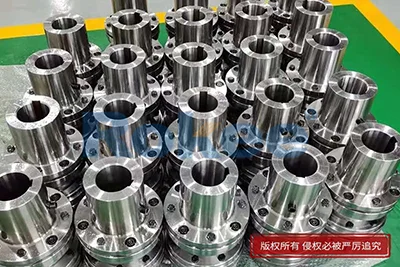
In the modern manufacturing industry, sandwich panel machines play an indispensable role in the production of building materials, with their operational stability directly determining the quality and efficiency of sandwich panel production. As a key component in the transmission system of sandwich panel machines, the elastic coupling is responsible for connecting the power source and the execution mechanism, transmitting torque, compensating for shaft misalignment, and damping vibrations. However, traditional elastic couplings often require frequent maintenance such as lubrication, component replacement, and alignment adjustment during long-term operation, which not only increases the labor intensity of operators but also leads to unplanned downtime of the equipment, affecting the continuous production of sandwich panels. Therefore, developing an elastic coupling with a maintenance-free design that can adapt to the working characteristics of sandwich panel machines has become an urgent demand in the industry.
The working environment of sandwich panel machines is usually complex, involving multiple processes such as uncoiling of facing materials, roll forming, preheating, foaming, lamination, curing, and cutting. Each process requires precise and stable power transmission to ensure the consistency of product quality and production efficiency. In the transmission system of sandwich panel machines, the elastic coupling is in a continuous working state for a long time, bearing alternating loads, vibrations, and possible shaft misalignments. At the same time, the working site may have dust, debris, and occasional oil pollution, which puts higher requirements on the durability, corrosion resistance, and stability of the elastic coupling. Traditional elastic couplings often use structures that require regular lubrication, such as gear couplings or universal couplings. These couplings need to add lubricating oil or grease regularly to reduce friction and wear, but in the working environment of sandwich panel machines, dust and debris are easy to mix into the lubricating medium, resulting in increased wear of components, reduced transmission efficiency, and even coupling failure. In addition, the elastic elements of some traditional elastic couplings, such as rubber sleeves, are prone to aging, cracking, and deformation under long-term alternating loads and temperature changes, requiring frequent replacement, which increases maintenance costs and affects production progress. Therefore, the maintenance-free design of elastic couplings must fully consider the working characteristics of sandwich panel machines, solve the problems of lubrication, component aging, and wear, and ensure long-term stable operation without maintenance.
The core principle of the maintenance-free design of elastic couplings is to optimize the structure and select appropriate materials to eliminate the need for regular lubrication, reduce component wear, and extend the service life of the coupling, so as to achieve long-term stable operation without manual maintenance. For sandwich panel machines, the maintenance-free elastic coupling needs to meet three key requirements: first, it can stably transmit torque to adapt to the power demand of the equipment; second, it has good compensation capacity for shaft misalignment, including radial, axial, and angular misalignment, to avoid additional stress caused by misalignment; third, it has strong resistance to wear, corrosion, and aging, and can adapt to the harsh working environment of sandwich panel machines. To achieve these requirements, the maintenance-free design of elastic couplings needs to carry out in-depth optimization from multiple aspects such as structural design, material selection, and surface treatment.
Structural design is the foundation of the maintenance-free performance of elastic couplings. Traditional elastic couplings often have complex structures with multiple moving parts, which not only increases the difficulty of maintenance but also easily leads to failure due to component wear. The maintenance-free elastic coupling for sandwich panel machines should adopt a simplified and integrated structure to reduce the number of moving parts and avoid the need for lubrication. One of the effective structural designs is the integrated elastic body structure, which uses a one-piece forming process to integrate the elastic element and the connecting part, eliminating the gap between components and reducing wear caused by relative movement. For example, the elastic body can be designed as a spiral groove or parallel groove structure, which is formed by wire cutting of metal materials. This structure not only has good elasticity to compensate for shaft misalignment but also avoids the use of separate elastic elements such as rubber sleeves, thus eliminating the problem of elastic element aging and replacement. At the same time, the integrated structure can also reduce the entry of dust and debris, reducing the risk of component wear. In addition, the connection mode between the coupling and the shaft should also be optimized. The clamping connection mode can be adopted instead of the keyway connection mode. The clamping connection uses bolts to lock the coupling hub on the shaft, which not only has a simple structure and convenient installation but also avoids the wear of the keyway and the shaft, reducing the need for maintenance. The clamping surface can be designed with a serrated structure to increase the friction between the coupling and the shaft, ensuring reliable torque transmission without slipping.
Material selection is another key factor affecting the maintenance-free performance of elastic couplings. The materials of the coupling components must have good mechanical properties, wear resistance, corrosion resistance, and aging resistance to adapt to the long-term continuous operation of sandwich panel machines. For the metal parts of the coupling, such as the hub and the elastic body, high-strength and corrosion-resistant materials should be selected. Alloy steel and stainless steel are ideal choices. Alloy steel has high strength, good toughness, and wear resistance, which can bear large alternating loads and avoid deformation and fracture. Stainless steel has excellent corrosion resistance, which can prevent rust and corrosion caused by dust, moisture, and occasional oil pollution in the working environment, extending the service life of the coupling. For example, 40CrMo alloy steel can be used for the hub of the coupling, which has high tensile strength and fatigue resistance, and can adapt to the high torque transmission requirements of sandwich panel machines. The elastic body can be made of stainless steel, which not only has good elasticity but also has strong corrosion resistance and aging resistance, avoiding the problem of elastic element aging and replacement. In addition, for some parts that need to have better elasticity, polymer materials such as polyurethane can be selected. Polyurethane has good wear resistance, tear resistance, and elastic modulus, and its working temperature range is wide, which can adapt to the temperature changes in the working environment of sandwich panel machines. Compared with traditional rubber materials, polyurethane has longer service life and is not easy to age and crack, reducing the need for maintenance.
Surface treatment technology is an important supplement to improve the maintenance-free performance of elastic couplings. Through appropriate surface treatment, the wear resistance, corrosion resistance, and surface hardness of the coupling components can be further improved, reducing the wear and failure probability of the components. For metal parts, surface treatment technologies such as galvanizing, chrome plating, and oxidation can be adopted. Galvanizing and chrome plating can form a protective layer on the surface of the metal parts, preventing corrosion caused by moisture and dust. Oxidation treatment can form a dense oxide film on the surface of the metal parts, improving the wear resistance and corrosion resistance of the parts. For example, the surface of the stainless steel elastic body can be subjected to passivation treatment, which can enhance the corrosion resistance of the surface and avoid rust and corrosion. The surface of the coupling hub can be subjected to quenching and tempering treatment, which can improve the surface hardness and wear resistance of the hub, reducing the wear caused by friction between the hub and the shaft. In addition, the surface of the coupling can be coated with a wear-resistant and corrosion-resistant coating, such as polyurethane coating or epoxy resin coating, which can further improve the protection performance of the coupling and extend its service life.
In addition to structural design, material selection, and surface treatment, the maintenance-free design of elastic couplings also needs to consider the matching with the working characteristics of sandwich panel machines. Sandwich panel machines have different power requirements and working speeds in different production processes, which requires the elastic coupling to have good adaptability. The maintenance-free elastic coupling should be designed with adjustable stiffness and damping to adapt to different working conditions. For example, by changing the number of spiral grooves or the thickness of the elastic body, the stiffness of the coupling can be adjusted, so that the coupling can transmit different torques and adapt to the power changes of the equipment. At the same time, the damping performance of the coupling should be optimized to absorb the vibrations generated during the operation of the equipment, reduce the impact on the transmission system, and protect the motor and other components. The damping performance can be improved by optimizing the structure of the elastic body, such as designing the elastic body as a multi-layer structure or adding damping materials in the elastic body. In addition, the maintenance-free elastic coupling should have good overload protection performance. When the equipment is overloaded, the coupling can automatically slip or deform to avoid damage to the motor and other components, ensuring the safe operation of the equipment. The overload protection function can be realized by designing a shear pin structure or using elastic materials with a certain yield limit. When the torque exceeds the rated value, the shear pin is sheared or the elastic body is deformed, cutting off the power transmission, thus protecting the equipment.
To verify the feasibility and application effect of the maintenance-free elastic coupling designed for sandwich panel machines, a series of performance tests and practical application tests were carried out. The performance tests included torque transmission test, misalignment compensation test, wear resistance test, corrosion resistance test, and service life test. The test results showed that the maintenance-free elastic coupling can stably transmit the rated torque, and the torque transmission efficiency is more than 98%, which meets the power transmission requirements of sandwich panel machines. In the misalignment compensation test, the coupling can effectively compensate for radial misalignment of 0.2-1.5mm, axial misalignment of ±0.5-3mm, and angular misalignment of 0.5°-3°, which can avoid additional stress caused by shaft misalignment and ensure the stable operation of the transmission system. In the wear resistance test, after 10,000 hours of continuous operation, the wear amount of the coupling components is less than 0.1mm, which shows good wear resistance. In the corrosion resistance test, after being placed in a harsh environment with dust, moisture, and oil pollution for 6 months, the surface of the coupling has no rust or corrosion, which indicates that the coupling has strong corrosion resistance. The service life test shows that the service life of the maintenance-free elastic coupling can reach more than 8 years under normal working conditions, which is much longer than that of traditional elastic couplings (usually 2-3 years). In the practical application test, the maintenance-free elastic coupling was installed on a sandwich panel machine for continuous production test. After 1 year of continuous operation, the coupling did not require any maintenance such as lubrication or component replacement, and the operation was stable. The production efficiency of the sandwich panel machine was increased by 15% compared with the use of traditional elastic couplings, and the maintenance cost was reduced by more than 80%, which fully verified the practical value and application effect of the maintenance-free elastic coupling.
The maintenance-free design of elastic couplings for sandwich panel machine not only solves the problems of frequent maintenance and high maintenance costs of traditional elastic couplings but also improves the operational stability and production efficiency of sandwich panel machines, bringing significant economic benefits to enterprises. However, with the continuous development of sandwich panel machine technology, the requirements for the performance of elastic couplings are also constantly improving. In the future, the maintenance-free elastic coupling will develop towards higher torque transmission capacity, better misalignment compensation performance, and smarter monitoring functions. For example, by integrating sensors into the coupling, the operating state of the coupling can be real-time monitored, such as torque, temperature, and vibration, and early warning of potential failures can be carried out, further improving the reliability and maintainability of the coupling. At the same time, with the development of new materials and new processes, more high-performance materials and advanced manufacturing processes will be applied to the design and production of maintenance-free elastic couplings, further improving the service life and performance of the coupling.
In conclusion, the maintenance-free design of elastic couplings is an important direction for the optimization of the transmission system of sandwich panel machines. By optimizing the structural design, selecting appropriate materials, and adopting advanced surface treatment technologies, the maintenance-free elastic coupling can adapt to the harsh working environment and functional requirements of sandwich panel machines, achieve long-term stable operation without maintenance, reduce maintenance costs, and improve production efficiency. The research and application of maintenance-free elastic couplings not only provide technical support for the upgrading of sandwich panel machines but also have important reference significance for the design and improvement of elastic couplings in other mechanical equipment. With the continuous deepening of research and the continuous progress of technology, the maintenance-free elastic coupling will play a more important role in the field of sandwich panel production, promoting the high-quality development of the sandwich panel manufacturing industry.
Rokee is a professional manufacturer of industrial couplings in china, designing and customizing a wide range of drive shaft coupling products for customers worldwide. Submit your coupling drawings or technical specifications, and we can customize coupling products for you.
Coupling Categories


Links:
- Calibration Weight
- Digital Viscometer
- Carpas Industriales
- Exhibition Tent
- Industrial Cardan Shaft
- PU Sandwich Panel Machine
- PIR Sandwich Panel Line
- Sandwich Panel Machine
- Sandwich Panel Production Line
- PU Sandwich Panel Line
- Sandwich Panel Line
- Flexible Couplings Manufacturer In China
- Elastic Couplings Manufacturer In China