Polyurethane Flexible Coupling

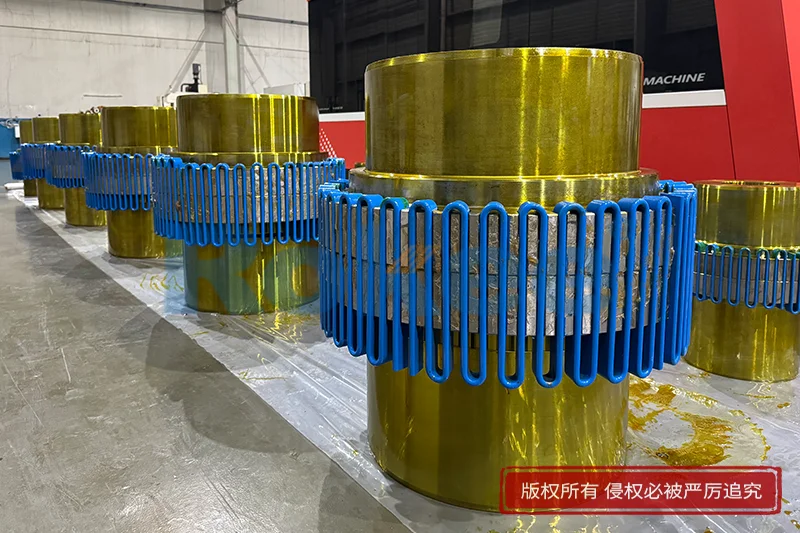
Polyurethane flexible couplings are indispensable elastomeric mechanical components widely applied in modern power transmission systems, serving as a critical connection medium between driving and driven shafts. Engineered with high-performance polyurethane elastic materials, these couplings integrate flexible deformation, torque transmission, and vibration buffering functions to resolve common mechanical operation issues such as shaft misalignment, operational vibration, and instantaneous impact loads. Unlike rigid coupling structures that rely on hard connection, polyurethane flexible couplings utilize the excellent elasticity and toughness of polyurethane materials to achieve adaptive deformation during equipment operation. They can effectively compensate for axial, radial, and angular deviations generated by installation errors and mechanical operation wear, ensuring continuous and stable power transmission. Meanwhile, the unique material properties endow these couplings with outstanding shock absorption and noise reduction effects, which significantly reduce mechanical operating noise and alleviate equipment load impact. With superior wear resistance, chemical stability, and environmental adaptability compared with traditional rubber and plastic couplings, they have become a preferred accessory for various electromechanical equipment, effectively extending the overall service life of mechanical systems and improving operational stability.
The core performance advantages of polyurethane flexible couplings stem from the unique physical and chemical properties of polyurethane elastomer materials, which distinguish them from other conventional flexible coupling materials in industrial applications. Polyurethane materials feature high elasticity, excellent tensile strength, and remarkable tear resistance, enabling the couplings to withstand long-term repeated deformation without permanent structural damage during high-frequency mechanical operation. In daily industrial operation, mechanical equipment inevitably generates continuous vibration and instantaneous impact loads during startup, shutdown, and variable-speed operation. Traditional rigid couplings cannot buffer these dynamic loads, leading to increased shaft wear, bearing damage, and loose connection parts. In contrast, polyurethane flexible couplings absorb and dissipate vibration energy through the micro-deformation of their elastic bodies, forming a stable buffer layer between connected shafts. This vibration damping effect effectively isolates mechanical resonance transmission, reduces the fatigue loss of key equipment components, and maintains the stability of power transmission accuracy. Additionally, polyurethane materials possess exceptional abrasion resistance, far exceeding ordinary rubber materials, which allows the couplings to adapt to long-term continuous operation scenarios and avoid failure caused by surface wear and structural aging.
Compensation for shaft misalignment is one of the most core functional characteristics of polyurethane flexible couplings, solving the installation and operation pain points of traditional power transmission structures. In the assembly process of electromechanical equipment, absolute precise alignment of two connected shafts is difficult to achieve due to manual operation errors, equipment manufacturing tolerances, and assembly process limitations. Even if high-precision alignment is completed during initial installation, long-term mechanical operation, component thermal expansion and contraction, and foundation settlement will cause subtle deviations between shafts, including axial displacement, radial offset, and angular deflection. These misalignments will generate additional alternating loads on the shaft system, accelerating the wear of bearings, seals, and gear components, and even causing equipment vibration and operational failure in severe cases. Polyurethane flexible couplings rely on the flexible deformation of their polyurethane elastic components to adapt to various subtle misalignment states in real time. They do not produce additional restrictive stress on the shaft while ensuring stable torque transmission, effectively eliminating the adverse effects of shaft misalignment on mechanical systems and greatly improving the fault tolerance of equipment installation and operation.
Polyurethane flexible couplings boast extremely low maintenance costs and stable long-term operational performance, making them highly cost-effective in long-cycle industrial production scenarios. Different from metal couplings that require regular lubrication, rust prevention, and gap adjustment, or rubber couplings that are prone to aging, cracking, and deformation, polyurethane flexible couplings realize maintenance-free operation in most conventional working environments. The dense molecular structure of polyurethane materials gives them excellent anti-aging and anti-oxidation capabilities, resisting the aging damage caused by long-term exposure to air, light, and heat. Meanwhile, the material has good oil resistance and chemical corrosion resistance, enabling it to operate stably in working environments with trace lubricating oil, weak acid, and weak alkali substances without structural corrosion and performance degradation. In actual industrial operation, these couplings do not need regular oiling, cleaning, or parameter debugging, and their structural integrity and transmission performance can be maintained for a long time. Only regular visual inspection is required to check for extreme deformation or accidental damage, which greatly reduces daily equipment maintenance workload, saves manual maintenance costs and downtime losses, and improves the continuous operation efficiency of production equipment.
The structural design of polyurethane flexible couplings is simple and reasonable, with convenient installation and replacement processes, adapting to diverse mechanical assembly and maintenance scenarios. Most polyurethane flexible couplings adopt a split elastic structure combined with metal hubs, featuring a compact overall structure and small occupied space, which is suitable for installation in limited mechanical assembly gaps. During installation, there is no need to displace or adjust the position of driving motors, driven equipment, and other main components. Operators only need to sleeve the coupling hubs on the two connected shafts and clamp the polyurethane elastic parts in the middle to complete the assembly and positioning. The overall installation process is simple and efficient, with low requirements for operation technology. When the coupling reaches its service life or is accidentally damaged, the replacement operation can also be completed quickly without disassembling a large number of mechanical components, effectively shortening equipment maintenance and shutdown time. In addition, the standardized structural design enables the elastic parts and metal components of the coupling to be interchangeable. Damaged individual parts can be replaced separately without replacing the entire set of couplings, further reducing equipment accessory replacement costs and improving the flexibility of equipment operation and maintenance.
Polyurethane flexible couplings exhibit excellent adaptive performance in variable load and frequent start-stop working conditions, fully meeting the dynamic operation requirements of modern industrial equipment. Many mechanical devices need to face frequent startup, shutdown, forward and reverse rotation, and sudden load changes during operation, which will generate instantaneous impact torque on the power transmission system. For traditional rigid and semi-rigid couplings, such instantaneous impact loads are easily transmitted to the internal structure of the equipment, causing structural fatigue damage and reducing equipment stability. The polyurethane elastic medium of flexible couplings can effectively absorb instantaneous impact torque through rapid elastic deformation when the load changes suddenly. It buffers the rigid impact between shafts, protects key transmission components such as shafts and bearings from impact damage, and ensures smooth transition of power transmission during load switching. Moreover, the torsionally soft performance of polyurethane materials enables the couplings to maintain stable torque transmission under variable-speed operation conditions, avoid power jitter and transmission delay caused by speed changes, and improve the operational accuracy and response sensitivity of mechanical equipment.
Environmental adaptability is another prominent advantage of polyurethane flexible couplings, enabling stable operation in complex and diverse industrial working environments. Polyurethane materials have good temperature adaptability, maintaining stable elasticity and mechanical performance in conventional low and medium temperature environments, without brittle fracture in low temperature or softening failure in high temperature. Meanwhile, the material has outstanding ozone resistance and ultraviolet resistance, which can resist the aging damage of outdoor and open working environments to coupling components and avoid performance attenuation caused by long-term environmental erosion. In industrial scenarios with dust, humidity, and minor corrosive media, polyurethane flexible couplings can still maintain complete structural performance, as their compact surface structure is not easy to accumulate dust and moisture, and will not produce chemical reactions with conventional industrial media. Compared with rubber couplings that are easy to swell and deform in oil environments and metal couplings that are easy to rust and corrode in humid environments, polyurethane flexible couplings have wider environmental adaptability, covering indoor and outdoor, dry and humid, clean and slightly corrosive various working scenarios, with strong industrial application versatility.
With the continuous upgrading of modern industrial mechanical equipment towards high efficiency, precision, and intelligence, polyurethane flexible couplings are playing an increasingly important role in the field of power transmission and showing broad application development prospects. At present, these couplings have been widely used in supporting equipment such as automated production machinery, conveying equipment, pump valve equipment, and light and medium power transmission devices. Their excellent vibration damping, misalignment compensation, impact resistance, and maintenance-free performance can effectively match the high-precision and high-stability operation requirements of modern mechanical equipment. With the continuous innovation of polyurethane material modification technology, the comprehensive performance of flexible couplings is further improved, with stronger load-bearing capacity, more durable fatigue resistance, and more stable environmental adaptability. In the future, with the continuous development of industrial automation and intelligent manufacturing, polyurethane flexible couplings will be further optimized in structural design and material performance, adapting to more high-end, high-precision, and harsh working condition scenarios, providing more reliable basic component support for the stable operation of modern mechanical systems, and becoming an indispensable key part of industrial power transmission systems.




Links:
- Calibration Weight
- Digital Viscometer
- Carpas Industriales
- Exhibition Tent
- Industrial Cardan Shaft
- PU Sandwich Panel Machine
- PIR Sandwich Panel Line
- Sandwich Panel Machine
- Sandwich Panel Production Line
- PU Sandwich Panel Line
- Sandwich Panel Line
- Flexible Couplings Manufacturer In China
- Elastic Couplings Manufacturer In China