Medium Duty Flexible Coupling

Medium duty flexible couplings are essential mechanical components designed to bridge driving and driven shafts in general industrial transmission systems, delivering stable torque transmission while accommodating minor operational deviations between connected equipment. Striking a perfect balance between the robust load capacity of heavy-duty couplings and the lightweight flexibility of miniature coupling models, they are tailored for moderate operating loads, conventional rotational speeds, and non-extreme industrial working conditions. Beyond basic power transmission, these core functional parts effectively absorb mechanical vibration, buffer sudden impact loads, and compensate for angular, parallel, and axial misalignment caused by equipment installation errors, operational wear, or thermal expansion. By mitigating additional mechanical stress on bearings, shafts, and other precision parts, medium duty flexible couplings significantly reduce equipment failure rates, extend the service life of transmission systems, and maintain the long-term stable operation of various mechanical devices, making them widely applicable in general manufacturing, logistics transmission, and auxiliary mechanical systems.
The core working logic of medium duty flexible couplings centers on controllable elastic deformation of internal flexible components, which distinguishes them fundamentally from rigid coupling structures that rely on hard contact for torque transmission. In normal operating states, driving shaft rotation drives the coupling’s integral structure to operate synchronously, and torque is evenly transferred to the driven shaft through the coordination of rigid hubs and intermediate elastic elements. When subtle misalignment occurs between the two connected shafts due to installation deviations or long-term operational vibration, the elastic parts produce reversible, low-amplitude deformation to offset spatial displacement differences. This adaptive deformation does not hinder continuous and efficient torque transmission but eliminates rigid friction and collision between shaft components. Meanwhile, during equipment start-stop, load fluctuation, or instantaneous impact, the elastic structure can absorb transient mechanical energy, convert sudden shock loads into gentle elastic strain, and avoid instantaneous torque spikes that damage transmission components. This unique working mechanism enables medium duty flexible couplings to adapt to complex and variable conventional working conditions while ensuring transmission efficiency.
Material selection is the foundation of the stable performance and durable service life of medium duty flexible couplings, with structural rigidity, elastic toughness, fatigue resistance, and environmental adaptability being the core selection criteria. The rigid hub parts that undertake positioning and assembly are mostly made of high-strength alloy steel or cast steel materials, which provide sufficient structural rigidity to ensure stable shaft connection and avoid structural deformation under medium load conditions. The key elastic functional components adopt high-quality engineering rubber, polyurethane, or high-toughness metal elastic sheets, all of which have excellent comprehensive mechanical properties. Rubber and polyurethane materials feature good vibration damping performance and low-temperature toughness, effectively buffering frequent operational vibration and minor impact loads, while metal elastic elements boast outstanding fatigue resistance and structural stability, suitable for long-term continuous rotating operation. All selected materials undergo standardized forging, molding, and surface treatment processes to eliminate internal structural defects, improve wear and corrosion resistance, and ensure the couplings maintain stable performance in long-cycle industrial operation without aging failure or performance attenuation.
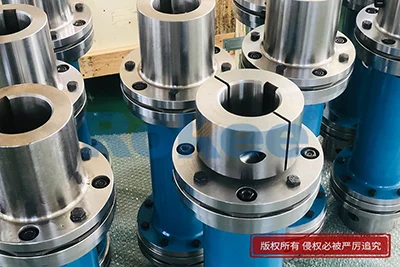
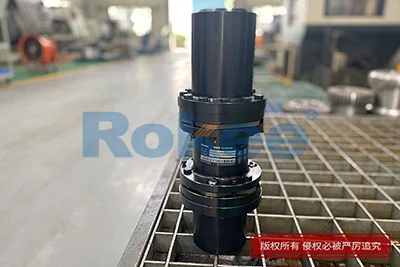
Medium duty flexible couplings possess distinct structural characteristics that adapt to medium-load industrial transmission scenarios, featuring compact layout, reasonable stress distribution, and convenient assembly and maintenance. Different from overly bulky heavy-duty couplings and structurally fragile light-duty couplings, their overall structure is optimized for moderate load bearing, with a streamlined and compact design that saves installation space and adapts to most conventional mechanical assembly environments. The internal structure abandons complex transmission accessories, adopting an integrated matching design of hubs and elastic components, which makes torque transmission more uniform and avoids local stress concentration. The structural design also reserves reasonable deformation allowance for elastic components, ensuring sufficient misalignment compensation capability without excessive deformation that affects transmission accuracy. In terms of assembly and later maintenance, the split structural form enables quick disassembly and replacement of worn elastic parts without disassembling the overall shaft system, greatly reducing equipment downtime and maintenance costs. These structural advantages make medium duty flexible couplings highly adaptable and practical in general industrial equipment.
Vibration damping and impact buffering are two of the most valuable functional advantages of medium duty flexible couplings, effectively solving common operational problems in industrial transmission systems. In the continuous operation of mechanical equipment, rotational friction, load changes, and motor operation will inevitably generate periodic vibration, which is transmitted along the shaft system and easily causes loose equipment connections, accelerated component wear, and increased operational noise. The internal elastic structure of medium duty flexible couplings can isolate most vibration transmission paths, weaken vibration amplitude between driving and driven ends, and reduce the overall vibration level of the equipment. For sudden impact loads generated by frequent start-stop, instantaneous load surge, or mechanical jitter, the elastic elements can quickly absorb and release impact energy through rapid compression and rebound deformation, buffer instantaneous torque changes, and protect precision components such as bearings, gears, and motor rotors from impact damage. This excellent damping and buffering performance greatly improves the operational stability of mechanical systems and reduces mechanical failure risks caused by vibration and impact.
Misalignment compensation capability is a core functional attribute that determines the operational reliability of medium duty flexible couplings, covering three common types of shaft deviation in industrial operation. In actual equipment assembly and operation, it is difficult to achieve absolute coaxiality of driving and driven shafts, and long-term operation will further trigger parallel offset, angular deflection, and axial displacement of the shafts. Medium duty flexible couplings rely on the elastic deformation of internal components to adaptively compensate for these three types of misalignment within a reasonable range. For parallel misalignment where the two shafts are staggered horizontally, the elastic structure produces lateral adaptive deformation to maintain synchronous rotation; for angular misalignment with shaft inclination, it balances the torque difference caused by deflection through uniform strain of elastic parts; for axial displacement generated by thermal expansion or mechanical movement, it reserves flexible shrinkage space to avoid axial extrusion stress. This all-round compensation capability eliminates additional friction and fatigue stress caused by shaft misalignment, ensuring long-term stable and efficient operation of the transmission system.
Medium duty flexible couplings enjoy a wide range of application scenarios, covering most medium-load and conventional-speed industrial mechanical transmission fields. In general manufacturing equipment such as conveyor machinery, packaging equipment, and processing auxiliary machinery, they are used to connect motor and reducer shafts, stabilizing power transmission and reducing equipment operational vibration. In light industrial and textile machinery, their precise transmission performance and low-noise operation adapt to high-frequency continuous working conditions, ensuring consistent equipment operation accuracy. In hydraulic and pneumatic power transmission systems, they buffer pressure fluctuation impact, protect hydraulic components from frequent load changes, and improve system operational stability. Additionally, they are widely applied in ventilation equipment, water pump units, and small and medium-sized power transmission devices, fully meeting the functional requirements of medium load, conventional speed, and long-term continuous operation in various industrial scenarios.
Correct daily maintenance and scientific selection methods are crucial to maximizing the service life and operational efficiency of medium duty flexible couplings. In terms of selection, users need to match the coupling model according to actual working conditions such as equipment transmission torque, rotational speed, vibration frequency, and installation space, avoiding performance attenuation or premature wear caused by overload operation or model mismatch. In daily operation, regular visual inspection is required to check for aging, cracking, deformation, or wear of internal elastic components, as well as loose assembly of hub connecting parts. Timely cleaning of surface dust and oil stains prevents corrosive substances from affecting the performance and service life of elastic materials. During equipment long-term shutdown or seasonal operation conversion, targeted inspection and debugging should be carried out to ensure the flexible structure maintains good deformation sensitivity. Scientific selection and standardized maintenance can effectively avoid early failure of couplings, reduce equipment operational costs, and ensure the long-term reliable operation of industrial transmission systems.


Links:
- Calibration Weight
- Digital Viscometer
- Carpas Industriales
- Exhibition Tent
- Industrial Cardan Shaft
- PU Sandwich Panel Machine
- PIR Sandwich Panel Line
- Sandwich Panel Machine
- Sandwich Panel Production Line
- PU Sandwich Panel Line
- Sandwich Panel Line
- Flexible Couplings Manufacturer In China
- Elastic Couplings Manufacturer In China