Adaptation Skills And Practice Of Flexible Coupling And PUR Sandwich Panel Production Line

The continuous advancement of industrial manufacturing technology has promoted the iterative upgrading of composite material production lines, among which PUR sandwich panel production lines have become essential production equipment in the field of building thermal insulation and lightweight structural materials. In the overall mechanical structure of the production line, flexible coupling serves as a core transmission component, undertaking the important task of connecting transmission shafts, transferring torque, and coordinating the operation of various mechanical units. Its adaptive performance directly affects the operating stability, production continuity and service life of the entire production line. In the complex production environment of PUR sandwich panels, mechanical vibration, axis deviation, alternating load and other adverse working conditions are ubiquitous, which puts forward higher requirements for the structural adaptability, material durability and motion coordination ability of flexible couplings. Mastering the adaptive application skills of flexible couplings and exploring practical optimization methods in the production line operation process is of great significance to improve the operational efficiency of PUR sandwich panel production lines, reduce mechanical failure rates, and stabilize product processing quality.
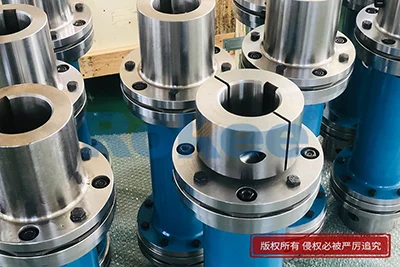
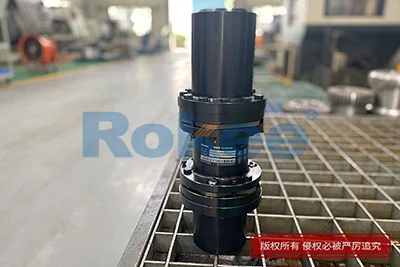
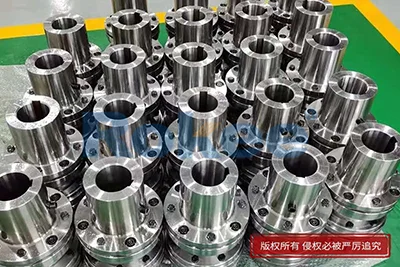
A flexible coupling is a mechanical component designed to connect two rotating shafts to transmit rotational torque, differing from rigid couplings in its unique deformable elastic structure. This structural feature enables it to effectively compensate for axial, radial and angular deviations between connected shafts during the operation of mechanical equipment. The basic composition of flexible couplings usually includes two metal half-couplings and intermediate elastic components, and the elastic parts can undergo reversible deformation such as compression, stretching and shearing under external force. In the working process, the elastic elements convert the instantaneous impact load generated by mechanical operation into elastic potential energy and release it slowly, thereby realizing vibration damping and buffering effects. This inherent adaptive mechanical property makes flexible couplings widely applicable to continuous production equipment with frequent start-stop, variable load and high vibration characteristics, which is highly consistent with the operating characteristics of PUR sandwich panel production lines.
The production process of PUR sandwich panels involves multiple continuous processing links such as raw material feeding, foaming compounding, pressing molding, constant-temperature curing and fixed-length cutting. Each processing link is driven by an independent power mechanism, and the transmission systems of all mechanisms need to maintain precise synchronous operation to ensure the flatness, uniform foaming density and stable dimensional accuracy of finished panels. The internal transmission system of the production line is composed of multiple sets of transmission shafts, gears and driving motors. Due to manufacturing errors of mechanical parts, installation deviation and thermal deformation during long-term operation, different degrees of axis misalignment will inevitably occur between adjacent transmission shafts. If rigid couplings are used for connection, the misalignment cannot be eliminated, which will cause additional shear stress on the shaft body, aggravate mechanical wear, and even produce severe vibration and noise during high-speed operation. Flexible couplings can rely on the elastic deformation of internal components to offset these deviations, maintain stable torque transmission, and avoid mechanical fatigue damage caused by long-term unbalanced stress, which is the core value of flexible couplings applied to PUR sandwich panel production lines.
The complex working environment of PUR sandwich panel production line puts forward diverse adaptive requirements for flexible couplings. First of all, the production line will generate continuous mechanical vibration during the pressing and foaming stages. The mixing and foaming of polyurethane raw materials requires mechanical stirring and high-pressure spraying, and the heavy-duty pressing equipment will produce periodic vibration during reciprocating operation. Long-term vibration will loosen the mechanical connection structure and affect the transmission accuracy. Flexible couplings can absorb vibration energy through elastic deformation, reduce vibration transmission between adjacent mechanical structures, and maintain the overall operational stability of the production line. Secondly, the production line will generate alternating loads during the switching of operating speeds. In the process of switching between raw material feeding, panel molding and finished product output, the operating speed of the transmission mechanism needs to be adjusted dynamically, and the instantaneous torque change will form an impact load on the transmission components. The elastic structure of flexible couplings can buffer such impact forces, reduce the rigid friction between shaft parts, and prolong the service life of transmission components such as bearings and shafts.
In addition to vibration and alternating load factors, the temperature and dust environment of the production workshop also tests the adaptive performance of flexible couplings. The foaming and curing process of PUR sandwich panels needs to be carried out in a constant-temperature closed space, and the local temperature of the pressing molding area is relatively high. Long-term high-temperature environment will affect the mechanical properties of elastic components of couplings. Meanwhile, tiny particle dust generated by raw material processing will adhere to the surface of coupling components, which may cause abrasion and clamping stagnation. Therefore, flexible couplings applied to PUR sandwich panel production lines need to have excellent temperature resistance and wear resistance. The selection of elastic materials with stable physical properties can ensure that the coupling maintains good elasticity and deformation recovery ability under high-temperature working conditions, while the optimized structural design can reduce dust accumulation and reduce the abrasion degree of moving contact parts.
The adaptive application skills of flexible couplings in PUR sandwich panel production lines run through the whole links of model selection, installation, debugging and daily operation. In terms of model selection, it is necessary to comprehensively judge the structural parameters of the coupling combined with the power parameters and operating characteristics of the production line. For the low-speed and heavy-load transmission parts such as the pressing roller and curing conveyor of the production line, flexible couplings with large torque density and strong deformation compensation ability should be selected to adapt to the low-frequency and high-amplitude vibration generated by heavy-duty operation. For the high-speed transmission parts such as raw material conveying pump and cutting transmission shaft, couplings with high torsional rigidity and sensitive dynamic response are required to ensure the synchronization accuracy of high-speed operation and avoid torque transmission lag affecting processing accuracy. In addition, the material of elastic components should be matched according to the environmental characteristics of different processing areas. Elastic components made of polyurethane materials can be used in high-temperature and wear-prone areas due to their high strength and wear resistance, while rubber elastic parts are more suitable for conventional vibration damping areas with mild working conditions.
Standardized installation and accurate debugging are key skills to give full play to the adaptive performance of flexible couplings. During the installation process, the coaxiality of the two connected transmission shafts should be strictly controlled. Although flexible couplings have axis deviation compensation capability, excessive initial installation deviation will increase the deformation load of elastic components, accelerate material fatigue aging, and reduce the service life of the coupling. It is necessary to use professional measuring tools to calibrate the shaft position, adjust the horizontal and vertical height of the shaft body, and minimize the installation gap and angle deviation. After the installation is completed, static debugging and low-speed trial operation should be carried out first to observe the deformation state of the elastic components and the rotation stability of the coupling. If abnormal vibration, jamming or eccentric rotation occur, the installation position needs to be adjusted in time to eliminate hidden dangers. In the formal debugging stage, the torque transmission efficiency under different operating speeds should be tested, and the connection tightness of the coupling fasteners should be optimized according to the load change rule of the production line to ensure that no sliding or loosening occurs during long-term operation.
In the daily operation and maintenance of PUR sandwich panel production lines, scientific use and maintenance skills can continuously maintain the adaptive performance of flexible couplings. During the formal production process, the staff should avoid sudden start-stop and extreme speed adjustment operations as much as possible. Frequent instantaneous load changes will cause repeated excessive deformation of elastic components, resulting in permanent structural deformation and loss of buffering compensation ability. Regular daily inspection work needs to be implemented, including checking the wear degree of elastic components, the fastening state of connecting bolts, and whether there is abnormal noise and heating during coupling operation. For the elastic parts with aging, cracking and obvious deformation, they should be replaced in a timely manner to prevent the damaged components from affecting the overall transmission performance of the production line. In terms of cleaning and maintenance, the dust and residual raw material attachments on the coupling surface should be cleaned regularly to avoid hard particles from aggravating component abrasion, and a small amount of lubricant should be applied to the rotating contact parts to reduce friction resistance and keep the operation flexible.
In the actual production practice of PUR sandwich panels, flexible couplings often face many adaptive challenges, and targeted optimization measures need to be adopted according to practical problems. In the long-term continuous production process, the repeated alternating stress will lead to fatigue aging of the elastic components of the coupling, resulting in reduced elasticity and weakened deviation compensation ability, which will further cause vibration of the transmission system and unstable panel processing size. To solve this problem, the replacement cycle of vulnerable elastic components can be formulated according to the production load and operating time, and high-performance composite elastic materials can be used to improve fatigue resistance. For the vibration resonance problem of individual transmission units of the production line, the vibration frequency of the mechanical structure can be changed by adjusting the hardness of the elastic components and optimizing the coupling connection gap, so as to avoid resonance and reduce vibration amplitude.
The synchronization coordination problem between multiple couplings is also a key difficulty in practical application. Each processing link of the PUR sandwich panel production line is connected in series, and the transmission speed of each unit needs to keep consistent. The difference in wear degree and deformation state of different couplings will lead to asynchronous transmission speed, resulting in uneven foaming thickness and edge warping of finished panels. In view of this problem, regular synchronous debugging of all transmission couplings should be carried out during equipment maintenance. The operating parameters of each coupling should be unified by means of speed calibration and torque adjustment, and the transmission difference between different units should be minimized to ensure the continuous and stable production of sandwich panels. In addition, for the harsh working conditions such as high temperature and humidity in the curing area, the coupling can be equipped with a protective shell structure to isolate heat and moisture, prevent the elastic materials from being affected by temperature and humidity to produce performance degradation, and improve the environmental adaptability of the coupling.
The reasonable application and adaptive optimization of flexible couplings have brought significant practical benefits to the operation of PUR sandwich panel production lines. In terms of production stability, the vibration damping and deviation compensation functions of flexible couplings reduce the mechanical failure rate of the transmission system, avoid production interruption caused by shaft body friction damage and connection loosening, and improve the continuous operation capacity of the production line. In terms of product quality, the stable torque transmission ensures the synchronization accuracy of each processing unit, making the foaming density, thickness flatness and overall dimensional consistency of PUR sandwich panels better, reducing the defective rate caused by mechanical transmission errors. In terms of production cost control, flexible couplings reduce the wear and damage of high-value mechanical parts such as transmission shafts and bearings, extend the maintenance cycle of the production line, and reduce the comprehensive maintenance cost of equipment.
With the continuous development of composite material manufacturing industry, the PUR sandwich panel production line is developing towards high automation, intelligent control and multi-specification flexible production. Higher requirements are put forward for the adaptive performance of flexible couplings in the future. On the one hand, it is necessary to develop new elastic composite materials with high temperature resistance, fatigue resistance and low creep property to adapt to more complex extreme working environments and prolong the service life of couplings. On the other hand, combined with intelligent monitoring technology, the operating state parameters such as deformation degree, vibration frequency and temperature of flexible couplings can be collected in real time, so as to realize early warning of component aging and fault prediction, and further improve the intelligent maintenance level of the production line. In addition, the structural design of flexible couplings needs to be optimized for the personalized transmission requirements of multi-specification sandwich panel production, so as to realize rapid adaptation to different production loads and speeds and meet the diversified production needs of the industry.
In conclusion, flexible coupling is an indispensable key component in PUR sandwich panel production lines, and its adaptive performance determines the operating quality and production efficiency of the entire mechanical transmission system. Starting from the structural characteristics and working mechanism of flexible couplings, this paper analyzes the adaptive requirements of production line working conditions for couplings, summarizes practical application skills including model selection matching, installation and debugging, daily maintenance, and proposes optimization solutions for common adaptive problems in actual production. In the future production practice, it is necessary to continuously combine the process characteristics of PUR sandwich panels, deepen the research on the adaptive optimization technology of flexible couplings, accumulate practical experience in equipment operation and maintenance, and realize the efficient, stable and low-consumption operation of production lines. This not only provides a guarantee for the improvement of the production quality and output of PUR sandwich panels, but also offers a reference for the adaptive application of flexible couplings in other continuous composite material production equipment, promoting the standardized and refined development of the composite material manufacturing industry.



Links:
- Calibration Weight
- Digital Viscometer
- Carpas Industriales
- Exhibition Tent
- Industrial Cardan Shaft
- PU Sandwich Panel Machine
- PIR Sandwich Panel Line
- Sandwich Panel Machine
- Sandwich Panel Production Line
- PU Sandwich Panel Line
- Sandwich Panel Line
- Flexible Couplings Manufacturer In China
- Elastic Couplings Manufacturer In China