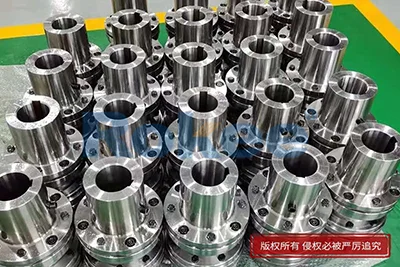
Flex Coupling

In the intricate and interconnected operating system of modern mechanical equipment, the stability and efficiency of power transmission determine the overall operating quality and service life of machinery and equipment. As a key basic component in power transmission structures, flex coupling has gradually become an irreplaceable core part of rotating machinery systems due to its unique elastic compensation performance and vibration damping characteristics. Unlike rigid connection structures that pursue absolute rigidity and positioning accuracy, flex coupling abandons the rigid transmission mode of hard contact and force conduction, and relies on controllable elastic deformation to complete torque transmission, shaft connection and dynamic error compensation. It effectively solves a series of practical problems in mechanical operation such as shaft misalignment, operational vibration, instantaneous impact load and thermal deformation displacement, providing a stable and reliable operational guarantee for various complex mechanical transmission scenarios. In the entire industrial transmission field where precision, stability and durability are increasingly valued, the subtle and flexible mechanical performance of flex coupling makes it a critical buffer and protection link between driving components and driven components.
The essential working logic of flex coupling lies in the elastic deformation characteristics of its internal flexible components, which realizes the organic balance between efficient torque transmission and dynamic error adaptation. In the actual assembly and operation process of mechanical equipment, it is almost impossible to achieve absolute coaxial alignment between the driving shaft and the driven shaft. Minor position deviations will inevitably occur due to manual assembly errors, structural settlement of equipment supports, thermal expansion and contraction of metal parts during long-term operation, and elastic deflection of components under load. These tiny deviations, if transmitted through rigid connection structures, will be converted into continuous alternating stress and friction force on the shaft body, bearings and connecting parts, resulting in accelerated component wear, increased operating noise, reduced transmission efficiency, and even mechanical failure and equipment shutdown in severe cases. Flex coupling perfectly makes up for this defect of rigid transmission. When misalignment occurs between the two connected shafts, the internal elastic components will produce reversible and controllable elastic deformation according to the actual offset direction and amplitude. This micro deformation will not interfere with the continuity and stability of torque and rotational power transmission, but can effectively offset parallel deviation, angular deviation and axial displacement between shafts, eliminate rigid extrusion and friction between mechanical parts, and realize flexible and error-adaptive power transmission.
Beyond basic displacement compensation, flex coupling undertakes the core functions of vibration damping and impact buffering in mechanical transmission systems, which is particularly critical for equipment with variable loads, frequent start-stop and reverse operation working conditions. Most mechanical equipment will produce instantaneous impact load during startup, shutdown, load mutation and speed switching. Such instantaneous impact force is extremely destructive to precision transmission components, which is easy to cause fatigue damage of shaft parts, loosening of connecting structures and performance attenuation of precision components. Meanwhile, the high-speed operation of rotating machinery will inevitably produce mechanical vibration, and the continuous vibration conduction will amplify the operating noise, affect the operating stability of the entire equipment system, and even cause resonance of the equipment support structure in special cases, triggering greater mechanical risks. The elastic elements inside flex coupling can effectively convert instantaneous impact kinetic energy into elastic potential energy for storage when the equipment is subjected to sudden load changes or impact forces. When the operating state tends to be stable and the impact load disappears, the elastic elements will slowly release energy and recover their original state, thereby weakening the impact amplitude and isolating the transmission of vibration energy between the front and rear shaft systems. This unique energy absorption and buffering mechanism greatly optimizes the dynamic operating environment of mechanical equipment and improves the overall operational stability of the transmission system.
The structural composition of flex coupling is simple and practical, with strong adaptability to different working conditions. Its basic structure is mainly composed of two metal hubs and intermediate flexible connecting elements. The two hubs are respectively fixed on the driving shaft and the driven shaft through fasteners, undertaking the functions of positioning and force transmission connection. The core flexible elements sandwiched between the two hubs are the key to realize all flexible functions of the coupling. According to different application scenarios and performance requirements, flexible elements can be made of various elastic materials with different characteristics, including high-elasticity polymer materials, composite materials and special metal elastic components. Different materials endow flex coupling with differentiated performance advantages: polymer elastic materials have excellent vibration damping performance and low-temperature flexibility, which can absorb high-frequency vibration and small-amplitude impact efficiently, and are suitable for light and medium-load transmission scenarios with stable speed and frequent start-stop; metal elastic components have high structural strength and fatigue resistance, can withstand large torque transmission and heavy-load impact, and maintain stable elastic compensation performance under high-temperature and high-strength operating conditions, meeting the operation requirements of heavy industrial mechanical equipment. In addition, most flex coupling structures do not need additional lubrication and maintenance in the operation process, with fewer wearing parts and lower later operation and maintenance costs, which is very suitable for long-term continuous operating industrial equipment.
Compared with traditional rigid couplings, the comprehensive performance advantages of flex coupling in practical industrial applications are very prominent. Rigid couplings rely on precise hard connection to ensure torque transmission accuracy, but they have zero tolerance for shaft misalignment and dynamic displacement. Once assembly deviation or operational displacement occurs, the transmission system will bear additional alternating load, leading to rapid wear of bearings and shaft sleeves, shortened equipment service life and increased failure rate. Flex coupling completely breaks through this limitation. It not only allows reasonable dynamic misalignment during equipment operation, but also actively eliminates the additional mechanical stress caused by misalignment through self-adaptive elastic deformation, realizing stress release and dynamic balance of the transmission system. In terms of operating protection, rigid transmission structures will directly transmit all impact loads and vibrations to the entire equipment system, while flex coupling can isolate most of the harmful dynamic loads, protect precision transmission components and core equipment structures, and greatly reduce the probability of fatigue damage and sudden failure of equipment. Although the torque transmission capacity of flex coupling is restricted by the strength of elastic elements and cannot fully match the ultimate bearing capacity of rigid couplings in extreme heavy-load scenarios, its comprehensive protection performance and operational stability make it more suitable for most civil and industrial mechanical transmission scenarios.
Flex coupling has a very wide range of application scenarios, covering light civil machinery, general industrial equipment and heavy industrial transmission systems. In fluid power equipment such as pumps and compressors, the operating state of the equipment is prone to fluctuation due to changes in medium pressure and flow rate, resulting in unstable load and slight vibration. The flexible connection performance of flex coupling can effectively adapt to the dynamic load changes of such equipment, isolate the vibration generated by fluid fluctuation, and ensure the stable operation of the pump body and compressor unit. In material conveying and processing equipment such as conveyors and mixers, frequent start-stop, forward and reverse switching and uneven material load will produce frequent impact loads. The buffering performance of flex coupling can weaken impact damage, reduce equipment operating noise, and extend the continuous operating cycle of the equipment. In precision transmission equipment such as automated production equipment and small and medium-sized transmission machinery, the vibration damping and error compensation functions of flex coupling can ensure the precise transmission of motion and torque, avoid transmission accuracy deviation caused by minor shaft displacement, and guarantee the processing and operation accuracy of precision equipment. In heavy-duty mechanical systems such as mining machinery and large-scale power transmission equipment, high-strength flex coupling with metal elastic elements can adapt to harsh working conditions such as heavy load, variable load and harsh environment, ensuring stable power output of large equipment.
The rational selection and standardized installation of flex coupling are important prerequisites to give full play to its performance advantages and ensure long-term stable operation of equipment. In the selection process, it is necessary to comprehensively judge according to the actual working conditions of the equipment, including the magnitude of transmission torque, operating speed, start-stop frequency, load fluctuation range, operating temperature and environmental conditions. For equipment with frequent start-stop and obvious load changes, flex coupling with excellent vibration damping and impact resistance should be prioritized to cope with continuous dynamic load changes; for high-speed rotating equipment, products with small deformation resistance and stable high-speed operation performance need to be selected to avoid additional dynamic unbalance caused by excessive elastic deformation; for high-temperature, low-temperature or corrosive working environments, flex coupling with corresponding material adaptability should be selected to ensure the structural stability and elastic performance of flexible elements in special environments. In the installation process, although flex coupling has a certain misalignment tolerance, excessive assembly deviation will still increase the deformation load of elastic elements, accelerate fatigue aging and affect the service life. Therefore, it is necessary to complete the alignment calibration of the two shafts in accordance with standardized installation procedures to control the misalignment within a reasonable range, so as to maximize the service life and operating efficiency of the coupling.
In the long-term operation and maintenance process, the performance attenuation law of flex coupling is relatively stable, and regular inspection and maintenance can effectively avoid equipment failures. The main aging and failure forms of flex coupling are fatigue deformation, elastic attenuation and structural damage of internal flexible elements after long-term alternating load action. With the increase of operating time, the elastic elements will gradually produce aging fatigue, resulting in reduced vibration damping capacity, weakened displacement compensation ability, and even cracking and damage in severe cases, which will directly affect the stability of the transmission system. Therefore, in the daily equipment maintenance work, it is necessary to regularly check the structural integrity of the flexible elements, observe whether there are deformation, aging, cracking and other abnormal phenomena, and check the fastening state of the hub and connecting fasteners to prevent loosening and displacement. Timely replacement of aging and failed flexible components can ensure the continuous and stable performance of the coupling, avoid transmission failure and equipment shutdown caused by component failure, and reduce the comprehensive operating cost of equipment.
With the continuous upgrading of modern mechanical equipment towards high speed, high precision and high stability, the technical requirements for flex coupling are also constantly improving, and its product design and performance optimization are also evolving continuously. Modern flex coupling design pays more attention to the matching degree of structural performance and equipment dynamic characteristics. Through optimized material ratio and structural innovation, it balances the contradiction between torque transmission capacity, elastic compensation performance and fatigue resistance, realizing higher transmission efficiency and longer service life. At the same time, with the popularization of intelligent manufacturing and automated production, flex coupling is also developing towards lightweight, modular and low-noise, which can better adapt to the refined operating requirements of modern precision machinery and intelligent equipment. As an inconspicuous but key basic component in mechanical transmission systems, flex coupling always undertakes the important task of connecting power, buffering vibration and protecting equipment. Its flexible mechanical characteristics make up for the inherent defects of rigid transmission, provide a safe and stable operating foundation for various mechanical equipment, and become an indispensable flexible core in modern industrial transmission systems. In the future, with the continuous progress of material technology and mechanical design technology, the performance of flex coupling will be further improved, and its application scope will be more extensive, continuing to provide reliable basic support for the efficient and stable operation of mechanical equipment in various fields.
Rokee is a professional manufacturer of industrial couplings in china, designing and customizing a wide range of drive shaft coupling products for customers worldwide. Submit your coupling drawings or technical specifications, and we can customize coupling products for you.
Coupling Categories



Links:
- Calibration Weight
- Digital Viscometer
- Carpas Industriales
- Exhibition Tent
- Industrial Cardan Shaft
- PU Sandwich Panel Machine
- PIR Sandwich Panel Line
- Sandwich Panel Machine
- Sandwich Panel Production Line
- PU Sandwich Panel Line
- Sandwich Panel Line
- Flexible Couplings Manufacturer In China
- Elastic Couplings Manufacturer In China