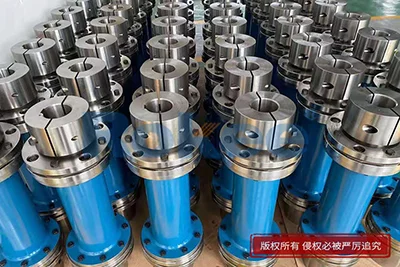
Flexible Coupling For Pump

Flexible couplings serve as indispensable connecting components in pump transmission systems, functioning as a critical bridge between pump bodies and driving motors to ensure efficient and stable power transmission. Unlike rigid coupling structures that pursue absolute shaft alignment, flexible pump couplings are designed with elastic deformation characteristics, enabling them to adapt to minor operational deviations during long-term equipment operation. These components primarily undertake core tasks including torque transmission, vibration absorption, and misalignment compensation, effectively resolving common operational problems such as shaft position deviation, mechanical vibration, and thermal expansion displacement in pump systems. In diverse pumping scenarios ranging from conventional fluid transportation to high-load industrial circulation, flexible couplings reduce rigid mechanical friction and structural stress, protect core pump accessories like bearings and seals from premature wear, and significantly improve the overall operational stability and service cycle of pump equipment. Their unique structural flexibility and adaptive performance make them a foundational guarantee for the safe and efficient operation of modern pump transmission systems.
The core working principle of flexible couplings for pumps centers on controllable elastic deformation and buffered torque transmission, which fundamentally differentiates them from rigid connection structures. During the normal operation of pump equipment, the driving motor outputs rotational torque, which is transmitted to the pump shaft through the flexible coupling’s elastic components. The elastic parts inside the coupling can produce mild compression, stretching or torsional deformation according to the real-time operating state of the equipment. This flexible deformation does not affect the continuity of torque transmission but effectively buffers the rigid impact generated during equipment startup, shutdown and load fluctuation. In actual operation, pump systems inevitably produce tiny parallel, angular and axial misalignment due to installation errors, equipment aging, foundation settlement and thermal expansion of metal components. Flexible couplings can automatically compensate for these minor deviations through their structural flexibility, avoiding the additional mechanical stress that misalignment imposes on pump shafts, bearings and motor spindles. This buffered transmission mode ensures that the pump runs smoothly under variable working conditions, eliminates jitter and stuck operation caused by rigid connection stress concentration, and lays a stable mechanical foundation for long-duration continuous operation of pump equipment.
Vibration and noise reduction is one of the most prominent functional advantages of flexible pump couplings, bringing significant improvements to the operational performance of pump systems. Mechanical vibration is an unavoidable problem in pump operation, stemming from rotor rotation deviation, fluid turbulence impact and periodic torque fluctuation. Rigid couplings directly transmit all vibration and shock between the motor and the pump, resulting in intensified equipment vibration, loud operating noise and accelerated aging of precision components. Flexible couplings rely on the damping performance of elastic materials and special structural design to isolate and absorb most high-frequency vibration and instantaneous shock energy generated during operation. The elastic elements inside the coupling can consume vibration energy through repeated micro-deformation, prevent vibration conduction between the driving and driven shafts, and reduce the overall vibration amplitude of the pump unit. Meanwhile, the suppression of mechanical vibration directly lowers the friction loss of matching parts, reduces abnormal noise generated by component collision and friction, and optimizes the on-site operating environment. Long-term vibration suppression also avoids loose connection, fatigue damage and structural deformation of pump accessories caused by continuous vibration, effectively improving the operational reliability of the entire fluid transmission system.
Flexible couplings for pumps deliver outstanding equipment protection effects and effectively reduce the long-term maintenance pressure of pump systems. Pump core components such as bearings, mechanical seals and impellers are precision vulnerable parts, which are extremely sensitive to rigid impact and alternating stress. In traditional rigid connection systems, minor shaft misalignment and load impact will form continuous alternating stress on these precision parts, leading to accelerated wear of bearings, seal leakage and impeller operational deviation, which greatly increases the frequency of equipment failure and maintenance costs. Flexible couplings can isolate most harmful alternating stress and instantaneous impact load through their flexible buffer performance, so that the stress borne by pump core components remains within a stable and safe range during operation. This protective mechanism effectively delays the aging and wear cycle of key accessories, reduces sudden equipment shutdown failures caused by component damage, and extends the overall service life of pump equipment. In addition, the excellent adaptive performance of flexible couplings reduces the precision requirements for equipment installation and later calibration, simplifies daily equipment inspection and maintenance work, and improves the operational efficiency of the entire pumping system.
There are diverse structural types of flexible pump couplings, each with unique performance characteristics adapted to different pump operating conditions. Common flexible coupling structures applied in pump equipment include elastomer compression type, diaphragm type and sleeve flexible type, all of which realize flexible connection through different structural designs without relying on complex transmission structures. Elastomer compression couplings utilize the elastic compression deformation of intermediate rubber or polymer components to transmit torque, featuring good damping effect and strong misalignment compensation ability, suitable for conventional medium and low-speed pump operation scenarios. Diaphragm flexible couplings rely on the elastic deformation of metal thin plates to complete power transmission, with high structural strength, strong high-speed adaptability and stable performance, ideal for high-speed and high-precision industrial pump systems. Sleeve flexible couplings adopt integrated flexible sleeve structures, featuring simple assembly, compact structure and low failure rate, which are widely used in small and medium-sized civil and general industrial pump equipment. Different structural designs endow flexible couplings with targeted performance advantages, enabling them to match the operational characteristics of various pumps and meet the diversified working condition requirements of fluid transmission systems.
The rational selection of flexible couplings is crucial to maximizing the operational efficiency and stability of pump systems, requiring comprehensive consideration of multiple operational factors. When selecting a flexible coupling for pump matching, the primary consideration is the torque matching degree between the coupling and the pump motor system, ensuring that the coupling’s torque bearing capacity can adapt to the rated operating torque and instantaneous peak torque of the pump to avoid elastic component failure or power transmission lag caused by overload. Secondly, the operating speed range of the coupling should match the pump’s rotational speed, as different flexible structures have distinct high-speed stability, and mismatched speed will lead to increased vibration and reduced transmission efficiency. In addition, the operating environment of the pump needs to be fully considered, including temperature changes, fluid corrosion and dust humidity conditions. For high-temperature and corrosive working environments, couplings with high-temperature resistance and corrosion-resistant elastic materials should be selected to ensure long-term stable performance. Reasonable type selection can give full play to the flexible coupling’s damping and compensation advantages, avoid performance mismatch caused by blind selection, and ensure the long-term efficient and stable operation of the pump unit.
Standardized installation and daily maintenance are key prerequisites to maintain the long-term performance stability of flexible pump couplings. During the installation process, precise shaft alignment is still required within the adaptive range of flexible couplings. Although flexible structures can compensate for minor misalignment, excessive installation deviation will lead to long-term overload deformation of elastic components, accelerated fatigue damage and reduced damping performance. The installation process needs to ensure tight and symmetrical connection of fastening parts, avoid eccentric stress caused by uneven locking, and reserve a reasonable telescopic gap according to the pump’s thermal expansion characteristics to adapt to axial displacement during equipment operation. In daily maintenance, regular visual inspection of the coupling’s elastic components is needed to check for aging, cracking, deformation and wear, and damaged parts should be replaced in a timely manner to avoid affecting transmission performance. It is also necessary to regularly clean the dust and dirt on the coupling surface to prevent foreign matter from affecting elastic deformation and torque transmission. Scientific installation and maintenance can effectively extend the service life of flexible couplings, maintain their optimal damping and compensation performance, and provide continuous and reliable protection for pump system operation.
With the continuous upgrading of industrial fluid transmission technology, the technical performance of flexible couplings for pumps is also constantly optimized and iterated to adapt to increasingly complex working conditions. Modern pump systems are developing towards high-speed, high-load and intelligent operation, putting forward higher requirements on the vibration damping capacity, misalignment compensation accuracy and fatigue resistance of supporting couplings. The updated flexible coupling products adopt new high-elasticity and high-toughness composite materials, which effectively improve the structural durability and environmental adaptability of elastic components, and can maintain stable performance in extreme working environments such as variable temperature and variable load. At the same time, optimized structural design further enhances the coupling’s torque transmission efficiency while reducing self-loss during operation, helping pump equipment achieve energy-saving operation. In the future, with the integration of intelligent monitoring technology, flexible pump couplings will realize real-time monitoring of deformation state and service life, providing more accurate data support for equipment operation and maintenance, and further improving the intelligent and reliable level of modern fluid transmission systems.



Links:
- Calibration Weight
- Digital Viscometer
- Carpas Industriales
- Exhibition Tent
- Industrial Cardan Shaft
- PU Sandwich Panel Machine
- PIR Sandwich Panel Line
- Sandwich Panel Machine
- Sandwich Panel Production Line
- PU Sandwich Panel Line
- Sandwich Panel Line
- Flexible Couplings Manufacturer In China
- Elastic Couplings Manufacturer In China