Flexible Elastomeric Coupling

In the intricate ecosystem of mechanical power transmission systems, the seamless connection between rotating shafts stands as a fundamental prerequisite for stable and efficient equipment operation. Among various shaft connection components, flexible elastomeric couplings have emerged as an indispensable mechanical element, distinguished by their unique structural composition, elastic deformation characteristics, and comprehensive adaptive performance. These specialized mechanical components are engineered to link adjacent rotating shafts within power transmission assemblies, accomplishing the basic torque transmission function while utilizing the inherent elastic properties of non-metallic elastomeric materials to mitigate mechanical defects prevalent in traditional rigid connection structures. Unlike rigid couplings that emphasize absolute shaft fixation and rigid torque transfer, flexible elastomeric couplings prioritize the balance between transmission stability and structural flexibility, effectively resolving a multitude of operational challenges generated during the mechanical movement process. Their widespread application spans general mechanical manufacturing, industrial processing, energy transmission, transportation machinery, and fluid handling equipment, establishing a vital foundational role in modern industrial mechanical systems.
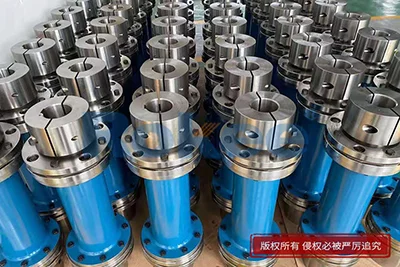
The fundamental structural composition of flexible elastomeric couplings follows a mature and optimized mechanical design logic, consisting primarily of two rigid metal connecting hubs and an intermediate elastomeric elastic component. The metal hubs, usually fabricated from high-strength metal alloys with excellent mechanical rigidity and structural stability, serve as the mounting and connecting base for the entire coupling. These metal parts are precisely processed with shaft holes and connecting structures to achieve tight mechanical fixation with the driving shaft and driven shaft, ensuring reliable torque conduction between the shaft bodies. The core functional part of the coupling lies in the intermediate elastomeric component, which acts as the flexible connection medium between the two metal hubs. This elastic component is ingeniously embedded or clamped between the metal hubs, forming an integrated connection structure that combines rigid metal support and flexible elastic deformation. The overall structural design abandons complex transmission mechanisms and redundant accessory parts, presenting a compact and streamlined assembly form. Such a simple structural layout not only lowers the difficulty of mechanical processing and assembly but also enhances the structural robustness of the coupling, enabling it to maintain stable working conditions in complex and variable industrial environments without prone to structural loosening or mechanical failure.
The diversity of elastomeric materials constitutes the core performance foundation of flexible elastomeric couplings, and different types of polymer elastic materials endow couplings with distinct operational characteristics to adapt to differentiated working conditions. Common elastomeric materials applied in coupling manufacturing include natural rubber, chloroprene rubber, ethylene propylene diene monomer, polyurethane, and other synthetic polymer materials. Natural rubber boasts exceptional elasticity and excellent deformation recovery capability, with low internal damping resistance during deformation, making it suitable for conventional working environments with mild operating conditions and low medium corrosion. Chloroprene rubber exhibits outstanding aging resistance and anti-oxidation performance, effectively resisting the erosion of air oxidizing components and ultraviolet radiation, and can maintain stable physical properties in open-air working environments for an extended period. Ethylene propylene diene monomer stands out for its superior high-temperature resistance and chemical corrosion resistance, capable of adapting to extreme temperature fluctuation environments and resisting the corrosion of weak acid and weak alkali chemical media. Polyurethane materials possess high structural strength and wear resistance, with strong bearing capacity for cyclic impact loads, ideal for mechanical systems with frequent start-stop movements and high-intensity operation requirements. Each elastomeric material has unique physical and chemical attributes, and the reasonable selection of raw materials based on actual working parameters becomes a key link to optimize the service performance and service life of couplings.
The internal working principle of flexible elastomeric couplings is derived from the elastic deformation characteristics of polymer materials and the energy conversion mechanism in mechanical motion. During the equipment operation process, the driving shaft drives one metal hub to perform rotational motion, and torque is transmitted to the other metal hub through the intermediate elastomeric component, thereby realizing the synchronous rotation of the driven shaft and completing the power transmission process. In this torque transmission cycle, the elastomeric component undergoes controllable elastic deformation under the action of torsional force. This reversible deformation does not cause permanent structural damage to the material but converts the unstable mechanical energy generated by shaft vibration, displacement deviation, and impact load into internal thermal energy of the material through molecular friction inside the elastomer, which is then dissipated into the external environment. This unique energy dissipation mechanism effectively suppresses mechanical vibration and operating noise, achieving the dual effects of vibration reduction and noise suppression. Additionally, the elastic deformation margin of the elastomeric material can compensate for various alignment deviations between the driving shaft and the driven shaft, including axial displacement, radial offset, and angular deflection generated during equipment installation and long-term operation.
Shaft misalignment is an inevitable mechanical problem in the assembly and operation of rotating mechanical systems, stemming from multiple factors such as manual installation errors, equipment foundation settlement, component thermal expansion and contraction, and long-term mechanical wear. Tiny deviations that are difficult to observe with the naked eye will produce continuous additional mechanical stress on the shaft body, bearings, and connecting components during high-speed rotation. If rigid couplings are adopted, these stresses cannot be released effectively, leading to intensified component wear, increased operating temperature, and even fatigue fracture of mechanical parts in severe cases. Flexible elastomeric couplings perfectly address this pain point by virtue of the flexible characteristics of elastic materials. Within the allowable deformation range, the elastomeric component can freely adjust its spatial structure to adapt to irregular shaft displacement, dispersing and releasing the additional stress generated by misalignment. This passive compensation capability eliminates the mechanical extrusion and friction between rigid structures, significantly reducing the wear degree of shafts and bearings and extending the overall service life of mechanical transmission systems.
Vibration and noise control represent another critical functional advantage of flexible elastomeric couplings. In industrial mechanical operation, mechanical vibration originates from torque fluctuation, rotational speed change, and contact impact between internal components. Long-term high-frequency vibration will not only damage the structural stability of mechanical equipment but also interfere with the normal operation of surrounding precision components. Meanwhile, mechanical friction and vibration resonance will produce continuous operating noise, deteriorating the industrial operation environment. The internal molecular structure of elastomeric materials has excellent damping characteristics, which can restrict the propagation of vibration waves between shafts. When vibration energy is transmitted to the elastomeric component, the viscoelasticity of the material slows down the vibration conduction speed and consumes vibration energy continuously. In terms of noise reduction, the elastic isolation structure cuts off the solid-borne noise transmission path between rigid metal components, avoiding harsh collision noise caused by direct metal contact. In closed mechanical workshops and precision processing production lines, this vibration and noise suppression performance can effectively optimize the operating environment and reduce the interference of mechanical vibration on high-precision processing equipment.
In terms of load adaptation, flexible elastomeric couplings demonstrate excellent shock absorption and buffer performance, showing strong tolerance to abrupt load changes. Many industrial mechanical equipment will generate instantaneous overload impact load during start-up, shutdown, and sudden working condition switching. Such instantaneous impact force is extremely destructive to rigid transmission structures, easily causing metal component deformation and internal structural fatigue. The elastomeric intermediate layer of the coupling can produce transient large deformation under impact load, buffering the instantaneous pressure peak and delaying the force transmission speed. This buffering process smooths the torque change curve in the transmission system, avoiding sharp torque fluctuations. For mechanical equipment operating under intermittent working conditions and variable load working modes, this load buffering capability can effectively protect power components such as motors and reducers, reducing the failure probability of core power parts caused by impact load fatigue.
The installation and maintenance advantages of flexible elastomeric couplings further enhance their application value in industrial production. The overall structural design is concise and user-friendly, with no complicated assembly processes or professional installation tools required. Most coupling products adopt an embedded assembly structure, enabling direct insertion and fixation after shaft alignment, which greatly shortens the equipment assembly cycle. In terms of daily maintenance, the coupling has low failure rates and stable operating performance, requiring no frequent lubrication and regular debugging like metal transmission components. The vulnerable part is only the intermediate elastomeric component, which features a simple replacement process and low replacement cost. When the elastic material ages and fails after long-term operation, workers can complete component disassembly and replacement in a short time without disassembling a large number of mechanical structures. This convenient maintenance method reduces equipment downtime and maintenance labor costs, improving the continuous operation efficiency of industrial production lines.
Nevertheless, flexible elastomeric couplings have inherent performance limitations restricted by material characteristics, and their application scope needs to be reasonably defined according to working conditions. The heat resistance of most polymer elastomeric materials is limited. In high-temperature working environments with sustained extreme heat, the molecular structure of elastic materials is prone to thermal aging, resulting in decreased elasticity, material hardening and cracking, which ultimately weakens the coupling's compensation and vibration reduction capabilities. Meanwhile, the overall structural strength of elastomeric materials is lower than that of metal materials, so they cannot withstand long-term ultra-high torque transmission and continuous severe impact loads. In addition, some special elastomeric materials are sensitive to chemical media such as organic solvents and strong corrosive liquids, and long-term exposure to harsh chemical environments will accelerate material corrosion and damage. In practical industrial applications, mechanical engineers need to comprehensively evaluate environmental temperature, load intensity, medium characteristics, and operating duration to select couplings with matching material attributes, so as to avoid performance attenuation and structural damage caused by mismatched working conditions.
The service life attenuation law of flexible elastomeric couplings is closely related to material fatigue and environmental aging. Under normal working conditions with matched operating parameters, the elastomeric component will undergo repeated cyclic deformation with the rotation of the shaft. Long-term cyclic stress will cause fatigue changes in the internal molecular structure of the material, gradually reducing the elasticity and toughness of the elastomer. External environmental factors such as ambient temperature, air humidity, ultraviolet radiation, and dust accumulation will also accelerate the aging process of elastic materials. In the initial stage of use, the coupling has stable deformation performance and excellent vibration reduction effect. After a certain period of operation, the elastomer will experience slight hardening, creep, and wear, accompanied by a slow decline in compensation capability. In the later stage of service, surface cracks and structural peeling will appear on the elastic component, and the damping performance will decrease sharply. Timely regular inspection and replacement of aging components are essential measures to ensure the stable operation of the transmission system.
In different industrial application scenarios, flexible elastomeric couplings present differentiated application forms and functional emphasis. In general manufacturing machinery such as textile equipment, printing machinery, and food processing machinery, the operating load is stable, the operating speed is moderate, and the working environment is mild. Couplings in these scenarios mainly undertake basic torque transmission and slight vibration reduction tasks, requiring balanced comprehensive performance and low operating cost. In fluid transportation equipment represented by water pumps and fans, the mechanical vibration generated by fluid turbulence is obvious, and shaft misalignment caused by foundation vibration is prominent. Couplings here focus on vibration isolation and displacement compensation to reduce the vibration transmission between pump bodies and power motors. In heavy-duty transportation machinery and mining auxiliary equipment, the equipment starts and stops frequently with frequent load fluctuations, and couplings need to rely on high-toughness elastomeric materials to resist impact loads and buffer instantaneous torque changes. In precision electronic manufacturing and optical instrument processing equipment, couplings are required to have extremely low vibration amplitude and low noise characteristics to avoid interfering with the precision positioning of components.
Compared with other common coupling types in the mechanical industry, flexible elastomeric couplings have unique competitive advantages and applicable boundaries. Rigid couplings have high structural strength and torque transmission efficiency but lack deformation compensation capability, making them only suitable for scenarios with extremely high shaft alignment accuracy and stable load operation. Metal diaphragm couplings and gear couplings can adapt to high torque and high-temperature working environments, but they have complex structures, high processing costs, and strict requirements for installation accuracy, accompanied by obvious metal friction noise during operation. Spring couplings have good elastic deformation capability but poor structural stability, prone to elastic fatigue and deformation failure under long-term cyclic load. Flexible elastomeric couplings balance cost, performance, and applicability, with moderate manufacturing costs, simple installation procedures, and excellent comprehensive capabilities in vibration reduction, noise reduction, and displacement compensation. Although they have deficiencies in high-temperature resistance and ultra-high torque bearing capacity, they can meet the working needs of most conventional industrial mechanical systems.
With the continuous progress of polymer material technology and mechanical optimization design, the performance upgrading of flexible elastomeric couplings is advancing steadily. Modern material modification technology optimizes the molecular structure of traditional elastomers by adding reinforcing fillers and anti-aging additives, effectively improving the material's high-temperature resistance, corrosion resistance, and fatigue resistance. Advanced structural optimization design adjusts the shape, thickness, and connection mode of elastomeric components, optimizing the stress distribution inside the coupling during torque transmission, reducing local stress concentration, and extending the service cycle of elastic parts. In addition, the lightweight design of metal hubs gradually becomes a development trend. High-strength lightweight alloy materials replace traditional ordinary carbon steel, reducing the overall weight of the coupling without reducing structural strength, which helps reduce the rotational inertia of the transmission system and improve equipment operation sensitivity.
In the entire mechanical transmission industry chain, flexible elastomeric couplings undertake the basic connection and protection functions, and their operational status directly affects the overall stability, energy consumption, and failure rate of mechanical equipment. A high-quality flexible elastomeric coupling can effectively reduce the mechanical wear of transmission components, lower the energy consumption loss caused by vibration friction, and prolong the maintenance cycle of equipment. For industrial production enterprises, the application of such couplings reduces equipment maintenance costs and production downtime, bringing indirect economic benefits to production activities. From the perspective of industrial environmental protection, the excellent noise reduction performance of couplings optimizes the industrial operating acoustic environment and reduces noise pollution in the production area. At the same time, the efficient and stable transmission performance reduces invalid energy loss in mechanical operation, which conforms to the energy-saving and consumption-reducing development concept of modern industry.
In actual engineering application and equipment selection, mechanical designers need to formulate scientific selection standards based on multiple dimensional parameters. First, the rated torque and instantaneous impact torque of the transmission system should be clarified to ensure that the coupling's bearing capacity matches the load demand. Second, the axial, radial, and angular deviation ranges of the shafts during equipment operation should be measured to select couplings with sufficient deformation compensation margin. In addition, the environmental temperature, medium composition, and dust humidity conditions of the working site need to be comprehensively considered to determine the material type of the elastomeric component. After the installation is completed, it is necessary to conduct no-load debugging and load operation detection to observe the vibration amplitude, temperature change, and operating noise of the coupling, so as to eliminate hidden dangers such as abnormal friction and structural jamming. In the daily use stage, regular surface inspection and performance detection should be carried out to record the aging degree of elastomeric components, and replacement plans should be formulated in advance to avoid equipment failure caused by component aging.
Looking ahead to the industrial development trend, the intelligent and refined upgrading of mechanical equipment will put forward higher performance requirements for flexible elastomeric couplings. In the field of intelligent automated production equipment, couplings need to maintain high-precision transmission stability under high-speed operation and have more sensitive vibration response capabilities to cooperate with intelligent monitoring systems to realize equipment fault early warning. In the field of new energy equipment and extreme working condition machinery, it is necessary to develop special elastomeric materials with ultra-low temperature resistance, high temperature resistance, and strong corrosion resistance to expand the application boundary of couplings. Meanwhile, with the popularization of green manufacturing concepts, the research and development of recyclable and degradable environmentally friendly elastomeric materials will become an important development direction, reducing the environmental pollution caused by waste coupling components. Through continuous material innovation, structural optimization, and application iteration, flexible elastomeric couplings will maintain irreplaceable application value in the field of mechanical transmission and continuously empower the stable and efficient operation of modern industrial mechanical systems.


Links:
- Calibration Weight
- Digital Viscometer
- Carpas Industriales
- Exhibition Tent
- Industrial Cardan Shaft
- PU Sandwich Panel Machine
- PIR Sandwich Panel Line
- Sandwich Panel Machine
- Sandwich Panel Production Line
- PU Sandwich Panel Line
- Sandwich Panel Line
- Flexible Couplings Manufacturer In China
- Elastic Couplings Manufacturer In China