Stainless Steel Elastic Coupling

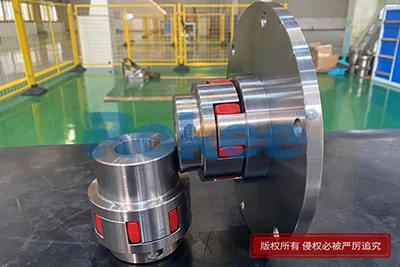
Stainless steel elastic coupling is a high-performance mechanical transmission component designed to connect driving and driven shafts and transmit rotational torque in modern mechanical systems. Differing from conventional rigid and rubber elastic couplings, it relies on the elastic deformation of integral stainless steel structures to complete power transmission, integrating torque transmission, vibration damping and shaft deviation compensation into one unit. Featuring excellent metal stability and structural elasticity, this coupling effectively eliminates transmission backlash and mechanical hysteresis during operation, ensuring precise and consistent power output. Its unique material properties enable it to adapt to complex and harsh working environments that ordinary couplings cannot withstand. Widely applied in precision automation, industrial processing and high-speed transmission equipment, it has become a core component for improving mechanical transmission accuracy, operational stability and service durability of mechanical equipment.
The core operational principle of stainless steel elastic coupling centers on controllable elastic deformation of metal structures during power transmission. When mechanical equipment starts to operate, rotational torque generated by the driving shaft is evenly transferred to the driven shaft through the elastic components of the coupling. Unlike traditional couplings that rely on gap meshing or rubber compression for power transmission, this all-metal structural design completely avoids free play and motion loss in the transmission process. During high-speed rotation and variable load operation, the stainless steel elastic part produces tiny, reversible elastic deformation to buffer instantaneous torque fluctuations and absorb mechanical vibration generated by equipment operation. Meanwhile, the structural elasticity can automatically compensate for minor axial, radial and angular deviations between the two connected shafts caused by installation errors, equipment wear and thermal expansion. This real-time compensation effect prevents additional mechanical stress from accumulating on the shaft and bearing components, effectively reducing equipment operation failure rate and maintaining long-term stable transmission accuracy of the mechanical system.
The superior comprehensive performance of stainless steel elastic coupling stems from the unique physical and chemical properties of stainless steel materials. Compared with aluminum alloy, carbon steel and rubber materials commonly used in traditional couplings, stainless steel has outstanding corrosion resistance, with a dense self-repairing protective film on its surface that can isolate moisture, oxygen and chemical corrosives in the external environment. This enables the coupling to maintain stable structural performance in humid, dusty and slightly corrosive working conditions without rusting, oxidation or structural aging. In terms of mechanical properties, stainless steel boasts high tensile strength and fatigue resistance, able to withstand frequent alternating loads and long-term high-speed operation without elastic fatigue failure. Although stainless steel has slightly higher density than lightweight alloy materials, its optimized structural design effectively controls inertial mass, balancing structural stability and operational flexibility. In addition, stainless steel materials retain stable mechanical properties in a wide temperature range, free from softening, hardening or performance attenuation caused by temperature changes, laying a solid material foundation for all-weather stable operation of the coupling.
Structural design advantages endow stainless steel elastic coupling with irreplaceable application value in precision mechanical transmission scenarios. Most products adopt integrated or laminated elastic structure, with compact overall layout and no redundant transmission accessories, which greatly saves installation space and simplifies the assembly process of mechanical transmission systems. The streamlined structural design ensures uniform stress distribution during torque transmission, avoiding local stress concentration and structural damage caused by uneven force. The zero-backlash structural feature is its core competitive advantage in precision transmission fields. In servo control, numerical control processing and automated positioning equipment, tiny transmission errors will directly affect the final processing and positioning accuracy, and the gap-free transmission mode of stainless steel elastic coupling completely eliminates positioning deviation caused by transmission backlash. Moreover, the metal elastic structure has excellent vibration isolation and noise reduction effects, which can weaken high-frequency vibration generated by equipment operation, reduce mechanical resonance risks, lower operational noise, and create a more stable and low-noise working state for mechanical equipment.
Stainless steel elastic coupling shows remarkable durability and low maintenance characteristics in long-term industrial application. Traditional rubber elastic couplings are prone to aging, deformation and wear after long-term use, requiring regular replacement and maintenance, which increases equipment downtime and operational costs. In contrast, the all-metal stainless steel elastic structure has no vulnerable wearing parts and no aging failure risk of non-metal materials. It can maintain stable elastic performance and transmission accuracy after tens of thousands of hours of continuous operation. The smooth and dense surface of stainless steel is not easy to accumulate dust and impurities, with excellent self-cleaning performance, and will not cause transmission jitter or accuracy decline due to dirt accumulation. In daily equipment operation, this coupling basically does not need regular lubrication, calibration and parts replacement, greatly reducing daily maintenance workload and maintenance costs. Its long service life and maintenance-free performance effectively improve the continuous operation efficiency of industrial equipment, reduce production interruption losses caused by component failure, and bring stable economic benefits to industrial production.
The application scenarios of stainless steel elastic coupling cover multiple high-precision and harsh working condition industries, fully adapting to the diversified development needs of modern machinery manufacturing. In precision automation equipment such as servo motors, robotic arms and automated assembly lines, it ensures high-precision positioning and synchronous transmission, guaranteeing the accurate execution of automated production actions. In numerical control processing equipment, precision machine tools and testing instruments, it eliminates transmission errors and vibration interference, improving product processing accuracy and detection reliability. In chemical, pharmaceutical and food processing equipment with high environmental cleanliness and corrosion resistance requirements, its anti-corrosion and anti-oxidation properties avoid equipment contamination and structural damage. In high-speed rotating equipment such as fans, pumps and precision transmission units, it stabilizes high-speed operation, reduces vibration and noise, and extends the service life of rotating components. Its strong environmental adaptability and performance stability make it a key matching component for upgrading modern high-end mechanical equipment.
In terms of operational stability and safety, stainless steel elastic coupling has excellent overload buffering and fault tolerance capabilities. During equipment start-up, stop and load sudden changes, the elastic deformation of stainless steel structure can effectively buffer instantaneous impact torque, avoid rigid impact between shafts, and protect core components such as motors, bearings and reducers from impact damage. When minor shaft misalignment and equipment operation deviation occur, its flexible compensation performance can absorb abnormal stress in time, preventing mechanical locking, shaft breakage and equipment jitter failures caused by rigid connection stress concentration. The high structural rigidity of stainless steel ensures that the coupling will not produce excessive deformation or torsion displacement under rated load, maintaining stable torque transmission efficiency. Even in unstable working conditions such as frequent start-stop and variable speed operation, it can always keep consistent transmission performance, avoid equipment operation fluctuation, and improve the overall operational safety and reliability of the mechanical transmission system.
With the continuous upgrading of modern mechanical manufacturing towards high precision, high speed and high stability, the market demand for stainless steel elastic coupling is constantly improving, and its structural optimization and performance upgrading are also advancing continuously. Modern design and processing technologies further optimize the elastic structure of the coupling, realizing more precise displacement compensation and more efficient torque transmission while maintaining compact volume. Advanced processing and surface treatment technologies further enhance the surface finish and structural fatigue resistance of stainless steel components, making the product more adaptable to extreme working conditions. Compared with traditional transmission components, stainless steel elastic coupling perfectly balances precision, stability, durability and environmental adaptability, solving many pain points of traditional couplings such as easy aging, low precision and poor environmental resistance. In the future, with the continuous development of intelligent manufacturing and high-end equipment manufacturing, this high-performance coupling will be more widely popularized and applied, becoming an indispensable basic component for promoting the high-quality development of modern mechanical transmission technology.




Links:
- Calibration Weight
- Digital Viscometer
- Carpas Industriales
- Exhibition Tent
- Industrial Cardan Shaft
- PU Sandwich Panel Machine
- PIR Sandwich Panel Line
- Sandwich Panel Machine
- Sandwich Panel Production Line
- PU Sandwich Panel Line
- Sandwich Panel Line
- Flexible Couplings Manufacturer In China
- Elastic Couplings Manufacturer In China