Rubber Elastic Coupling

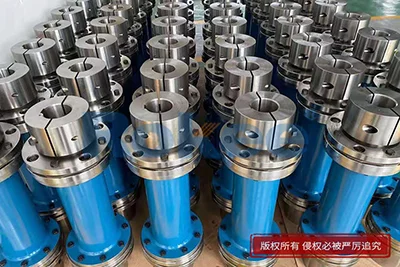
Rubber elastic couplings are indispensable flexible mechanical components widely applied in modern industrial transmission systems, serving as a critical connection between driving and driven equipment. Differing from rigid coupling structures, these components rely on high-elastic rubber materials as the core functional medium to achieve stable torque transmission while integrating multiple practical performances such as vibration absorption, shock buffering, and misalignment compensation. In various mechanical operation scenarios, shaft installation deviation, equipment operation vibration, and instantaneous impact load are inevitable, and rigid transmission parts often fail to adapt to these complex dynamic conditions, easily causing equipment wear, noise amplification, and shortened service life. Rubber elastic couplings effectively solve these industrial pain points through the unique elastic deformation characteristics of rubber. They can moderately offset axial, radial, and angular misalignment generated during equipment assembly and operation, weaken torsional vibration in the transmission process, and isolate mechanical noise. With simple structure, convenient installation and maintenance, and strong environmental adaptability, they have become a preferred matching part for various rotating mechanical equipment, ensuring the stability, safety, and durability of the entire transmission system.
The core working principle of rubber elastic couplings centers on the excellent elastic deformation and resilient recovery properties of elastomer materials, which fundamentally differentiates them from traditional rigid transmission accessories. The overall structure of the coupling mainly consists of two metal hub components and a vulcanized rubber elastic body clamped between the hubs, where the metal hubs are responsible for fixed connection with the driving and driven shafts respectively, and the rubber elastic body undertakes the core tasks of torque transmission and dynamic adjustment. During equipment operation, the rotational torque output by the power device is transmitted to the driven shaft through the elastic deformation of the rubber body. When the transmission system generates slight shaft misalignment due to assembly errors, mechanical vibration, or thermal expansion and contraction of parts, the rubber material can produce controllable elastic distortion to adapt to such displacement changes, avoiding rigid friction and extrusion between shafts. Meanwhile, when the machine starts, brakes, or bears instantaneous impact loads, the rubber elastic body can absorb and release impact energy through repeated deformation, effectively buffering sudden load changes. This flexible transmission mode eliminates rigid stress concentration in the transmission system, reduces the mechanical tension of each component, and lays a foundation for long-term stable operation of mechanical equipment.
Material performance determines the core service quality and application scope of rubber elastic couplings, and the selection and processing technology of rubber materials are key links affecting their comprehensive performance. High-quality rubber elastic couplings mostly adopt specially formulated composite rubber materials processed by professional vulcanization technology, which endows the material with balanced elasticity, toughness, and fatigue resistance. Natural rubber substrates are often used as the main material due to their excellent resilience and low deformation resistance, enabling efficient vibration damping and flexible deformation. On this basis, modified additives are incorporated to enhance the material’s aging resistance, wear resistance, and temperature adaptability, preventing performance degradation caused by long-term operation, environmental temperature changes, or air oxidation. After high-temperature vulcanization treatment, the rubber material forms a stable integrated structure with good structural compactness, avoiding cracking, deformation, or peeling under long-term cyclic load. Different material formulas can adapt to different operating environments: optimized formulas can resist high-temperature aging for high-temperature working scenarios, while enhanced wear-resistant formulas are suitable for high-frequency vibration and friction environments. The superior material properties ensure that the coupling maintains stable elastic performance and structural integrity during long-term continuous operation, reducing the frequency of replacement and failure.
Rubber elastic couplings possess multiple unique structural advantages that make them highly adaptable to complex industrial working conditions, with simple and compact design bringing diverse practical values. Compared with other types of flexible couplings, their overall structural size is more compact, occupying less installation space, which is very suitable for mechanical equipment with limited internal assembly space. The integrated structural design of rubber and metal hubs simplifies the overall assembly process, realizing fast positioning and installation without complex auxiliary tools or precise debugging procedures. In daily use, the coupling does not require regular lubrication, tightening adjustment, or complicated maintenance operations, achieving a maintenance-free operating state for a long time and greatly reducing equipment operation and maintenance costs. In addition, the structural flexibility of the coupling enables it to bear alternating loads and frequent start-stop working conditions, and the rubber elastic body can evenly disperse local stress generated by uneven load transmission. The overall structure also has good anti-fatigue performance, which can resist structural damage caused by long-term cyclic vibration. The reasonable structural design not only improves the operating efficiency of the transmission system but also effectively extends the service life of supporting equipment such as bearings and gears.
Vibration damping and noise reduction are the most prominent functional advantages of rubber elastic couplings, which effectively optimize the operating environment of mechanical equipment and improve industrial operation efficiency. In the operation of rotating machinery, torsional vibration and mechanical friction vibration are unavoidable, and these vibrations will be transmitted along the shaft to the entire equipment and even the overall mechanical system, causing loose parts, accelerated wear, and continuous mechanical noise. The rubber elastic body of the coupling has excellent vibration absorption and damping characteristics, which can effectively attenuate high-frequency and low-frequency vibration generated in the transmission process. When vibration energy is transmitted to the coupling, the rubber material converts mechanical vibration energy into internal energy consumption through micro-elastic deformation, thereby blocking the transmission path of vibration. At the same time, the flexible connection mode avoids rigid collision and friction between metal parts, fundamentally reducing mechanical noise generated by hard contact. In continuous operating industrial equipment, this vibration and noise reduction function can stabilize the operating state of the equipment, avoid resonance phenomena that may cause structural damage, and also improve the on-site working environment, reducing noise interference and vibration hazards brought by mechanical operation.
Strong misalignment compensation capability is another core advantage of rubber elastic couplings, which solves the common assembly and operation deviation problems in mechanical transmission systems. In actual industrial assembly, it is difficult to achieve absolute coaxiality between the driving shaft and the driven shaft, and tiny axial deviation, radial offset, and angular deflection are ubiquitous. Rigid couplings cannot adapt to these deviations, which will cause additional bending stress and friction resistance during equipment operation, leading to accelerated shaft and bearing wear, and even equipment jamming in severe cases. Rubber elastic couplings rely on the flexible deformation of rubber materials to achieve multi-directional misalignment compensation, which can adapt to slight axial stretching and compression displacement, radial offset displacement, and angular deflection displacement generated during equipment operation. This adaptive compensation performance can eliminate additional stress caused by shaft misalignment, make the torque transmission process more uniform and smooth, and avoid local overload of transmission parts. Whether it is static deviation formed during assembly or dynamic deviation generated by thermal deformation and mechanical vibration during operation, the coupling can effectively adapt, ensuring the continuous and stable operation of the transmission system.
Rubber elastic couplings have extremely wide application coverage, penetrating almost all fields involving rotating mechanical transmission systems. In general industrial manufacturing, they are widely matched with conventional equipment such as fans, pumps, compressors, and conveyors, stabilizing the power transmission of these continuous operating equipment and reducing equipment failure rates. In the field of mechanical processing and manufacturing, they are applied to mixers, agitators, and transmission machinery, adapting to the variable load and frequent start-stop working characteristics of processing equipment. In engineering and construction machinery, the couplings can cope with harsh working conditions such as complex vibration and impact load, protecting the transmission system of engineering equipment from damage. In addition, they are also commonly used in light industry, chemical industry, environmental protection equipment, and other fields, providing stable flexible transmission support for various mechanical systems. Thanks to their strong environmental adaptability, they can maintain stable performance in conventional temperature and humidity environments, as well as in dusty and slightly corrosive working environments, showing high practical value and universal applicability in industrial production.
With the continuous upgrading of modern industrial manufacturing technology, the performance optimization and application prospects of rubber elastic couplings are becoming increasingly broad, and their industrial status is constantly improving. At present, the continuous innovation of rubber material formulas and processing technology is further improving the temperature resistance, corrosion resistance, and fatigue resistance of couplings, enabling them to adapt to more extreme working conditions and expand their application boundaries in high-end industrial fields. The lightweight and integrated structural optimization design further improves the installation convenience and transmission efficiency of the product, meeting the precision and high-efficiency operation requirements of modern intelligent mechanical equipment. In the future, with the continuous development of industrial automation and intelligent manufacturing, the demand for stable, low-noise, and low-failure mechanical transmission components will continue to rise. Relying on their unique flexible transmission, vibration damping, and misalignment compensation advantages, rubber elastic couplings will continue to be optimized and upgraded, provide more reliable support for high-efficiency and stable operation of various industrial mechanical systems, and maintain irreplaceable core value in the field of mechanical transmission accessories.


Links:
- Calibration Weight
- Digital Viscometer
- Carpas Industriales
- Exhibition Tent
- Industrial Cardan Shaft
- PU Sandwich Panel Machine
- PIR Sandwich Panel Line
- Sandwich Panel Machine
- Sandwich Panel Production Line
- PU Sandwich Panel Line
- Sandwich Panel Line
- Flexible Couplings Manufacturer In China
- Elastic Couplings Manufacturer In China