Installation And Commissioning Of Flexible Coupling In PU Sandwich Panel Line

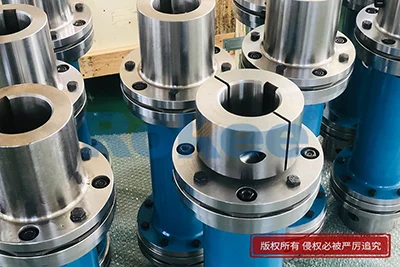
In modern PU sandwich panel production systems, flexible couplings serve as core transmission components that connect driving and driven shafts, undertaking the critical task of stabilizing power transmission while buffering mechanical vibration, compensating minor shaft misalignment, and protecting key production equipment from impact damage during operation. The operational stability, transmission efficiency, and service life of the entire PU sandwich panel line are closely tied to the standardization and precision of flexible coupling installation and commissioning. PU sandwich panel production involves continuous high-speed rolling, compounding, cutting, and forming processes, where the production line operates with long-duration continuous load and frequent dynamic load changes. Improper installation and incomplete commissioning of flexible couplings will easily lead to transmission jitter, abnormal equipment vibration, accelerated component wear, and even intermittent shutdowns, seriously affecting the continuity and product precision of sandwich panel production. Therefore, standardized implementation of the full-process installation and scientific commissioning of flexible couplings is an essential link to ensure the long-term stable and efficient operation of PU sandwich panel production lines.
Pre-installation preparation is the foundation for ensuring coupling installation quality and subsequent commissioning accuracy, covering equipment inspection, component checking, site arrangement, and tool preparation, and every detail directly affects the overall construction effect. Before starting any installation work, it is necessary to conduct a comprehensive inspection of the driving and driven shaft systems of the PU sandwich panel line. The surface of the connecting shafts should be smooth and free of scratches, rust, deformation, and residual welding slag, and the shaft runout and axial displacement must meet the basic operating requirements of the production line. Excessive shaft deformation or runout will cause persistent misalignment of the coupling after installation, leading to continuous vibration and wear during equipment operation. Meanwhile, the flatness and firmness of the equipment base should be checked to eliminate base looseness and deformation problems, ensuring that the main equipment of the production line is in a stable fixed state before coupling installation, avoiding secondary displacement during installation and commissioning.
Subsequently, a full inspection of the flexible coupling components is required. All split parts, flexible elastic elements, fastening bolts, positioning pins, and gaskets should be sorted and checked one by one to confirm complete specifications and intact appearance. The flexible elastic elements, as the key buffer and compensation part of the coupling, must be free of aging cracks, deformation, wear, and structural damage; any defective elastic elements must be replaced in advance to prevent functional failure during subsequent operation. Fastening accessories need to ensure complete thread integrity and no sliding teeth or deformation, which guarantees uniform stress and reliable fixing effect after assembly. In addition, the installation construction area of the production line should be cleaned thoroughly to remove dust, oil stains, and sundries on the equipment surface and operating platform, creating a clean and tidy construction environment, effectively avoiding foreign matter mixing into the coupling assembly gap and affecting the precision of installation and operation.
In terms of tool preparation, professional precision measuring tools and assembly tools must be equipped, including alignment detection tools, torque measuring tools, and conventional disassembly and assembly tools. All measuring tools should be in a normal working state with accurate detection performance to ensure reliable data support for subsequent shaft alignment and bolt fastening. Before formal construction, construction personnel need to be familiar with the structural characteristics of the flexible coupling and the transmission operation logic of each station of the PU sandwich panel line, clarify the installation sequence and key control points, and formulate targeted installation and commissioning implementation plans according to the actual operating parameters of the production line, avoiding random operation and missing key inspection links.
The formal installation process of flexible couplings follows standardized assembly procedures, adhering to the principle of precise positioning and uniform stress to ensure that each assembly link meets the mechanical operation standards of the production line. The first step is to install the coupling hubs on the driving shaft and driven shaft respectively. Before installation, the matching parts of the shaft body and the hub inner hole should be wiped clean to remove residual oil and impurities, ensuring a tight and fitting matching state. The two hubs are sleeved on the corresponding connecting shafts in sequence, and the initial positioning is completed through the key connection structure to ensure that the keys are fully embedded in the key grooves without deflection or empty gaps. It is forbidden to use heavy hammer knocking to force the hub into place during installation, as this will easily cause deformation of the hub structure, shaft surface damage, and displacement of the internal key structure, affecting the coaxiality and fixing stability of the coupling.
After the hub is initially positioned, the gap distance between the two coupling hubs is adjusted according to the structural design of the flexible coupling and the operating stroke requirements of the production line. A reasonable intermediate gap can reserve effective compensation space for thermal expansion and contraction of equipment during high-speed operation and minor axial displacement of the shaft body, preventing rigid extrusion and friction between components. After adjusting the gap, the flexible elastic elements are installed in the clamping grooves of the two hubs in sequence, ensuring that the elastic elements are fully seated and evenly stressed without distortion, offset, or extrusion deformation. The assembly state of the elastic elements directly determines the vibration buffering and misalignment compensation capacity of the coupling, and asymmetric installation will lead to unbalanced operation of the coupling and generate abnormal vibration during equipment operation.
Once the internal structural assembly is completed, the fastening bolts and positioning accessories are installed in accordance with the symmetric tightening sequence. The bolts need to be pre-tightened symmetrically multiple times instead of one-time full tightening, which can effectively avoid unilateral excessive stress leading to hub deflection and shaft coaxiality deviation. In the pre-tightening stage, the running flexibility of the coupling is checked manually after each round of tightening. The whole coupling should rotate smoothly and freely without jamming, stagnation, and obvious resistance. After confirming no abnormal rotation, the bolts are fastened to the standard torque value in strict accordance with the mechanical assembly requirements, ensuring uniform stress of all fastening points and stable connection of the overall structure. Finally, the protective cover of the coupling is installed to isolate external dust, debris, and mechanical collision interference, protecting the internal coupling structure from external environmental damage.
Precision alignment calibration is the core key link in the installation process, and the accuracy of shaft alignment directly determines the operating stability and service life of the flexible coupling. Minor angular, radial, and axial misalignments are unavoidable in the assembly process, and excessive misalignment will cause the coupling to bear alternating shear force and extrusion force during operation, accelerating the fatigue wear of elastic elements and fastening parts, and even causing shaft body torsion and equipment transmission failure in severe cases. After the preliminary assembly of the coupling is completed, professional alignment tools are used to detect and calibrate the coaxiality of the driving and driven shafts. The detection covers radial runout deviation and axial end face gap deviation of the coupling in the rotating state, and all deviation values need to be controlled within the allowable tolerance range of the production line operation.
During calibration, fine adjustment is carried out by modifying the fixed position of the equipment base and the gasket thickness of the shaft support seat. Each adjustment is matched with real-time data detection to ensure that the misalignment error is gradually reduced and eliminated. After each fine adjustment, manual rotation of the coupling for multiple full-circle operations is required to verify the smoothness of operation and the consistency of gap changes. Repeated detection and adjustment are implemented until the shaft alignment state is stable and all precision indicators meet the operation standards. It is necessary to avoid blind pursuit of zero deviation in actual operation; appropriate tolerance matching conforms to the mechanical operation characteristics of continuous production lines, and excessive precision adjustment will easily cause structural stress concentration during equipment thermal expansion.
Commissioning work is divided into no-load commissioning and load commissioning, which are carried out step by step from low state to normal operating state to comprehensively verify the installation quality and operating performance of the flexible coupling. No-load commissioning is the first stage of commissioning, with all production line processing components in a non-working state, only starting the transmission power system to drive the coupling and the transmission shaft system to operate. The initial operating speed is set to low speed, and the operation is maintained for a certain period to observe the operating state of the coupling. During the operation, it is necessary to check whether there is abnormal vibration, periodic jitter, abnormal friction noise, and local overheating of the coupling. At the same time, the fastening state of the bolts and the fitting degree of the elastic elements are monitored in real time to check for loosening and displacement.
After the low-speed no-load operation is stable, the operating speed is gradually increased to the idle speed of the production line, and continuous operation monitoring is carried out. If no abnormal state occurs during the whole process of speed increase and stable operation, it indicates that the basic installation of the coupling is qualified and the transmission structure is unobstructed. If abnormal vibration or noise is found during no-load commissioning, the equipment should be shut down immediately for inspection, troubleshooting of misalignment deviation, loose fasteners, distorted elastic elements, and other problems, and commissioning can be continued only after re-calibration and correction.
Load commissioning is the core link to verify the practical application performance of the coupling, which simulates the actual production working state of the PU sandwich panel line. On the basis of qualified no-load commissioning, raw material feeding is started to make the production line enter the normal rolling, compounding and forming working state, and the coupling bears the dynamic load generated by equipment operation and material processing. In the early stage of load commissioning, low-load and low-speed operation is adopted first, and the operating state of the coupling under light load is observed, focusing on checking the vibration amplitude, transmission stability and temperature change of the coupling parts under load stress.
After the light-load operation is stable, the production line parameters are gradually adjusted to the standard production speed and full-load operating state, and long-term continuous operation monitoring is carried out. During full-load commissioning, it is necessary to focus on verifying the buffering and vibration reduction effect of the flexible coupling under alternating dynamic loads, as well as the stability of power transmission. The coupling should maintain smooth operation without jitter and slipping, and the vibration generated by equipment operation can be effectively buffered and absorbed by the elastic structure, avoiding the transmission of vibration to the whole production line and affecting the flatness and compounding precision of PU sandwich panels. Meanwhile, the temperature rise of the coupling during continuous load operation is detected, and excessive temperature rise indicates unbalanced local stress or severe friction of components, which needs to be shut down for adjustment and optimization.
In the process of installation and commissioning, it is necessary to avoid common construction errors that easily affect the operating performance of the coupling. Excessive bolt tightening torque is a common problem, which will cause permanent deformation of the flexible elastic elements and structural fatigue of the hub, reducing the vibration compensation ability and service life of the coupling. Too loose fastening will lead to relative displacement of components during operation, generating impact noise and transmission jitter. In addition, insufficient shaft alignment accuracy and ignored tiny misalignment deviations will accumulate fatigue loss for a long time, leading to early failure of the coupling. Meanwhile, the problem of unreasonable gap reservation between coupling hubs should be avoided; too small a gap will cause thermal extrusion friction during high-temperature operation of the equipment, and too large a gap will affect the stability of power transmission and cause operating jitter.
After the completion of installation and commissioning, systematic inspection and debugging confirmation work need to be carried out, and all commissioning data and installation adjustment records are sorted out to form complete construction files. The final inspection includes rechecking the fastening torque of all bolts, the fitting state of elastic elements, the alignment precision of the shaft system, and the operating stability under full-load working conditions. After confirming that all indicators meet the production operation requirements, the coupling protection device is completely fixed, and the construction and commissioning work is officially completed.
In addition, standardized post-commissioning daily maintenance norms are formulated according to the operating characteristics of the flexible coupling in the PU sandwich panel line. Regular visual inspection is carried out during daily production operation to check for component wear, aging, loosening and abnormal deformation. Regular precision detection and calibration of shaft alignment are implemented to compensate for tiny displacement errors generated by long-term equipment operation. Regular cleaning and lubrication maintenance are done to keep the coupling operating environment clean and the transmission state smooth, effectively reducing component wear and failure probability, and ensuring that the flexible coupling can maintain efficient and stable power transmission performance for a long time, providing reliable technical guarantee for the continuous and high-precision production of PU sandwich panels.


Links:
- Calibration Weight
- Digital Viscometer
- Carpas Industriales
- Exhibition Tent
- Industrial Cardan Shaft
- PU Sandwich Panel Machine
- PIR Sandwich Panel Line
- Sandwich Panel Machine
- Sandwich Panel Production Line
- PU Sandwich Panel Line
- Sandwich Panel Line
- Flexible Couplings Manufacturer In China
- Elastic Couplings Manufacturer In China